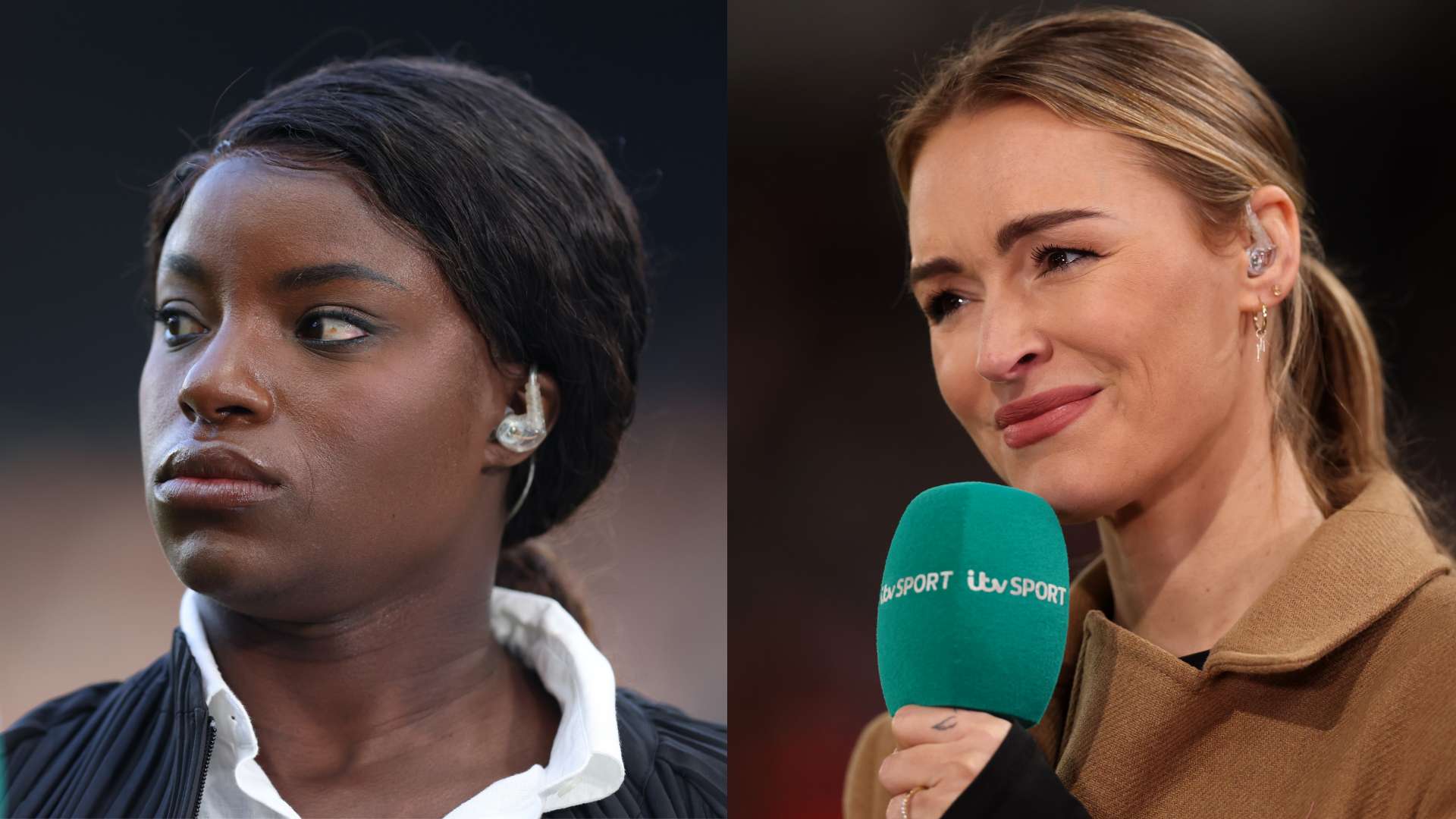

The ongoing feud between Eni Aluko and Laura Woods
The public feud between former England international Eni Aluko and ITV and TNT Sports presenter Laura Woods shows no signs of slowing down. The latest development in their war of words has seen Aluko hitting back at Woods, claiming that her path towards punditry roles in the women’s game has been blocked by England and Arsenal legend Ian Wright.
Aluko’s comments came in response to Woods’ quip that “caps don’t win automatic work”, implying that simply having a successful playing career does not guarantee opportunities in the world of sports punditry. This exchange of words has not only sparked controversy but has also shed light on the challenges faced by former athletes transitioning into media roles.
Aluko’s perspective
In a recent interview, Eni Aluko expressed her frustration at what she perceives as a lack of opportunities in the punditry space, particularly in women’s football. She believes that her credentials as a former England international should open doors for her, but claims that Ian Wright’s influence has hindered her progress.
Aluko’s assertion that she has been “blocked” by Wright has sparked debate among fans and industry insiders. Some believe that former players like Aluko should be given more opportunities to share their insights and experiences, while others argue that merit should be the determining factor in securing punditry roles.
Woods’ response
Laura Woods’ response to Aluko’s accusations was met with further criticism, as Aluko claimed that Woods’ comments had left her feeling “gaslit”. This term, popularized in discussions surrounding emotional manipulation and psychological abuse, indicates that Aluko felt invalidated or dismissed by Woods’ remarks.
While Woods has not directly addressed Aluko’s allegations against Ian Wright, her stance on the competitive nature of the media industry suggests that she believes success in punditry is earned through talent and hard work, rather than reputation alone.
Industry insights and implications
The clash between Aluko and Woods highlights the ongoing debate surrounding diversity and representation in sports media. Former players, especially women and minority athletes, often face barriers when trying to break into punditry roles, even with successful playing careers under their belts.
As the demand for diverse voices and perspectives in sports media grows, organizations and broadcasters are under increasing pressure to provide opportunities for underrepresented groups. The feud between Aluko and Woods serves as a reminder of the challenges faced by aspiring pundits and the importance of creating inclusive environments within the industry.
Conclusion:
While the war of words between Eni Aluko and Laura Woods may be ongoing, the underlying issues of representation and opportunity in sports media are far-reaching. As the conversation continues, it is crucial for industry stakeholders to address these challenges and work towards creating a more diverse and inclusive landscape for all aspiring pundits.
Opportunities in Women’s Football Punditry
Eni Aluko’s struggle to break into the world of punditry highlights the broader challenges faced by women seeking roles in sports media. Despite the growing popularity and success of women’s football, there remains a lack of representation for female voices in punditry positions. The industry has historically been male-dominated, with men often dominating the airwaves and analysis desks.
As a former England international with a wealth of experience in the game, Aluko’s perspective and insights would undoubtedly add value to the coverage of women’s football. Her frustrations with the lack of opportunities are echoed by many female athletes who have found it difficult to transition into media roles after retiring from their playing careers.
The Role of Influencers in Punditry Selection
Eni Aluko’s claim that her path has been blocked by Ian Wright raises questions about the influence of established figures in the industry on the selection of pundits. While having a mentor or advocate can be beneficial for aspiring pundits, there is a fine line between mentorship and exclusionary practices. The perception that certain individuals hold the power to open or close doors for others raises concerns about transparency and fairness in the selection process.
In an industry where connections and relationships play a significant role in career advancement, the issue of favoritism and nepotism often comes into play. The challenge for aspiring pundits, especially those from underrepresented groups, is to navigate these dynamics while maintaining their integrity and pushing for a level playing field.
The Need for Diversity and Inclusion
The feud between Eni Aluko and Laura Woods underscores the importance of diversity and inclusion in sports media. A diverse range of voices and perspectives enriches the coverage of sports and reflects the varied experiences of fans and athletes alike. By providing opportunities for women, minorities, and individuals from different backgrounds to enter the punditry space, broadcasters and organizations can create a more representative and engaging media environment.
Efforts to promote diversity and inclusion in sports media should not only focus on increasing the visibility of underrepresented groups but also on creating supportive and inclusive cultures within media organizations. Mentorship programs, training initiatives, and recruitment strategies that prioritize diversity can help break down barriers and open doors for aspiring pundits from diverse backgrounds.
Conclusion:
As the feud between Eni Aluko and Laura Woods continues to spark debate and reflection within the sports media industry, it is clear that the issues of representation, opportunity, and inclusivity are central to the future of punditry. By addressing these challenges head-on and championing diversity in all its forms, the industry can create a more vibrant and inclusive space for voices from all walks of life to be heard.