
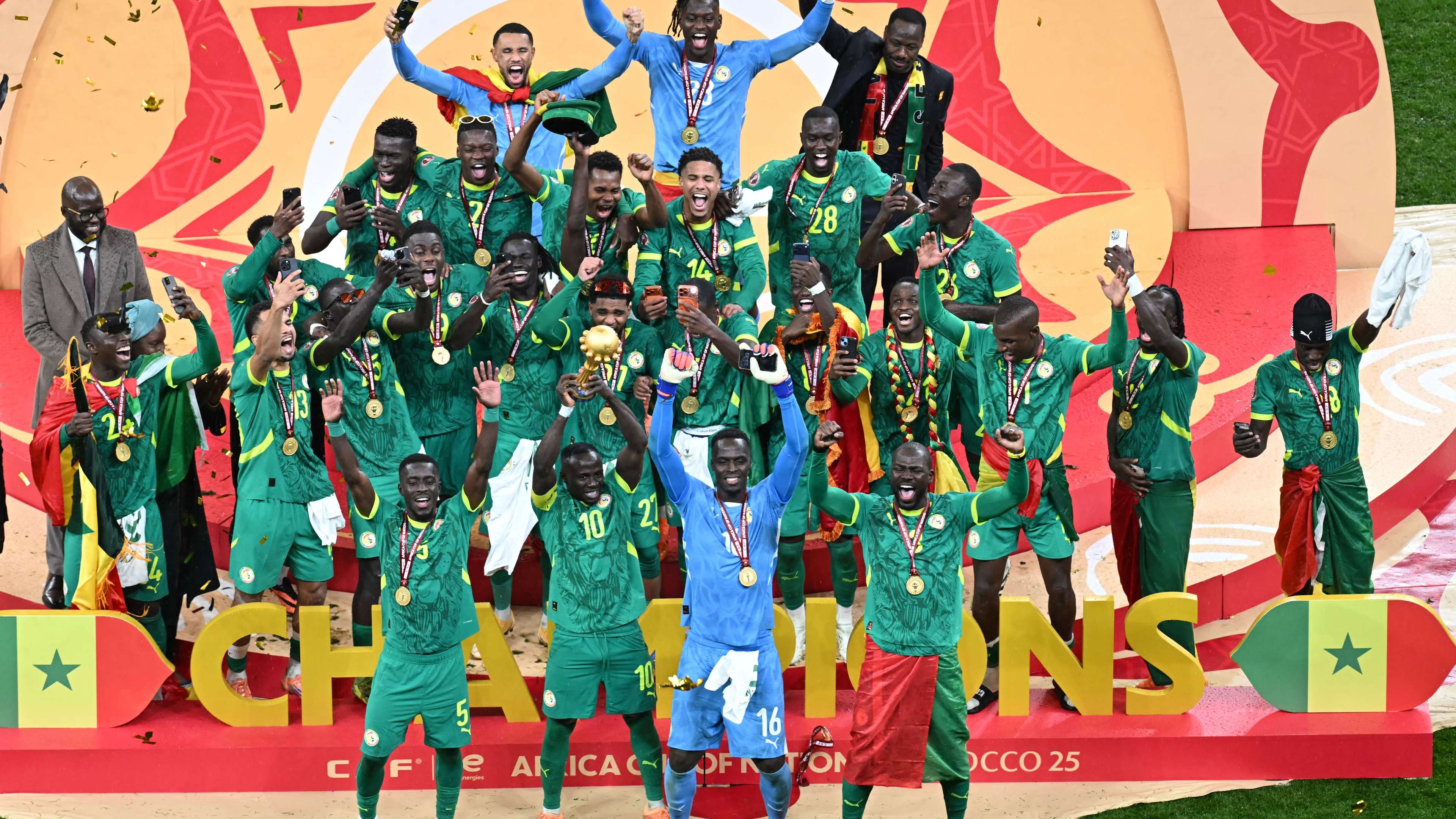

The Controversy Surrounding the Africa Cup of Nations Final
The Africa Cup of Nations final has not only been a topic of discussion among football fans but has also sparked controversy within the Confederation of African Football (CAF). The fallout from the final match reached a boiling point when Augustin Senghor, a senior official at CAF and former head of the Senegalese Football Federation, publicly criticized his own governing body for their decision to overturn the match result and hand the trophy to Morocco.
Augustin Senghor Speaks Out
Augustin Senghor, who serves as an executive committee member of CAF, did not hold back in expressing his disapproval of the controversial decision made by the governing body. In a bold move, Senghor slammed CAF for what he believes is a “bridge too far” in their handling of the situation.
“I strongly disagree with the decision to overturn the result of the Africa Cup of Nations final and award the trophy to Morocco. This sets a dangerous precedent and undermines the integrity of the sport,” Senghor stated in a recent interview.
The Backlash and Public Outcry
The decision to overturn the match result has been met with widespread backlash and public outcry, both within the African football community and among fans worldwide. Many have voiced their concerns over the lack of transparency and fairness in the process, questioning the motives behind CAF’s decision.
Football pundits and analysts have also weighed in on the controversy, with some calling for a thorough investigation into the matter to ensure that justice is served and the integrity of the sport is upheld. The fallout from the final has not only divided opinions but has also put CAF under intense scrutiny.
Implications for African Football
The fallout from the Africa Cup of Nations final has far-reaching implications for African football as a whole. The controversy surrounding the match result and the subsequent backlash have cast a shadow over the sport, raising questions about the credibility of CAF and its governance.
Many are now calling for reforms within CAF to prevent similar controversies from arising in the future and to restore confidence in the organization. The integrity of African football is at stake, and it is crucial for CAF to address the concerns raised by stakeholders and take decisive action to rectify the situation.
Looking Ahead
As the fallout from the Africa Cup of Nations final continues to unfold, the controversy surrounding the match result and CAF’s decision will undoubtedly dominate headlines in the coming weeks. The football world will be watching closely to see how CAF responds to the public outcry and whether any changes are made to prevent similar incidents from occurring in the future.
One thing is certain: the aftermath of the final has exposed deep-rooted issues within African football that must be addressed in order to maintain the integrity and credibility of the sport.
The Role of Technology in Football Prediction
One way fans and analysts have been able to predict the outcomes of football matches, including high-stakes finals like the Africa Cup of Nations, is through the use of technology. With the rise of advanced statistical analysis and predictive modeling, football prediction has become more data-driven than ever before. Analysts can now leverage historical data, player statistics, team performance metrics, and other relevant factors to make informed predictions about match outcomes.
By utilizing sophisticated algorithms and machine learning techniques, football prediction models can generate probabilities and insights that help fans and bettors make more accurate forecasts. These models take into account various factors such as home-field advantage, player injuries, team form, head-to-head records, and even weather conditions to predict the likelihood of different outcomes, whether it be a win, loss, or draw.
The Impact of Predictions on the Game
While football predictions have become increasingly popular and sophisticated, they also have the potential to influence the game itself. Coaches and players may use predictions to gain insights into their opponents’ strategies and weaknesses, adjust their tactics accordingly, or even motivate themselves to perform better based on the expected outcome.
On the other hand, fans and bettors who rely on predictions may experience heightened emotions during matches, especially when the actual outcome deviates from what was forecasted. This can add an extra layer of excitement and suspense to the game, as viewers eagerly await to see if the predictions align with reality or if unexpected upsets occur.
The Future of Football Prediction
As technology continues to evolve and data analytics become more sophisticated, the future of football prediction looks promising. With the advent of artificial intelligence and predictive modeling tools, analysts can delve deeper into the nuances of the game, uncovering patterns and insights that may have been previously overlooked.
Furthermore, as more data becomes available and accessible, including real-time statistics and tracking metrics, football prediction models will become even more accurate and reliable. Fans, analysts, and even bookmakers will be able to make more informed decisions based on data-driven insights, enhancing the overall football-watching experience.
Conclusion
In conclusion, while the controversy surrounding the Africa Cup of Nations final may have dominated headlines, it has also shed light on the role of technology in football prediction. As the football world grapples with the aftermath of the contentious match result, the use of data analytics and predictive modeling will continue to play a significant role in shaping the future of the sport.
Whether it be predicting match outcomes, analyzing player performance, or identifying trends in team strategies, technology will undoubtedly be a driving force in football prediction, offering fans and analysts valuable insights and enhancing the overall experience of the beautiful game.