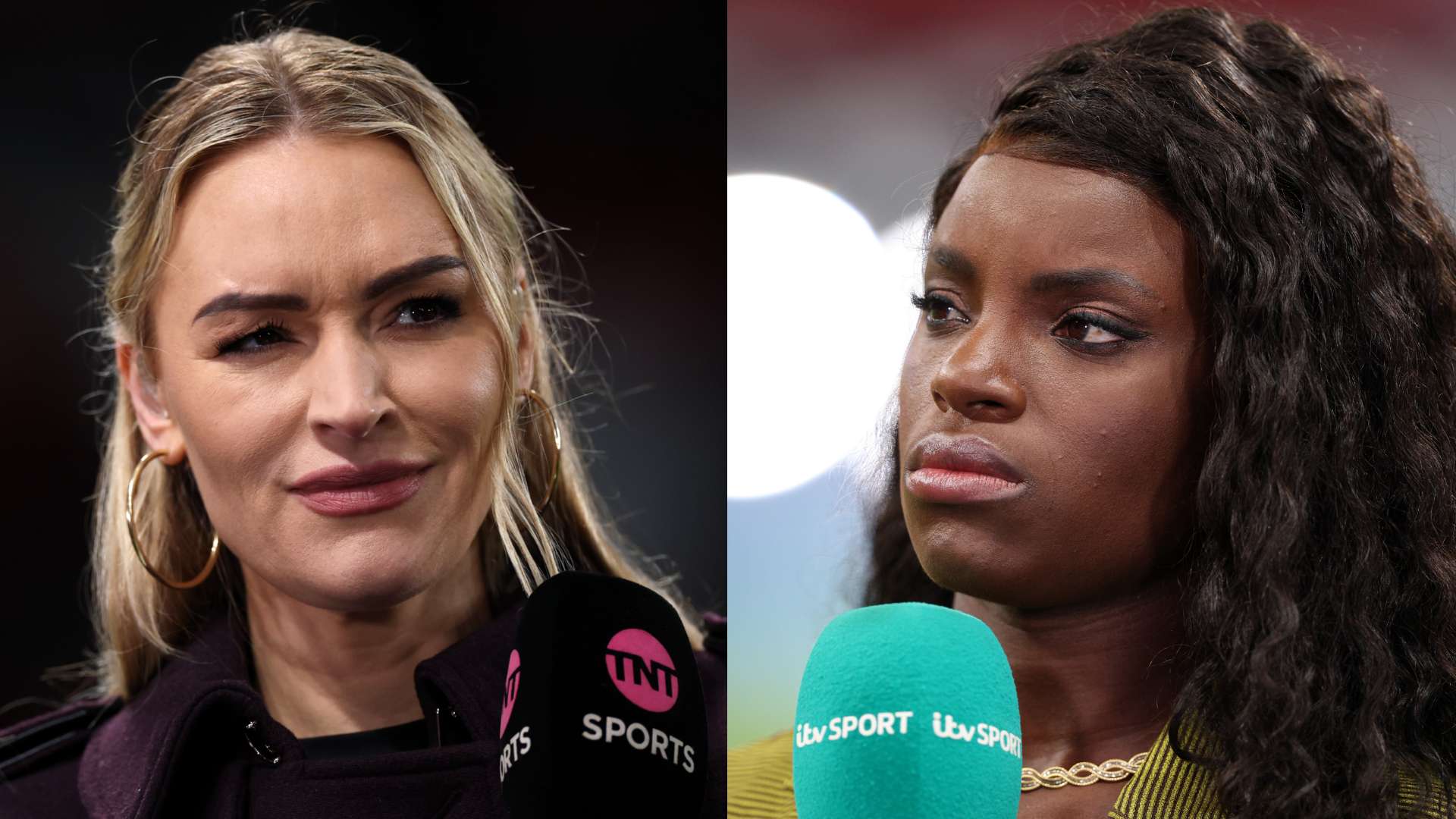

Laura Woods Responds to Eni Aluko’s Controversial Comments on Women’s Football
Recently, former Lionesses star Eni Aluko stirred up controversy in the world of women’s football by suggesting that “the women’s game should be by women, for women”. Aluko specifically took aim at Arsenal legend Ian Wright, claiming that his involvement in coverage of women’s football is detrimental to the progress of women’s punditry.
Aluko’s Criticism of Ian Wright
In a bold statement, Eni Aluko expressed her belief that men like Ian Wright should not have a prominent role in discussing women’s football. She argued that having male figures like Wright in the spotlight is ultimately hindering the advancement of women in the sport.
Aluko’s comments sparked a heated debate within the football community, with many questioning the validity of her claims. One individual who took issue with Aluko’s stance was TV presenter Laura Woods.
Laura Woods Fires Back
Laura Woods, who is known for her work covering both men’s and women’s football, did not mince words when responding to Eni Aluko’s criticism of Ian Wright. Woods pointed out flaws in Aluko’s argument, highlighting the importance of diversity and inclusivity in sports media.
Woods emphasized that the goal should be to elevate women’s football by welcoming a variety of voices and perspectives, regardless of gender. She defended the idea that everyone, regardless of their background, should have a place in the conversation surrounding women’s sports.
Promoting Diversity in Sports Media
The debate between Aluko and Woods brings to light larger issues of representation and diversity in sports media. While Aluko advocates for a more exclusive approach to discussing women’s football, Woods champions a more inclusive and open-minded perspective.
By encouraging a diverse range of voices and opinions, Woods believes that the coverage of women’s football can reach a wider audience and generate more interest in the sport. She argues that shutting out certain voices, whether male or female, only serves to limit the potential growth and development of women’s football.
Looking Ahead
As the discussion around women’s football continues to evolve, it is clear that differing opinions on the best approach to promoting the sport will persist. While Eni Aluko and Laura Woods may disagree on certain aspects of media representation, their contributions to the conversation highlight the importance of engaging with a variety of perspectives.
Ultimately, the goal should be to elevate women’s football by fostering an inclusive and diverse environment that welcomes all voices, regardless of gender. By embracing a wide range of viewpoints, the coverage of women’s football can continue to grow and thrive in the years to come.
Keywords: football, prediction, women’s football, Laura Woods, Eni Aluko, Ian Wright, diversity, sports media.
Women’s Football: Embracing Diversity and Inclusion
The debate sparked by Eni Aluko’s comments on women’s football and the role of male pundits like Ian Wright sheds light on the ongoing conversation surrounding diversity and inclusion in sports media. While Aluko’s perspective emphasizes the importance of female representation in discussing women’s football, Laura Woods advocates for a more inclusive approach that welcomes a variety of voices, regardless of gender.
One key aspect of promoting diversity in sports media is the need to provide opportunities for individuals from all backgrounds to contribute to the conversation. By allowing a range of voices to be heard, the coverage of women’s football can offer unique insights and perspectives that resonate with a broader audience. This inclusivity not only enriches the content but also helps to break down barriers and stereotypes within the industry.
Championing Women in Football
While Aluko’s call for women to take the lead in discussing women’s football is rooted in the desire for empowerment and representation, Woods’ stance emphasizes the importance of collaboration and unity in advancing the sport. By working together, regardless of gender, individuals can leverage their diverse experiences and expertise to elevate the profile of women’s football on a global scale.
It is crucial for the football community to support and promote female voices in sports media. By providing platforms for women to share their knowledge and perspectives, the industry can create a more inclusive and equitable environment for all stakeholders. This support not only benefits individual women in the industry but also contributes to the overall growth and success of women’s football as a whole.
Building a Stronger Future for Women’s Football
As the dialogue around women’s football continues to evolve, it is essential for stakeholders to prioritize diversity and inclusion in all aspects of the sport. By embracing a wide range of viewpoints and promoting gender equality, the coverage of women’s football can reach new heights and attract a more diverse fan base.
Moving forward, it is crucial for the football community to listen to and amplify the voices of women in sports media. By championing inclusivity and diversity, the industry can create a more dynamic and engaging landscape for discussing and celebrating women’s football. Together, stakeholders can work towards building a stronger and more inclusive future for the sport.
In conclusion, the debate between Eni Aluko and Laura Woods highlights the complexities surrounding diversity and inclusion in sports media. By engaging with a variety of perspectives and promoting gender equality, the football community can foster a more vibrant and inclusive environment for discussing women’s football.
Keywords: football, prediction, women’s football, Laura Woods, Eni Aluko, Ian Wright, diversity, inclusion, sports media.