

University of Missouri-Columbia Adds New Chess Player and Dominates Season Opener
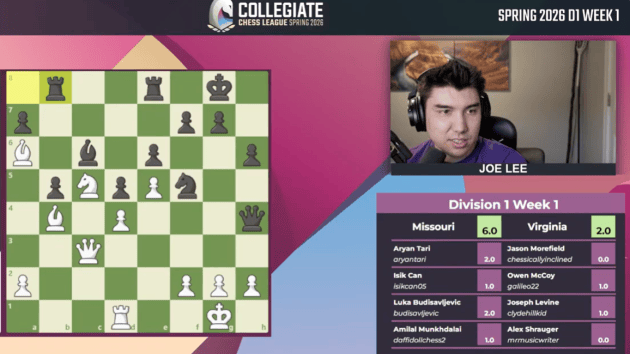
The University of Missouri-Columbia (Mizzou) chess team kicked off their season in style with a dominating 14-2 victory over the University of Virginia (UVA). The team, led by a new player from Mongolia, is aiming to regain their championship form and make a strong statement in the Collegiate Chess League Division 1.
New Player Joins Strong Team
Munkhdalai, the new addition to the Mizzou team, proved his worth by contributing to the team’s impressive victory in their opening match. Paired with a strong team of Grandmasters and International Masters, Munkhdalai’s skills added depth to the already formidable lineup.
On the other side, UVA, who failed to win a match last season, is looking to turn things around in 2026. Despite having some strong titled team members, including FIDE Masters and International Masters, the team faced an uphill battle against the well-rounded squad from Mizzou.
Strong Start in the Spring Season
The Collegiate Chess League Division 1 saw Mizzou and St. Louis University jump to early leads in the spring season. Both teams displayed strong performances, with Mizzou’s 14-2 victory over UVA setting the tone for the competition.
In the match against UVA, Mizzou’s players Tari and Budisavljevic shone with perfect 4-0 results. Tari’s strategic play against Levine in a sharp French Defense showcased his skill, while Budisavljevic’s willingness to take risks paid off in his match against Morefield, UVA’s top board.
Despite UVA managing to secure two points through Shrauger and McCoy, Mizzou’s dominance was evident throughout the match. Munkhdalai, who narrowly missed a perfect 4-0 result, displayed a strong performance and expressed his excitement about being part of the team in a post-match interview.
Exciting Season Ahead
The Collegiate Chess League continues to be a platform for college students to showcase their skills and compete at a high level. With strong teams like Mizzou making a statement early in the season, chess fans can look forward to an exciting and competitive season ahead.
As Mizzou aims to reclaim their championship form and UVA looks to bounce back from a tough season, the competition in the Collegiate Chess League Division 1 promises to be intense and full of exciting matchups.
Chess enthusiasts can follow all the action in the league as teams battle it out for supremacy on the virtual chessboard, showcasing their strategic prowess and determination to come out on top.
The Rise of Chess in Collegiate Athletics
Chess has been gaining popularity in the world of collegiate competition, with universities recognizing the strategic and intellectual benefits of the game. The addition of new players like Munkhdalai from Mongolia to teams like the University of Missouri-Columbia highlights the global nature of chess and the diverse talent pool that exists in the competitive chess world.
Universities are investing in chess programs to attract top-tier players and elevate their presence in the competitive chess scene. With the rise of online chess platforms and virtual competitions, collegiate chess teams have more opportunities to showcase their skills and compete against top programs from around the world.
The Impact of Team Dynamics in Chess
Chess is often seen as an individual sport, but the importance of teamwork and collaboration cannot be overlooked in collegiate chess competitions. Strong team dynamics, effective communication, and support among teammates can play a crucial role in achieving success in team-based chess tournaments.
Teams like the University of Missouri-Columbia have found success by combining individual talent with a cohesive team strategy. The synergy among team members, the ability to analyze games collectively, and the support system within the team all contribute to a winning formula in collegiate chess.
The Mental Aspect of Competitive Chess
Competing in high-stakes chess tournaments requires not only strategic thinking and tactical skills but also mental resilience and focus. Players must navigate through intense matches, make critical decisions under pressure, and maintain composure even in the face of setbacks.
The mental aspect of competitive chess is often underestimated but plays a significant role in determining the outcome of games and tournaments. Universities like the University of Missouri-Columbia recognize the importance of mental training and support their players in developing the right mindset to excel in high-pressure chess competitions.
The Future of Collegiate Chess
As collegiate chess continues to grow in popularity and competitiveness, universities are expected to invest more resources in their chess programs, recruit top talent from around the world, and elevate the level of play in collegiate chess leagues. The future of collegiate chess looks bright, with more opportunities for players to showcase their skills, compete at a high level, and contribute to their team’s success.
Chess enthusiasts, both within the university community and beyond, can look forward to an exciting season of collegiate chess filled with intense matchups, strategic brilliance, and memorable moments on the virtual chessboard. The rise of chess in collegiate athletics is a testament to the enduring appeal and intellectual challenge of the game, attracting players and fans alike to the competitive world of collegiate chess.
By expanding on the original article with insights into the rise of chess in collegiate athletics, the impact of team dynamics in chess, the mental aspect of competitive chess, and the future of collegiate chess, readers gain a deeper understanding of the competitive chess landscape and the unique challenges and opportunities that collegiate chess presents.