
Chess.com Hosts Successful Chess and AI Conference in Boston
Last weekend, the Hynes Convention Center in Boston was buzzing with excitement as Chess.com returned to host a packed program that delved into the world of chess, artificial intelligence (AI), and the intersection of mental and physical performance. The annual event, which ran from March 6-7, brought together leading sports executives, analysts, and innovators to explore the fascinating connections between chess, AI, and human performance.
Exploring Chess and AI
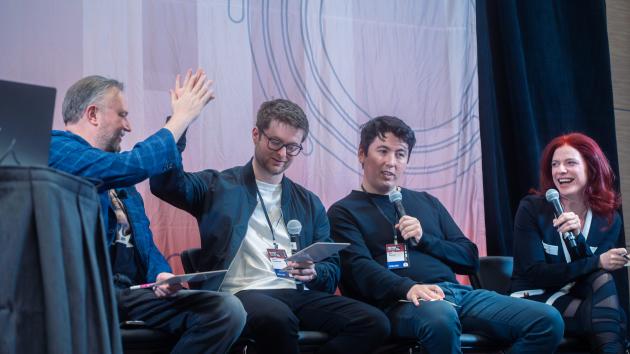
The event kicked off with a panel discussion moderated by International Master (IM) Danny Rensch and featured Grandmaster (GM) Robert Hess, Philadelphia 76ers President of Basketball Operations Daryl Morey, Google DeepMind’s Meg Risdal, and Federico Barbero. The panel delved into how chess can offer valuable insights into a world increasingly shaped by superhuman AI, sparking thought-provoking discussions among the attendees.
Exciting Chess Events
Throughout the weekend, attendees were treated to a variety of engaging chess events. FIDE Master (FM) James Canty took on conference participants in a simultaneous exhibition, showcasing his impressive skills with a score of 7/8. The only player able to defeat Canty was retired lawyer Rodney Malpert, who managed to secure a win against the seasoned chess commentator, coach, and streamer.
Canty also moderated a Hand & Brain session where Daryl Morey teamed up with GM Robert Hess to face Women’s Grandmaster (WGM) Jennifer Shahade and Bill Chen, a quantitative analyst, poker player, and software designer. Morey and Hess emerged victorious in a closely contested match, maintaining their perfect record in the format at MIT Sloan.
Another crowd favorite was the Guess The Elo event, which saw Zack Weiner, co-founder of Overtime Sports, stepping in as a moderator. Participants, including Morey, Hess, Shahade, and IM Christopher Yoo, attempted to estimate players’ ratings based on watching their games. Shahade ultimately came out on top, showcasing her keen eye for assessing chess skills.
Chessboxing and More
As in previous years, Chessboxing played a significant role at the conference. The program included a breathwork session led by United Chessboxing Founder Matt Thomas, focusing on the techniques competitors use to regulate their heart rate and recover between rounds. Participants also had the opportunity to engage in a light chessboxing demonstration, simulating real matches in the sport.
The weekend concluded with a thrilling blindfold exhibition featuring Danny Rensch facing off against two-time NBA Champion Shane Battier. Despite Battier’s best efforts, Rensch emerged victorious in the blindfold game, showcasing his exceptional chess skills.
Celebrity Sightings
The event also welcomed notable celebrities, including Houston Rockets center Steven Adams, who stopped by to watch the demonstrations and show his support for the exciting world of chess and AI.
Overall, the Chess.com conference in Boston was a resounding success, bringing together chess enthusiasts, AI experts, and sports innovators for a weekend of engaging discussions, thrilling chess matches, and insightful panels. The event highlighted the enduring appeal of chess and its growing relevance in the age of artificial intelligence.
The Rise of AI in Chess
One of the most significant developments in the world of chess in recent years has been the integration of artificial intelligence into the game. AI-powered chess engines like Stockfish and AlphaZero have revolutionized the way players analyze positions, prepare openings, and improve their overall gameplay. These engines have reached levels of play that surpass even the best human grandmasters, raising questions about the future of human-machine competition in chess.
AI has also had a profound impact on chess education, with platforms like Chess.com leveraging AI algorithms to provide personalized training recommendations, analyze games, and offer insights into players’ strengths and weaknesses. By harnessing the power of AI, players can enhance their skills, learn new strategies, and gain a deeper understanding of the game.
The Psychology of Chess
Chess is not just a game of strategy and tactics; it is also a mental sport that challenges players’ cognitive abilities, decision-making skills, and emotional resilience. Studies have shown that playing chess can improve memory, concentration, problem-solving skills, and critical thinking. The game also teaches important life lessons such as patience, resilience, and the ability to think ahead.
Furthermore, chess has been used as a tool to study human cognition and behavior. Researchers have explored how chess players think, plan, and make decisions during a game, shedding light on the complexities of human intelligence and problem-solving. Understanding the psychology of chess can provide valuable insights into how the mind works and how we can improve our cognitive abilities.
The Future of Chess
As chess continues to evolve in the digital age, with online platforms enabling players from around the world to compete and learn, the future of the game looks brighter than ever. The growing popularity of chess streaming, online tournaments, and esports events has brought the game to a wider audience and sparked renewed interest among players of all ages.
Looking ahead, the integration of AI, virtual reality, and other cutting-edge technologies into the world of chess is likely to revolutionize the game even further. Advanced AI systems could offer training programs tailored to individual players’ needs, simulate historical matches for analysis, and provide real-time coaching during games. Virtual reality platforms could create immersive chess experiences, allowing players to feel like they are sitting across the board from their opponents.
Overall, the intersection of chess, AI, and technology holds immense potential for innovation, education, and entertainment in the world of chess. By embracing these advancements and exploring new possibilities, players, coaches, and enthusiasts can elevate their chess experience to new heights.
By delving into the psychological aspects of chess, the rise of AI in the game, and the potential future developments, we gain a deeper understanding of the enduring appeal and evolving nature of this ancient game. The Chess.com conference in Boston served as a platform for exploring these intriguing topics and engaging with the vibrant chess community.