
Controversial Refereeing Sparks Debate in Madrid Derby: A Deep Dive into Ortiz Arias’ Performance and Football Predictions
The recent Madrid derby between Atlético Madrid and Real Madrid has not only been a highlight for football fans but has also ignited intense discussions about refereeing standards in La Liga. At the center of the controversy is referee Ortiz Arias, whose performance in this crucial clash drew widespread criticism, with some experts and fans questioning his decision-making and consistency. This article explores the specifics of the incident, the broader implications for football prediction markets, and the ongoing debate about refereeing quality in top-tier football.
The Madrid Derby: A Match Full of Passion and Controversy
The Madrid derby, one of Spain’s most fiercely contested football matches, witnessed a dramatic showdown that ended with Atlético Madrid claiming a 2-1 victory over their city rivals, Real Madrid. While the game itself was packed with thrilling moments, tactical battles, and intense player performances, the refereeing decisions overshadowed much of the on-field action. The officiating came under scrutiny for a series of questionable calls that appeared to influence the match’s outcome and sparked a wider conversation about the integrity of referees in football predictions and betting markets.
Referee Ortiz Arias: A Performance Under the Microscope
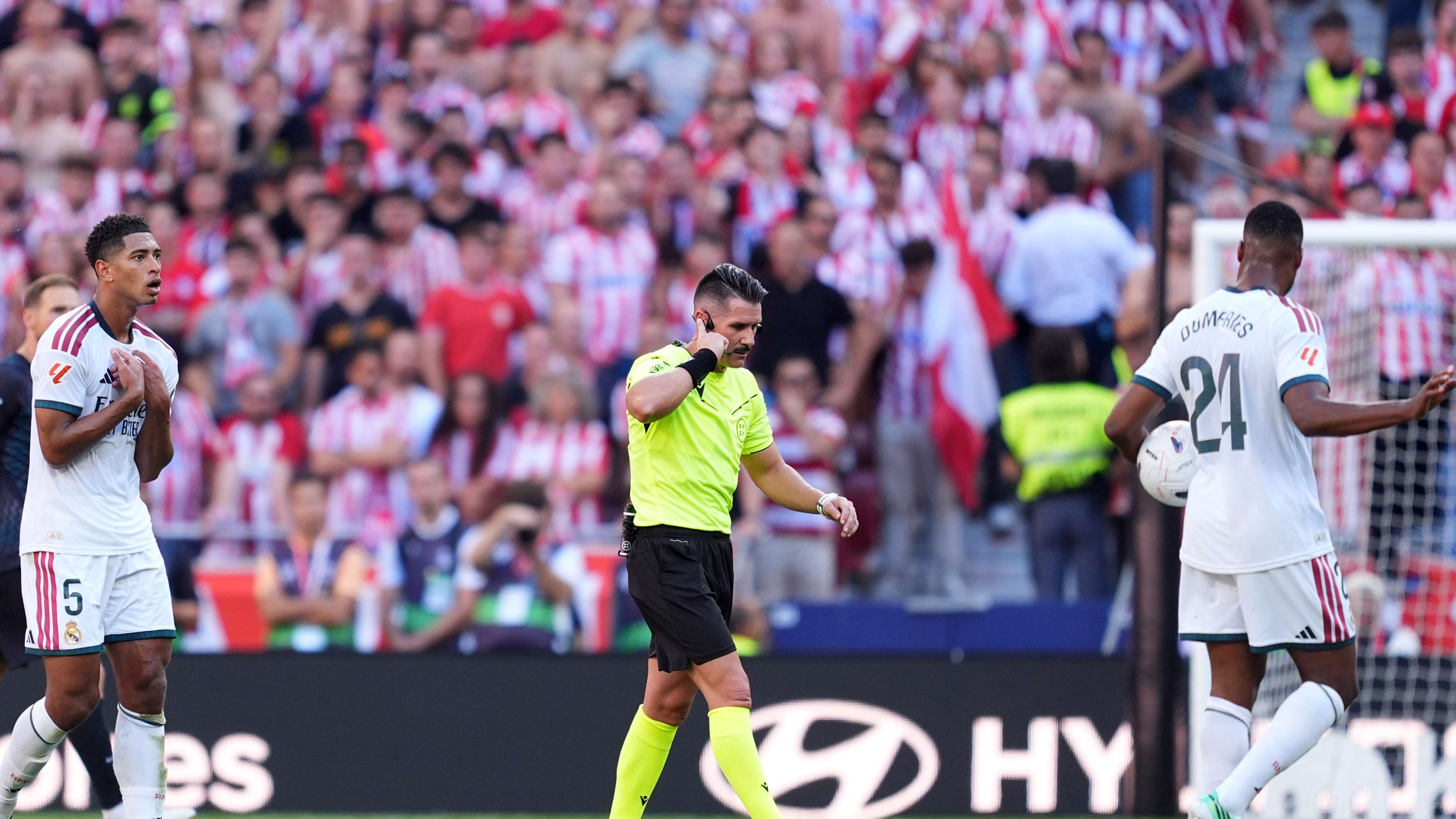
Referee Ortiz Arias, who officiated the match, faced harsh criticism from multiple quarters. The site “Archivo VAR”, renowned for its detailed analysis of refereeing incidents, assigned Ortiz Arias a shocking rating of just 0.25 out of 10 for his performance in this game. Such a low score underscores the perceived level of incompetence or bias in his officiating during this high-stakes encounter.
Why did Archivo VAR rate Ortiz Arias so poorly? The platform justified its grading by describing his performance as “terrifying,” emphasizing that it was a display that could potentially lead to a referee’s career freeze-out. The report pointed out that the match conditions demanded a high level of precision and fairness—criteria that Arias failed to meet consistently throughout the game.
Critical Incidents and Key Decision Failures
The analysis from Archivo VAR delved into specific moments that exemplified the referee’s shortcomings:
Early Mistakes and Lapses in Judgment
Ortiz Arias began the match by overlooking two potential yellow cards for Baena, despite clear fouls, which were met with light-hearted warnings rather than disciplinary action. This leniency set a problematic tone early on, raising questions about consistency and authority on the pitch.
Misplaced Card and Confusion Over Player Identity
The referee then made a critical error involving Bellingham: he issued a yellow card for a stamping incident but later reversed it after consulting the review screen. The confusion over player identities— Romero was incorrectly penalized instead of Bellingham—highlighted a troubling lapse in officiating. Moreover, the incident was deemed not worthy of a yellow card in the first place, making the correction appear more problematic than the original call.
Missed Foul and Dangerous Challenge
Perhaps most egregiously, Ortiz Arias failed to award a yellow card for a dangerous challenge by Kang-in Lee on Fede Valverde. The foul, which caused Valverde to twist his ankle, was committed right in front of the referee’s eyes, yet no disciplinary action was taken. This oversight not only affected the flow of the game but also raised concerns about player safety and the fairness of the match outcome.
Inconsistent Penalty Area Decisions
The final notable incident involved a challenge by Huijsen on Giuliano Simeone inside the penalty box. Despite clear evidence of holding and obstruction—an incident that typically warrants a red card—the referee opted for a yellow instead. Such inconsistency fuels speculation about bias and the influence of subjective judgment in football officiating.
The Broader Impact on Football Prediction and Betting Markets
Refereeing controversies like those seen in the Madrid derby have far-reaching implications beyond just match analysis. In the world of football prediction and betting, referee decisions are often factored into models that forecast match outcomes, goal totals, and even player performances. When referees make questionable calls, it can skew predictions and lead to unexpected results, affecting both bettors and bookmakers.
Moreover, persistent officiating errors erode trust in the fairness of competitions, which is vital for the integrity of football markets. As fans and bettors rely heavily on accurate predictions, the perception of biased or incompetent refereeing can diminish confidence in the sport’s predictive analytics. This underscores the importance of technological integration, such as VAR (Video Assistant Referee), to improve decision accuracy and reduce human error.
The Future of Refereeing in Football: Challenges and Opportunities
The incident involving Ortiz Arias is not an isolated case but part of a broader challenge facing football authorities worldwide: how to ensure consistent, fair, and transparent officiating. Many experts argue that integrating more advanced technology, such as AI-assisted decision-making tools, could help mitigate human errors and improve the accuracy of predictions in football matches.
Additionally, ongoing referee training, psychological support, and stricter accountability measures are essential steps toward elevating the standards of officiating. For fans and prediction enthusiasts alike, a more reliable refereeing system would mean more accurate forecasts and a more enjoyable, fairer football experience.
What This Means for Football Fans and Prediction Markets
For those invested in football prediction and betting markets, the Madrid derby serves as a reminder of the unpredictable nature of football officiating. While expert models and statistical analyses provide valuable insights, they are ultimately susceptible to human factors—especially when referees make critical mistakes.
As the sport evolves, there is a growing demand for greater transparency and technological support in refereeing. Fans and bettors should stay informed about officiating controversies and leverage multiple sources of analysis to make more informed predictions. Ultimately, improving refereeing standards benefits everyone involved in football—players, fans, bookmakers, and prediction markets alike.
Conclusion: A Call for Improved Standards and Accountability
The fallout from the Madrid derby officiating controversy highlights the critical need for reform and innovation in football refereeing. As technology advances, so too must the standards and accountability measures that ensure fairness on the pitch. For football prediction enthusiasts, understanding the nuances of officiating and its impact on game outcomes is essential for making accurate forecasts.
While Ortiz Arias’ performance was widely condemned, it also serves as a wake-up call for football authorities worldwide to prioritize consistency, fairness, and transparency in refereeing. Only then can the sport continue to grow in popularity, integrity, and predictability—factors that are vital for the thriving world of football prediction and betting markets.
Stay tuned to trusted football analysis platforms and prediction forums to keep abreast of officiating trends and their implications for upcoming fixtures. The future of football prediction depends on it.