
Spain National Team Coach Addresses Fractured Relationship Between Barcelona and Real Madrid Players
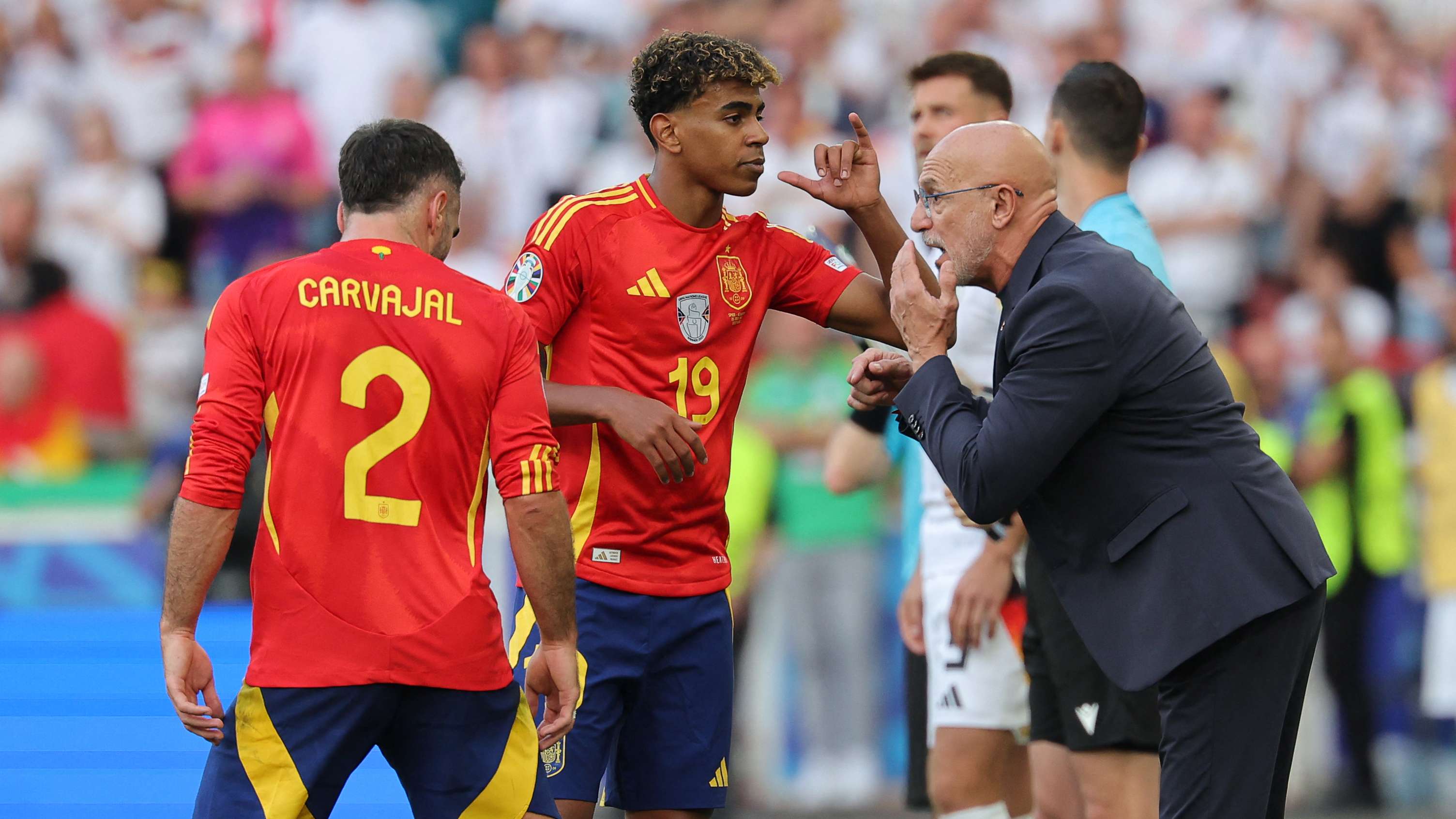
Spain’s head coach, Luis de la Fuente, has stepped in to address concerns surrounding the strained relationship between two of the country’s star players, Lamine Yamal from Barcelona and Dani Carvajal from Real Madrid. The two players were recently involved in a heated confrontation following a tense El Clasico match in October at the Santiago Bernabeu.
The clash between the Barcelona wonderkid and the Real Madrid captain raised eyebrows among fans and media alike, sparking fears of a potential rift within the national team. However, Coach de la Fuente has moved quickly to dispel any doubts about the harmony within the squad as they gear up for upcoming fixtures.
Putting Club Rivalries Aside for International Duty
Despite the fierce domestic rivalry between Barcelona and Real Madrid, Coach de la Fuente emphasized the importance of unity and camaraderie when representing the Spanish national team. He stressed that international duty transcends club rivalries and that all players must come together for the greater good of La Roja.
De la Fuente’s swift intervention in addressing the issue demonstrates his commitment to maintaining a harmonious and cohesive team environment, essential for success on the international stage. With crucial matches on the horizon, including World Cup qualifiers and friendly fixtures, the coach’s focus is on ensuring that the players are fully united and focused on achieving their collective goals.
Building Strong Bonds Off the Field
In addition to addressing the immediate concerns surrounding Yamal and Carvajal’s altercation, Coach de la Fuente has emphasized the importance of building strong relationships off the field. He believes that fostering a sense of camaraderie and mutual respect among players is key to creating a winning team dynamic.
By organizing team-building activities, bonding sessions, and open communication channels, the coach is working to strengthen the bonds among the players and cultivate a positive team spirit. These efforts not only help to resolve any lingering tensions but also create a supportive and inclusive environment where players can thrive and perform at their best.
Looking Ahead to a Bright Future
As Spain prepares for a busy schedule of international fixtures, including high-stakes matches against top opponents, Coach de la Fuente remains optimistic about the team’s prospects. With a talented squad of players and a strong sense of unity, he believes that La Roja has what it takes to achieve success on the global stage.
By addressing and resolving any potential conflicts early on, Coach de la Fuente is laying the foundation for a harmonious and competitive team that is ready to take on any challenge. As the players come together to represent their country, they do so with a shared sense of purpose and determination to make their mark in the world of football.
With the coach’s guidance and the players’ commitment to putting aside club rivalries in favor of national pride, Spain’s national team is poised for a bright and successful future.
Effect of Club Rivalries on National Team Performance
The relationship between Barcelona and Real Madrid players has long been a topic of discussion in Spanish football. The intense rivalry between the two clubs often spills over onto the international stage, with players carrying the weight of their club allegiances when they come together to represent their country. This can lead to tensions, misunderstandings, and even conflicts among teammates, as seen in the recent incident between Yamal and Carvajal.
While the passion and competitiveness that characterize the Barcelona-Real Madrid rivalry can be a driving force for success at the club level, it can also present challenges when players from these clubs are brought together to play for the national team. Managing egos, overcoming differences in playing styles, and fostering team chemistry become crucial tasks for the coach in order to ensure a cohesive and harmonious unit on the field.
The Role of Leadership in Resolving Conflicts
Coach de la Fuente’s proactive approach to addressing the conflict between Yamal and Carvajal highlights the importance of strong leadership in managing interpersonal relationships within the team. By stepping in early to address the issue, he sets the tone for open communication, mutual respect, and conflict resolution among the players.
Effective leadership not only helps to prevent conflicts from escalating but also creates a culture of accountability and teamwork within the squad. Players look to their coach for guidance, support, and direction, and when leadership is strong, it sets the stage for a successful and cohesive team environment.
The Impact of Team Dynamics on Performance
The success of a national team often hinges on the strength of its team dynamics. When players trust and respect each other, when they communicate openly and work towards a common goal, the team is better positioned to excel on the field. Building strong bonds off the field, as Coach de la Fuente has emphasized, is key to fostering a positive team dynamic that translates into improved performance.
Team chemistry, cohesion, and unity are intangible factors that can make a significant difference in high-pressure situations, such as World Cup qualifiers and international tournaments. Players who are united, focused, and committed to each other are more likely to overcome adversity, adapt to challenges, and ultimately achieve success as a collective unit.
Conclusion
In conclusion, the resolution of conflicts, the cultivation of strong team bonds, and the guidance of effective leadership are crucial elements in ensuring the success of a national football team. By addressing the fractured relationship between Barcelona and Real Madrid players, Coach de la Fuente is not only laying the groundwork for a harmonious and competitive squad but also setting the stage for a bright and successful future for Spain’s national team.
As the players come together to represent their country on the global stage, they do so with a renewed sense of unity, purpose, and determination to make their mark in the world of football. With the coach’s guidance and the players’ commitment to putting aside club rivalries in favor of national pride, Spain’s national team is well-positioned to achieve greatness and write a new chapter in the country’s footballing history.