
Norway Triumphs Over Denmark in a Thrilling UEFA Nations League Clash: A Deep Dive into the Match and Its Implications for Football Prediction
In a captivating opening fixture of the UEFA Nations League, Norway secured a dramatic 3-2 victory over Denmark, showcasing tactical prowess, individual brilliance, and relentless determination. This match not only provided football fans with an exciting spectacle but also offered valuable insights into team form, player performance, and potential predictions for upcoming fixtures. Let’s explore the detailed narrative of this thrilling encounter and analyze what it might mean for future football predictions.
Early Dominance and Strategic Pressing Set the Tone
From the outset, Norway demonstrated a well-organized and aggressive approach, emphasizing high pressing and quick ball recovery. Their intent was clear: to assert dominance early and keep Denmark on the back foot. The Norwegian side’s pressing game paid dividends when they regained possession near the Danish penalty area, leading to the opening goal. It was a textbook example of how strategic pressing can unlock defenses and set the stage for an engaging match.
In the 14th minute, Norway’s relentless pressure resulted in a fortunate rebound that fell kindly to midfielder Martin Odegaard. Recognized as one of Europe’s most creative playmakers, Odegaard quickly spotted Oscar Bobb making an intelligent run into space. The young winger’s precise pass set up Erling Haaland for an easy finish, giving Norway an early lead and setting the tone for the game. This goal highlighted Norway’s tactical discipline and their ability to capitalize on opposition mistakes—an essential factor in football prediction models that favor teams with high pressing and clinical finishing.
Haaland’s Early Impact and Norway’s Offensive Prowess
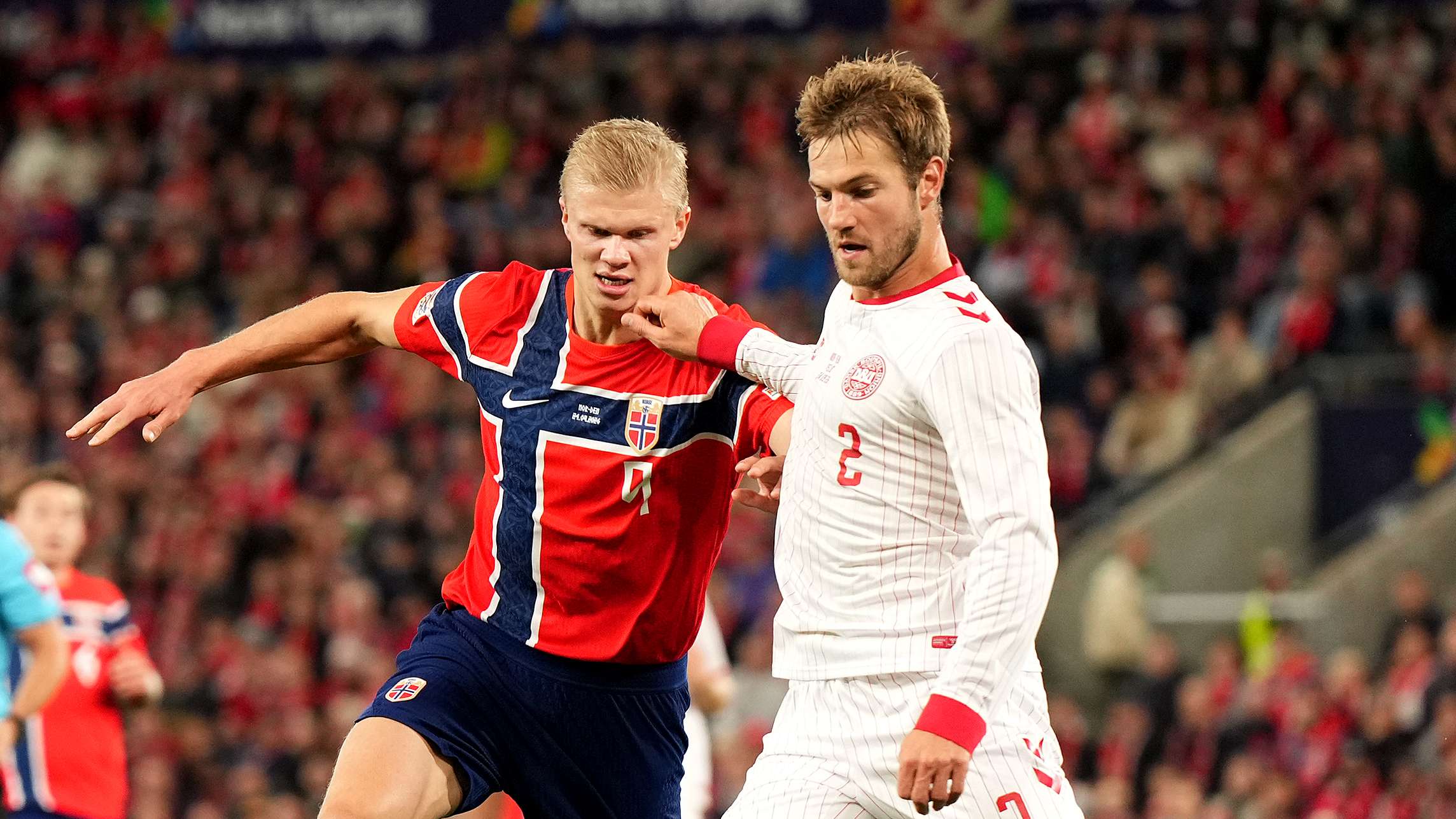
Just four minutes after their opener, Norway’s star striker Erling Haaland announced his presence on the international stage with a stunning goal. Receiving a long ball from Nusa, Haaland showcased his speed and composure as he breezed past Danish defender Rasmus Kristensen. With his trademark precision, Haaland slid the ball past the goalkeeper, doubling Norway’s lead in the 18th minute. This goal exemplified Haaland’s reputation as a prolific scorer and a game-changer — factors that significantly influence football predictions, especially when analyzing the likelihood of a team’s offensive success.
Denmark Responds: The Power of Resilience and Set Pieces
The Danes refused to fold under Norway’s early pressure. In the 25th minute, Mikkel Damsgaard demonstrated his set-piece expertise by curling a free-kick into the top corner, reducing Norway’s lead and reigniting the contest. This goal underscored Denmark’s resilience and their ability to exploit dead-ball situations, a crucial aspect often considered in football prediction models that assess match outcomes based on set-piece proficiency.
Second Half: A Shift in Momentum and Tactical Adjustments
After halftime, the game’s tempo intensified as Denmark surged forward, seeking an equalizer. Their efforts paid off shortly after the restart when Rasmus Hojlund pounced on a rebound from a corner kick, slotting the ball past the Norwegian goalkeeper to make it 2-2. Hojlund’s goal was a testament to Denmark’s persistent attacking approach and their capacity to capitalize on set-piece opportunities, reinforcing the importance of offensive set-piece effectiveness in football prediction strategies.
Norway responded by introducing key substitutes, including veteran midfielder Bård Skjelbred, whose experience and vision helped stabilize the Norwegian midfield. However, the moment of the match arrived when Haaland once again demonstrated his exceptional instincts. Inside the penalty area, after a short corner, he drilled a precise shot into the top corner, restoring Norway’s lead and ultimately sealing the victory. Haaland’s decisive goal not only earned Norway three points but also highlighted his importance as a predictive factor in matches involving Norway.
Key Moments, Missed Opportunities, and the Role of Substitutes
As the game progressed, both teams created chances, with Norway almost extending their lead through a clever run by Nusa, who narrowly missed connecting with a cross aimed at the top corner. The match’s intensity was palpable, with tactical substitutions playing a pivotal role in shaping the final outcome.
In the closing moments of stoppage time, Norway’s David Wolfe received a red card for a tactical foul that halted a Danish counter-attack. While the dismissal had little impact on the final result, it added an extra layer of drama and demonstrated the importance of discipline and tactical fouling—elements often analyzed in football prediction models to understand how teams manage late-game pressures and disciplinary risks.
Implications for Football Prediction and Future Fixtures
This match exemplifies several critical factors that influence football predictions, particularly in the context of international competitions like the UEFA Nations League. Norway’s organized pressing game, Haaland’s clinical finishing, and Denmark’s resilience through set pieces all contribute to shaping future forecasts.
For football enthusiasts and analysts, the encounter offers valuable insights:
- Team form and tactical setup: Norway’s quick transition from pressing to attack proved effective, suggesting their ability to control matches and create scoring opportunities.
- Key players’ influence: Haaland’s performance underscores the importance of star strikers in predicting match outcomes, especially when assessing the likelihood of goals and decisive moments.
- Set-piece proficiency: Denmark’s goals from free-kicks and corners highlight the importance of set-piece strategies in modern football predictions.
- Discipline and game management: The red card in stoppage time emphasizes the need to consider team discipline and tactical fouling in comprehensive prediction models.
Looking Ahead: What Does This Mean for Upcoming Football Predictions?
As both teams prepare for their next fixtures, analysts will be closely monitoring their tactical adjustments and player performances. Norway’s victory signals their potential as a formidable contender in the UEFA Nations League, especially if Haaland maintains his scoring streak. Conversely, Denmark’s resilience and set-piece threat suggest they remain competitive and dangerous in future matches.
For football fans and bettors interested in prediction accuracy, this game reinforces the significance of analyzing team strategies, individual talents, and recent form. Incorporating these factors into predictive algorithms can improve forecast reliability, making matches more engaging and the betting experience more informed.
Conclusion: A Memorable Start with Long-Term Implications
The Norway vs. Denmark clash was a testament to the unpredictable and thrilling nature of international football. It showcased how tactical intelligence, star power, and resilience can influence outcomes and shape predictions. As the UEFA Nations League progresses, such matches will continue to serve as valuable case studies for football prediction enthusiasts, offering insights into team dynamics, strategic adjustments, and the pivotal role of individual brilliance like that of Erling Haaland.
Stay tuned for further updates, analysis, and predictions as these teams and others continue their quest for glory in this competitive tournament. Whether you’re a football fanatic, a bettor, or a casual observer, understanding the nuances of such matches enhances the enjoyment and accuracy of football prediction models.