
Mourinho Delivers Sharp Rebuke as Real Madrid and La Liga Chief Clash
Jose Mourinho has added a pointed new line to the growing dispute between Real Madrid and La Liga president Javier Tebas, suggesting that only a medical explanation could excuse some of the league chief’s behaviour. The Portuguese coach declined to discuss the row in detail, but his brief response was enough to underline how tense relations have become across Spanish football.
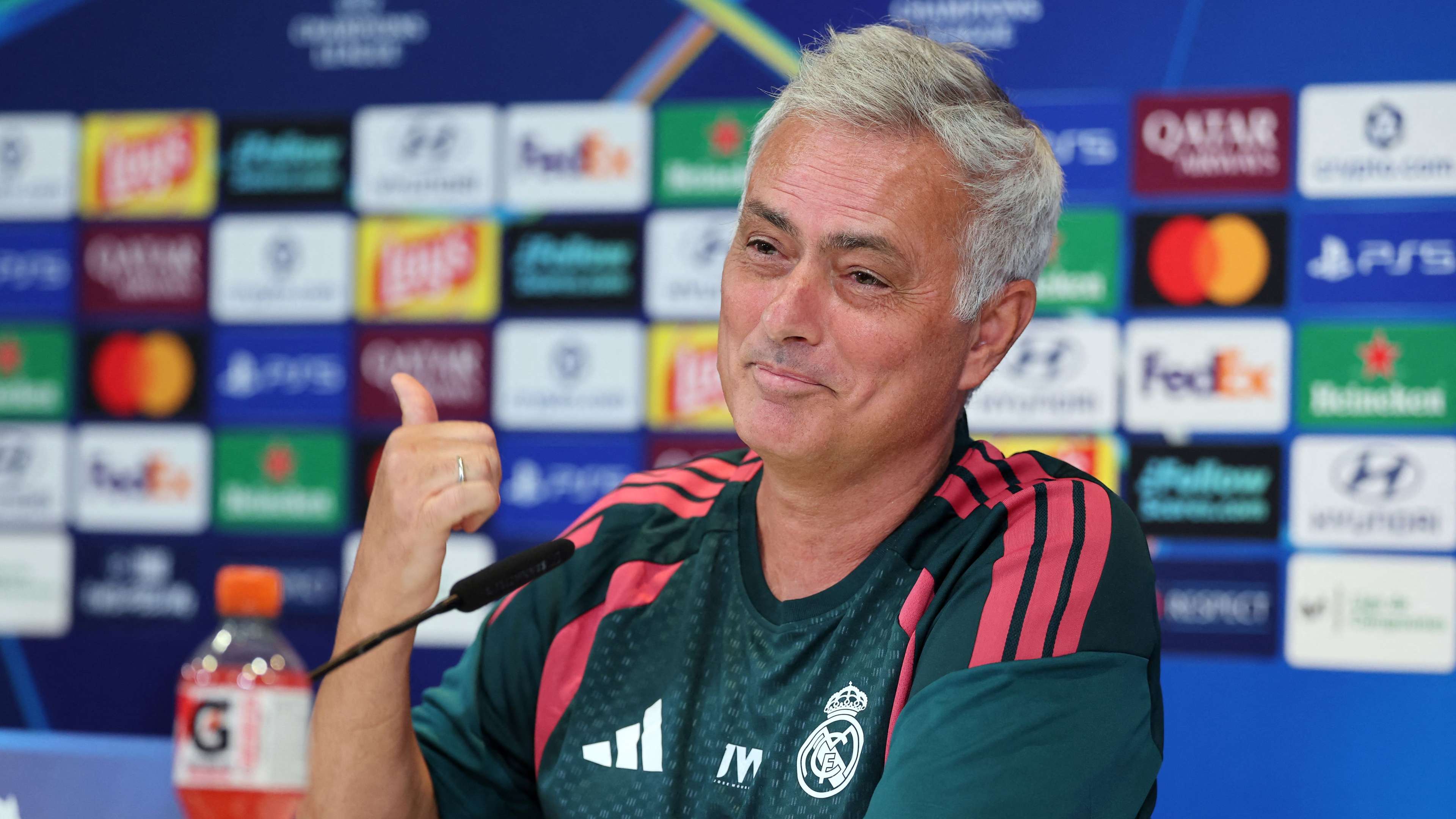
Speaking to Spanish newspaper AS before his team’s scheduled visit to Sevilla, Mourinho was asked what he thought of Tebas. Rather than offer a lengthy assessment, he replied: “I don’t want to talk about this matter, because there are limits and limits. Excuses can only be offered if the case is clinically medical, otherwise there are no excuses. I don’t want to get into this subject.”
The remark was sarcastic and deliberately restrained in length, yet it landed as a direct criticism. Mourinho has long been known for using concise, provocative comments to make his position clear, and this latest intervention brings another high-profile voice into a dispute that has increasingly played out in public.
Mourinho urges Spanish football to keep the dispute at home
While Mourinho offered no detailed prediction about how the disagreement might end, he did comment on its wider consequences. He said Real Madrid supporters understand the challenges facing their club, but argued that the conflict should remain within Spain rather than damage the league’s reputation overseas.
“Real Madrid’s fans are aware of what they are facing,” he said. “And given the standing that the Spanish league enjoys abroad, and that we are the current world champions, it is better that we try to keep these matters here and that they do not go outside.”
His appeal reflects a concern shared by many observers: disputes between a major club and the organisation governing its domestic competition can quickly become international news. La Liga competes for attention with other leading football leagues, and sustained public conflict may distract from the quality of its teams, players and matches.
The timing is also notable. Mourinho’s comments came ahead of a demanding fixture against Sevilla, a match that places the focus back on the pitch even as the argument between Madrid and Tebas continues to dominate headlines. For coaches and players, maintaining concentration during a heated institutional dispute can be a challenge in its own right.
How the Real Madrid–Tebas dispute escalated
The latest flare-up followed a day of increasingly forceful exchanges. Tebas criticised the output of Real Madrid’s television channel, accusing it of presenting the club as a victim, repeatedly revisiting grievances and selecting incidents to support a particular narrative.
To describe what he saw as the channel’s communication strategy, Tebas compared its methods to those associated with Joseph Goebbels, the propaganda minister in Nazi Germany. The comparison immediately drew a strong response because it invoked one of the most disturbing periods in modern history.
Tebas later clarified his position on social media, saying his reference was to propaganda techniques rather than Nazi ideology or Real Madrid supporters. He described those techniques as including repetition, the portrayal of critics as enemies and the manipulation of facts to reinforce a chosen account.
That clarification did little to calm the situation. Real Madrid’s board demanded that Tebas resign as La Liga president and as a vice-president of the Royal Spanish Football Federation. The club called his comments unacceptable and described him as “a real plague on Spanish football.”
Madrid argued that comparing the club’s media operation with Nazi propaganda mechanisms was deeply offensive. It also maintained that Tebas’s attempt to distinguish between the methods he criticised and the ideology associated with them did not remove the seriousness of the original comparison.
Tebas questions consistency over freedom of expression
Tebas responded by pointing to previous comments from Real Madrid president Florentino Perez. Perez had said: “I could have won 14 league titles, but the rest were taken from me.” Some referees subsequently lodged a complaint over those remarks.
By raising Perez’s statement, Tebas challenged what he sees as inconsistent standards. He questioned why comments suggesting that league titles had been taken away could be treated as freedom of expression, while his own criticism of the club’s media coverage prompted demands for his resignation and potential official consequences.
His central argument is that the same rules should apply regardless of who is speaking. “Freedom of expression should not depend on the name of the person speaking,” he said, calling for standards to be applied independently and consistently.
The debate now extends beyond the wording of any single statement. It raises broader questions about the limits of public criticism in football, the responsibilities of club-owned media and the authority of league officials. Clubs have the right to challenge decisions and defend their reputations, while governing bodies also face scrutiny over how they communicate and exercise power.
Why the row matters beyond the two sides
Real Madrid and La Liga are both influential institutions, so their conflict carries implications for Spanish football as a whole. A prolonged breakdown in relations could make cooperation harder on issues such as competition planning, disciplinary processes, broadcasting and the league’s international image.
It also highlights the growing role of club media in modern football. Official channels can provide supporters with direct access to their teams, but they can also become powerful tools for shaping public opinion. When clubs and league leaders accuse one another of distorting events, fans are left to assess competing versions of the same story.
For supporters, the immediate question may be whether the argument will affect the football itself. At present, the dispute is playing out through statements, interviews and social media rather than on the field. But the longer it continues, the more difficult it may become to separate sporting competition from institutional politics.
Mourinho’s intervention did not offer a solution, and his refusal to elaborate leaves his precise view open to interpretation. Still, his warning about keeping the conflict within Spain points to the reputational stakes. With attention turning back to upcoming fixtures, including the meeting with Sevilla, both sides face pressure to prevent the dispute from overshadowing the game.
For now, there is no clear prediction about when the stand-off will ease. The next steps will depend on whether Madrid and Tebas choose to continue trading public accusations or move towards a more private resolution. Until then, the clash remains one of the most prominent stories in Spanish football, with the league’s credibility and the boundaries of free expression at its centre.