
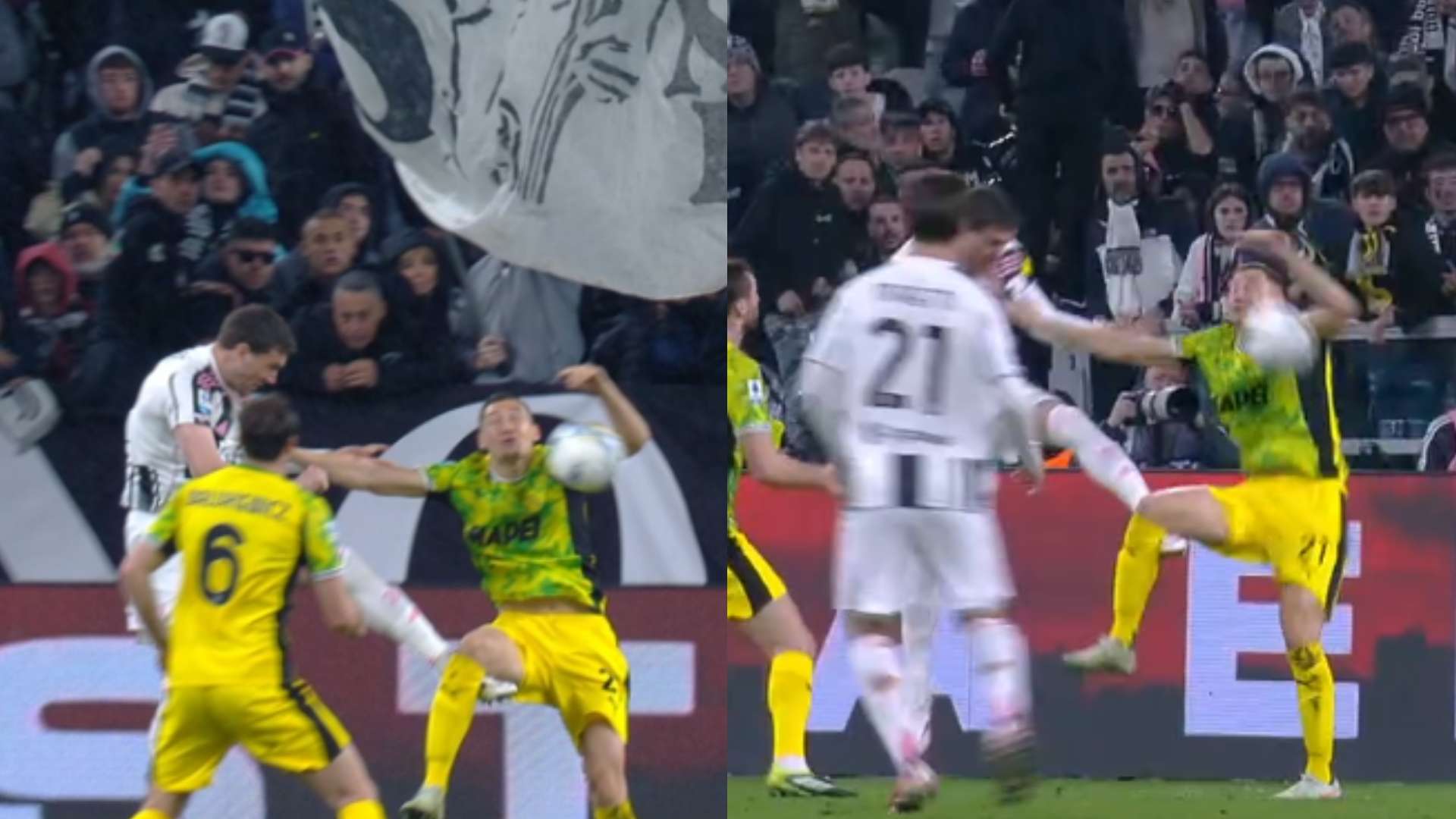

Open VAR Analysis of Idzes’ Handball and Penalty Decision in Juventus Match
During the latest ‘Open VAR’ segment at the VAR centre in Lissone, Mauro Tonolini from the National Referees’ Committee (CAN) assessed the controversial incidents of Matchday 30 in Serie A. One of the main incidents under scrutiny was the penalty awarded to Juventus in their match against Sassuolo.
Penalty Incident: Idzes’ Handball
The penalty decision came in the match officiated by Marchetti, with Abisso and Camplone on VAR duty. The incident occurred when Idzes was involved in an aerial challenge with Vlahovic, who had just been substituted onto the field. The VAR analysis focused on whether Idzes’ handball inside the penalty area warranted the penalty kick awarded to Juventus.
The panel at the VAR centre dissected the footage to determine the sequence of events leading to the handball. The decision-making process was scrutinized, with Tonolini providing insights into the referee’s interpretation of the incident. The analysis aimed to provide clarity on the application of VAR technology in such contentious situations on the field.
Challenges and Controversies
The ‘Open VAR’ segment highlighted the challenges faced by referees in interpreting and implementing VAR decisions effectively. The incident involving Idzes’ handball sparked debates among fans, analysts, and football experts regarding the consistency and accuracy of VAR interventions in crucial moments of the game.
The discussion around the penalty decision in the Juventus-Sassuolo match underscored the importance of clear and transparent communication between the on-field officials and the VAR team. The analysis sought to shed light on the complexities of VAR use in football and the need for continuous improvement in its application.
Implications for Future Matches
The outcome of the ‘Open VAR’ analysis has implications for future matches in Serie A and beyond. The examination of the Idzes handball incident serves as a learning opportunity for referees, players, and fans to understand the nuances of VAR review processes and decision-making protocols.
As football continues to evolve with technological advancements, the role of VAR in shaping the outcome of matches becomes increasingly significant. The ‘Open VAR’ segment is a platform for stakeholders to engage in constructive dialogue and enhance the overall understanding of refereeing decisions in the modern game.
Conclusion
The ‘Open VAR’ analysis of Idzes’ handball and the penalty awarded to Juventus provides valuable insights into the intricate nature of VAR interventions in football. The scrutiny of such incidents contributes to the ongoing discourse on the impact of technology on the sport and the quest for fair and unbiased officiating.
As the Serie A season progresses, the lessons learned from VAR assessments will influence future refereeing practices and decision-making frameworks. The evolution of VAR in football remains a focal point of discussion and debate, as stakeholders strive to strike a balance between technological assistance and maintaining the essence of the beautiful game.
Analysis of VAR Decisions in Football Prediction
VAR has become a crucial element in modern football, impacting not only the outcome of matches but also the way fans and analysts predict game results. The use of technology in refereeing decisions has added a layer of complexity to the game, influencing the accuracy of predictions and betting strategies.
When assessing football matches for prediction purposes, analysts and punters often take into account the potential impact of VAR interventions on key moments of the game. The scrutiny of incidents like Idzes’ handball and the subsequent penalty decision in the Juventus match can shape the predictions made by experts and enthusiasts alike.
VAR and Predictive Models
With the introduction of VAR, predictive models in football have had to adapt to account for the variability introduced by technology. Factors such as the frequency of VAR interventions, the consistency of decision-making, and the influence of VAR on match dynamics have become essential considerations in developing accurate prediction algorithms.
Analyzing VAR decisions and their implications for match outcomes can provide valuable data points for predictive modeling. Understanding how referees interpret and apply VAR technology in different situations can enhance the predictive capabilities of algorithms used in football forecasting.
Enhancing Prediction Accuracy
By incorporating insights from VAR analyses like the ‘Open VAR’ segment on Idzes’ handball incident, football prediction models can become more refined and precise. The ability to anticipate the impact of VAR on match results can give analysts and punters a competitive edge in predicting game outcomes.
Furthermore, a deeper understanding of the nuances of VAR decisions can help in identifying patterns and trends that may influence future matches. The transparency provided by platforms like ‘Open VAR’ enables stakeholders to delve into the intricacies of refereeing decisions and their implications for predictive analytics.
Striking a Balance
As VAR continues to shape the landscape of football prediction, finding the right balance between technological insights and traditional analysis methods is crucial. While VAR enhances the accuracy and fairness of refereeing decisions, its impact on predictive models requires a nuanced approach to forecasting match results.
Stakeholders in the football prediction industry must adapt to the evolving role of VAR in the sport, leveraging its insights while also considering its limitations and challenges. By integrating VAR analyses into predictive frameworks, analysts can enhance the reliability of their predictions and stay ahead of the curve in the rapidly evolving world of football forecasting.
Conclusion
The intersection of VAR analysis and football prediction presents a unique opportunity for stakeholders to enhance their understanding of the sport and improve the accuracy of match forecasts. By leveraging insights from VAR assessments like the ‘Open VAR’ segment, analysts and punters can gain a deeper insight into the intricacies of refereeing decisions and their implications for game outcomes.
As the relationship between VAR and football prediction continues to evolve, it is essential for stakeholders to embrace technological advancements while maintaining a critical perspective on the impact of VAR on match dynamics and predictive modeling. By striking a balance between innovation and tradition, the football prediction industry can navigate the complexities of VAR interventions and optimize its predictive capabilities for the benefit of all involved.