
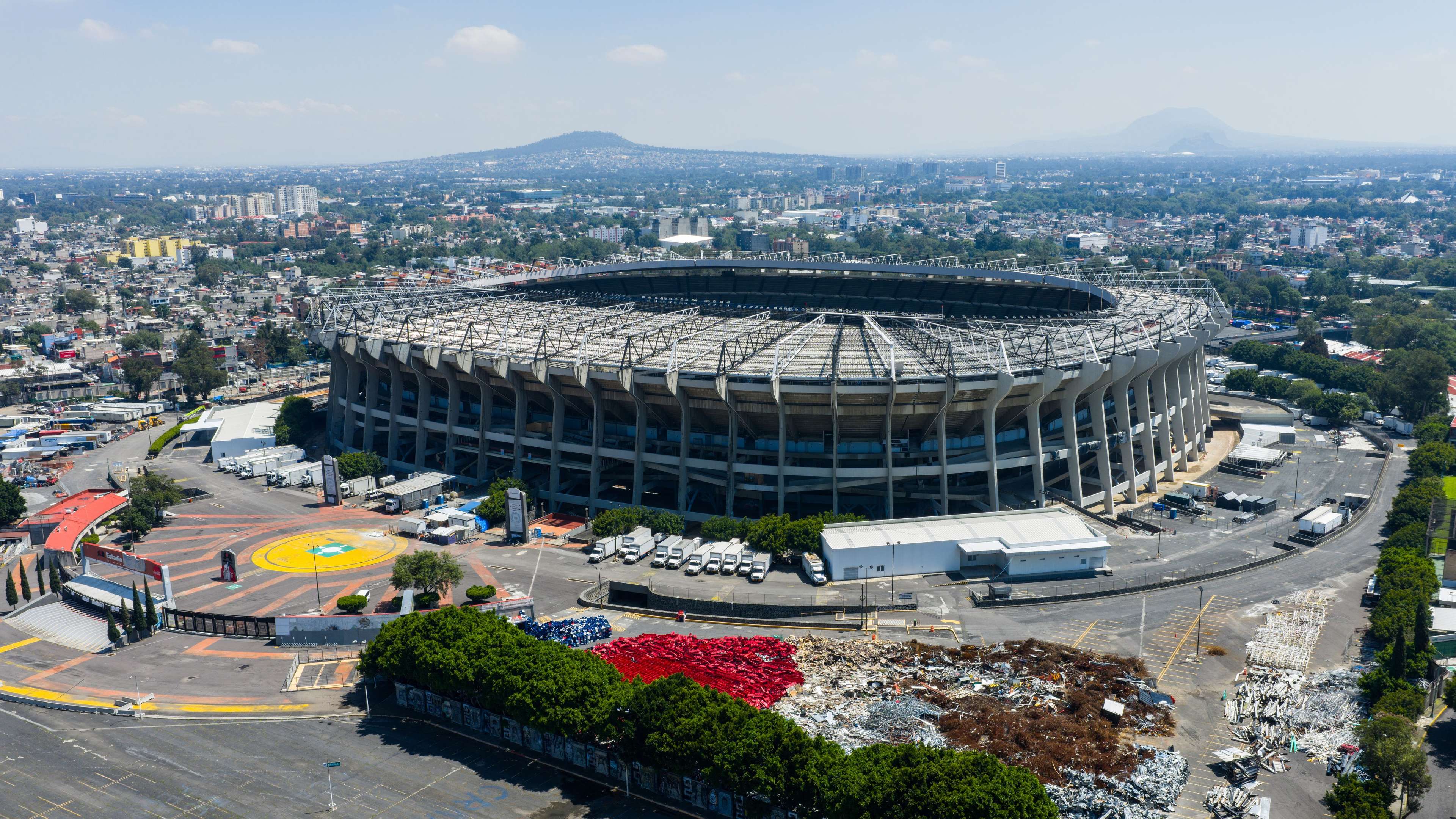

Mexico City’s Iconic Estadio Azteca Faces Renovation Delays
As the countdown to the highly anticipated friendly match between Mexico and Portugal on March 28 continues, concerns are rising over renovation delays at the historic Estadio Azteca in Mexico City, now known as Estadio Banorte. Portuguese media outlets have reported on the growing unease surrounding the stadium’s readiness for the upcoming event.
Uncertainty Surrounding Venue’s Completion
Despite assurances from organizers that the stadium will be prepared to host the match, speculation has emerged regarding the possibility of relocating the game to an alternate venue. The uncertainty has also raised questions about the stadium’s ability to host future World Cup fixtures.
Estadio Azteca, originally built in 1966, has long been regarded as one of Mexico’s most iconic sports venues, with a rich history of hosting major international football events. The stadium’s recent renovation efforts, including the change of name to Estadio Banorte, were intended to modernize the facility and enhance the overall fan experience.
Impact on Football Fans and Players
The potential relocation of the Mexico-Portugal match could have significant implications for both fans and players. Football enthusiasts who have been eagerly anticipating the event may face disappointment if the venue change disrupts their plans to attend the match.
For the players, competing in a different stadium than originally planned could impact their performance and familiarity with the surroundings. The uncertainty surrounding the venue may create additional challenges for teams as they prepare for the match.
Organizers’ Reassurances and Contingency Plans
Despite the concerns surrounding Estadio Banorte’s renovation delays, organizers have reiterated their commitment to ensuring that the stadium will be ready for the Mexico-Portugal friendly. Contingency plans are reportedly being put in place to address any potential issues that may arise leading up to the event.
While the possibility of a venue change remains uncertain, officials are working diligently to resolve any obstacles and provide football fans with a memorable and seamless experience on match day. The ultimate goal is to showcase Estadio Banorte as a modern, world-class facility capable of hosting international football events.
Looking Ahead to the Future of Estadio Banorte
As renovation efforts at Estadio Banorte continue, the stadium’s future as a host venue for major football competitions remains a topic of interest and speculation. With the upcoming Mexico-Portugal match serving as a test of the stadium’s readiness, the outcome of the event could influence decisions regarding its suitability for future World Cup fixtures.
Football fans around the world will be eagerly following developments leading up to the friendly match, hoping for a successful completion of renovations at Estadio Banorte and a thrilling showcase of talent on the pitch. Stay tuned for updates as the countdown to the Mexico-Portugal match continues.
Challenges in Renovating Historic Stadiums
Renovating historic stadiums like Estadio Banorte comes with its own set of challenges. Balancing the need to modernize facilities while preserving the stadium’s rich history and cultural significance can be a delicate task. In the case of Estadio Azteca, the stadium’s iconic status as the venue for two FIFA World Cup finals adds an additional layer of complexity to the renovation process.
Preserving the architectural integrity of the stadium while upgrading amenities and infrastructure to meet contemporary standards requires careful planning and execution. Delays in renovation projects are not uncommon, as unforeseen issues and logistical hurdles can arise during the construction process. In the case of Estadio Banorte, the pressure to meet deadlines for upcoming events like the Mexico-Portugal match adds to the urgency of completing the renovations.
Importance of Predicting Stadium Readiness
For organizers and event planners, accurately predicting the readiness of a stadium for upcoming matches is crucial. Uncertainty surrounding a venue’s completion can have ripple effects on scheduling, ticket sales, and overall fan experience. In the case of the Mexico-Portugal friendly, the potential need to relocate the match due to renovation delays underscores the importance of contingency planning and clear communication with stakeholders.
Advanced technologies, such as predictive analytics and project management software, can help assess the progress of renovation projects and identify potential bottlenecks that may impact a stadium’s readiness for events. By leveraging data-driven insights, organizers can make informed decisions and mitigate the risks associated with venue renovations.
The Future of Stadium Infrastructure
As the sports industry continues to evolve, the demand for modern, state-of-the-art stadium facilities is on the rise. Beyond aesthetic enhancements, stadiums are increasingly being designed to prioritize sustainability, accessibility, and fan engagement. From eco-friendly construction materials to digital ticketing systems and immersive fan experiences, the future of stadium infrastructure is centered around creating memorable moments for spectators.
In the case of Estadio Banorte, the ongoing renovations present an opportunity to transform the stadium into a cutting-edge sports venue that meets the needs of both fans and athletes. By incorporating innovative design elements and technology-driven solutions, Estadio Banorte could set a new standard for stadium infrastructure in Mexico and beyond.
Embracing Change and Adaptation
While renovation delays and venue uncertainties may pose challenges in the short term, they also provide an opportunity for stakeholders to showcase their flexibility and resilience in the face of adversity. Adapting to unexpected circumstances, whether by relocating a match or implementing last-minute adjustments, demonstrates the industry’s ability to navigate obstacles and deliver exceptional experiences for fans.
As Estadio Banorte navigates its renovation journey and prepares to host the Mexico-Portugal friendly, the spotlight is on the stadium’s transformation and its potential to shape the future of sports infrastructure in Mexico City. By addressing renovation delays head-on and embracing change with a spirit of innovation, the organizers of the upcoming match have an opportunity to leave a lasting legacy for football fans and athletes alike.
By exploring the challenges, opportunities, and future prospects associated with renovating historic stadiums like Estadio Banorte, this expanded content provides a comprehensive view of the factors influencing the stadium’s transformation and its impact on the sports industry.