
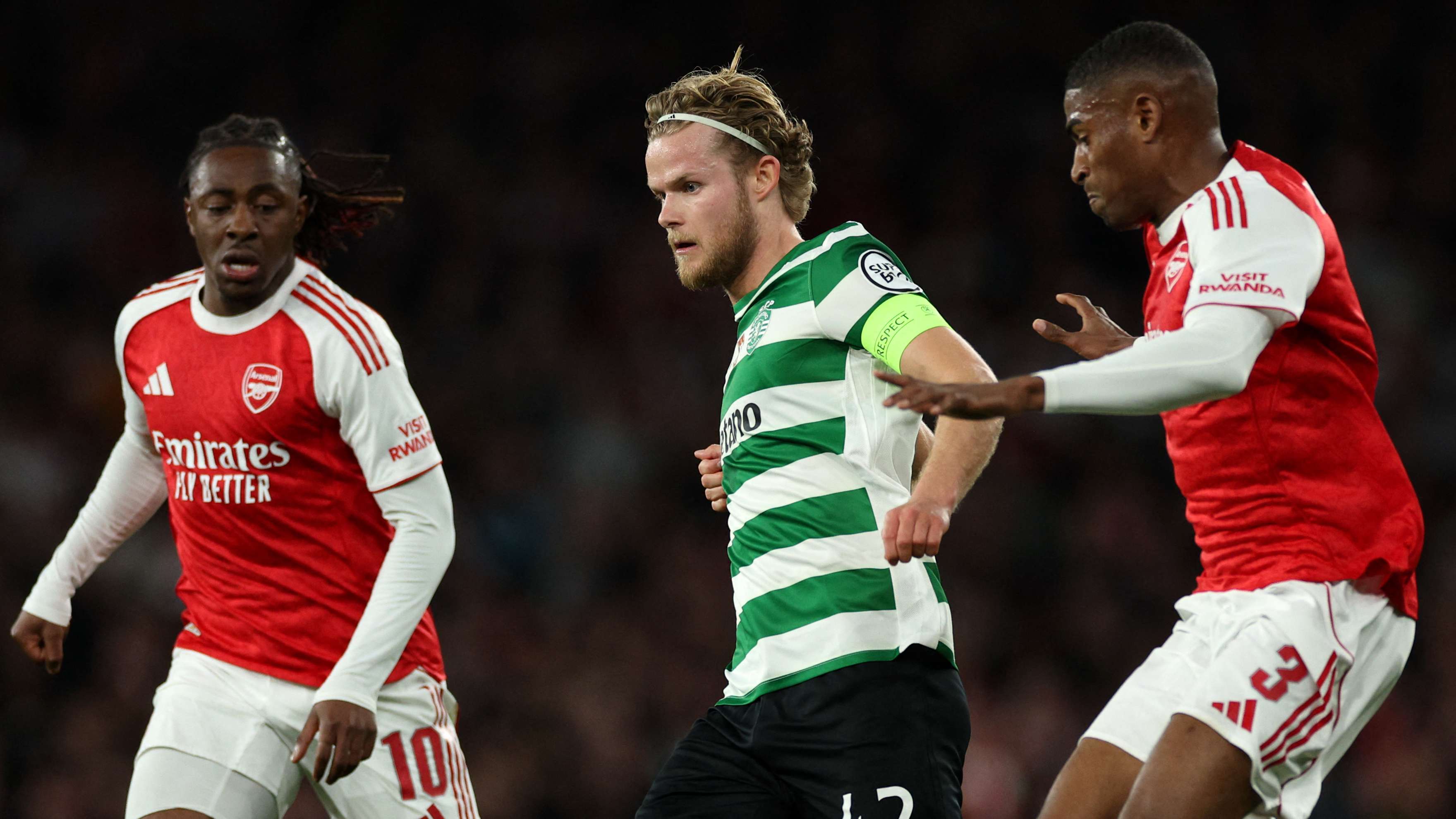

Sporting CP Captain Criticizes Arsenal’s Tactical Approach
Sporting CP captain Morten Hjulmand did not hold back in his criticism of Arsenal’s tactical approach following his team’s Champions League quarter-final exit at the Emirates Stadium. The Danish midfielder expressed his frustration with the lack of rhythm in the contest, suggesting that the Gunners’ repetitive set-piece delays resulted in a boring spectacle.
Disappointing End to Champions League Campaign
The match between Sporting CP and Arsenal was highly anticipated, with both teams aiming to secure a spot in the semi-finals of the prestigious Champions League. However, Sporting CP’s hopes were dashed as they were unable to overcome Arsenal’s tactical prowess on the night.
Despite putting up a valiant effort, Sporting CP ultimately fell short, with Hjulmand’s comments shedding light on the tactical battle that took place on the pitch. The captain’s frustration with Arsenal’s approach reflects the intense competition that unfolded during the match.
Critique of Arsenal’s Playing Style
Hjulmand’s pointed dig at Arsenal’s tactical approach highlights the importance of strategy in football. The Danish midfielder’s comments suggest that he was unimpressed with the Gunners’ reliance on set-piece delays, which he believed disrupted the flow of the game.
By calling attention to Arsenal’s repetitive tactics, Hjulmand signaled his dissatisfaction with the lack of creativity and spontaneity in their gameplay. This critique speaks to the competitive nature of elite football, where teams are constantly looking for ways to outsmart their opponents.
Impact on Sporting CP’s Performance
For Sporting CP, the Champions League quarter-final exit represents a missed opportunity to showcase their skills on the European stage. Hjulmand’s frustration with Arsenal’s tactical approach reflects the disappointment felt by the entire team as they fell short of their goal.
Despite the loss, Sporting CP can take pride in their journey to the quarter-finals and use this experience to fuel their future success. The captain’s critique of Arsenal’s playing style serves as a reminder of the tactical challenges that teams face in high-stakes matches.
Looking Ahead
As Sporting CP regroups and sets their sights on future competitions, Hjulmand’s comments will likely spark discussions within the football community about the importance of tactical innovation and adaptability. The captain’s critique of Arsenal’s approach serves as a valuable lesson for teams looking to succeed at the highest level of the sport.
Overall, Sporting CP’s Champions League campaign may have ended in disappointment, but the team can take pride in their efforts and use this experience to grow and improve for future challenges. Hjulmand’s critique of Arsenal’s tactical approach will undoubtedly be remembered as a key moment in the team’s journey through the competition.
Impact of Hjulmand’s Criticism
Hjulmand’s criticism of Arsenal’s tactical approach not only sheds light on the specific dynamics of the match but also underscores the broader conversation around strategic nuances in football. In a sport where tactics play a crucial role in determining outcomes, his comments serve as a reminder of the meticulous planning and execution required at the highest level of competition.
Furthermore, Hjulmand’s bold critique demonstrates the willingness of players to openly discuss and analyze tactical decisions, highlighting the level of scrutiny that top teams face in every match. This transparency can offer fans and analysts a glimpse into the intricacies of the game beyond what is visible on the surface.
Strategic Evolution in Football
The debate sparked by Hjulmand’s comments also speaks to the constant evolution of tactics in football. As teams strive to gain a competitive edge, they must continuously innovate and adapt their strategies to stay ahead of the curve. Arsenal’s reliance on set-piece delays may have been effective in this particular match, but it could also prompt them to reassess their approach in future games.
In a sport where trends and styles of play evolve rapidly, Hjulmand’s critique serves as a reminder that strategic flexibility and creativity are key components of success. Teams that can anticipate and counter their opponents’ tactics effectively are more likely to achieve consistent results in the long run.
Implications for Arsenal and Sporting CP
For Arsenal, Hjulmand’s critique presents an opportunity for reflection and refinement of their tactical approach. The feedback from an opposing captain can offer valuable insights into areas where the team can improve and adjust their strategies for future matches. This feedback loop is essential for teams looking to maintain a competitive edge in the fast-paced world of football.
On the other hand, Sporting CP can use this experience as a learning opportunity to enhance their tactical awareness and adaptability. The captain’s critique of Arsenal’s playing style can inspire the team to explore new tactics and approaches that can help them overcome similar challenges in the future. This growth mindset is essential for teams seeking sustained success in elite competitions.
Conclusion
In conclusion, Morten Hjulmand’s criticism of Arsenal’s tactical approach in the Champions League quarter-final adds a layer of depth to the narrative of the match and underscores the strategic intricacies of football. His comments not only highlight the importance of tactics in determining outcomes but also spark discussions around innovation, adaptability, and strategic evolution in the sport.
As both Arsenal and Sporting CP reflect on this match and prepare for future challenges, Hjulmand’s critique will likely serve as a valuable reference point for strategic decision-making and tactical adjustments. In the ever-evolving landscape of football, the ability to analyze, learn, and adapt to changing circumstances is what separates the best teams from the rest.