
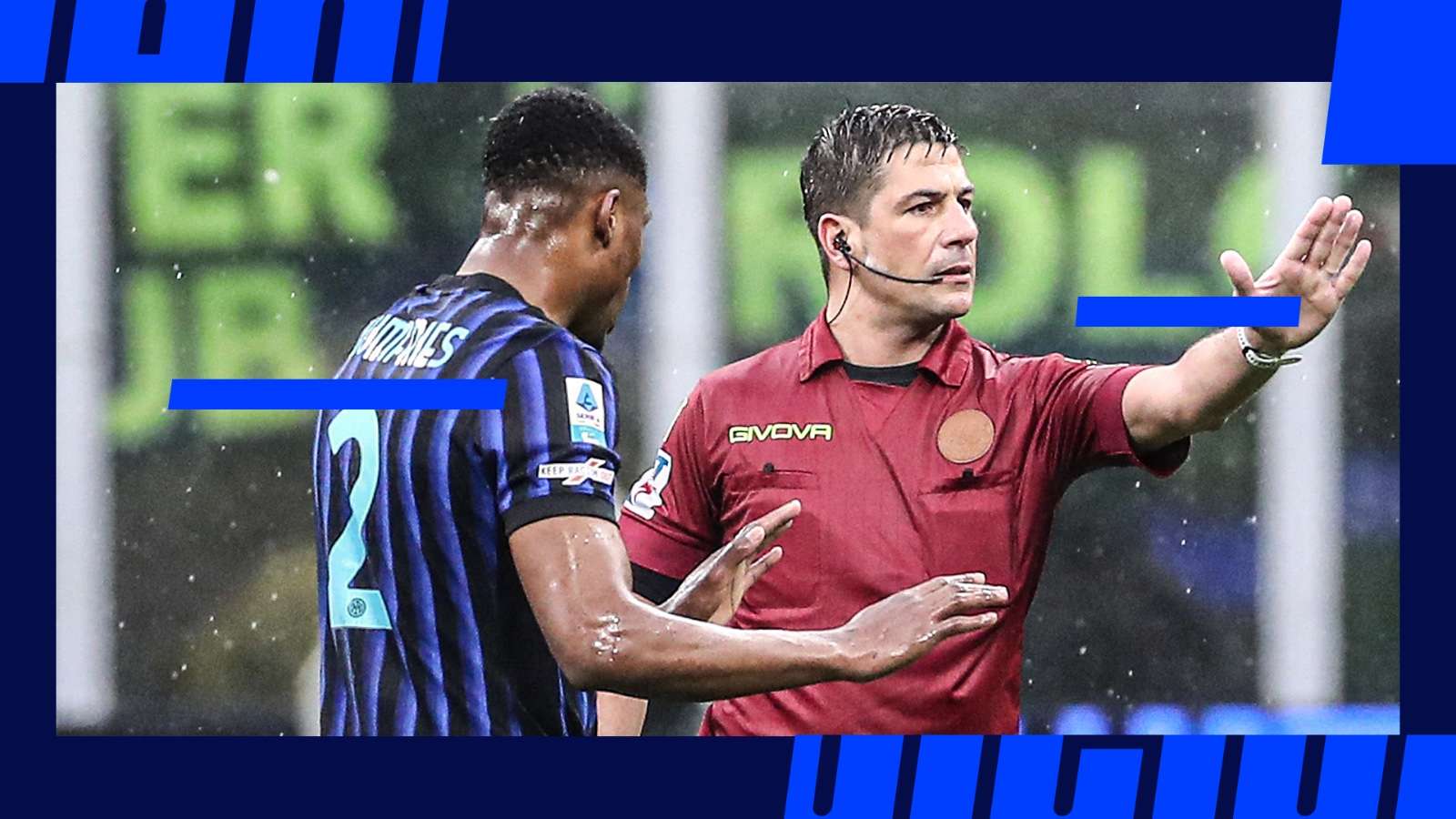

Open VAR Analysis Reveals Controversy in Inter v Atalanta Match
In a recent episode of Open VAR, DAZN’s weekly programme in partnership with the AIA and FIGC, the highly debated moment of the Inter v Atalanta match was thoroughly analyzed. The focus of the discussion was on the contact between Sulemana and Dumfries that ultimately led to Krstovic’s equaliser.
Former Referee Dino Tommasi Weighs In
Former referee and current CAN member Dino Tommasi provided his expert insight on the incident, stating, “There is no shove, there is a touch; the hand is barely touching, there is no pressure, there is no shove. Even the low contact is assessed using all the cameras; in the VAR room, they eventually realise that there is no foul whatsoever.”
Tommasi further explained, “Dumfries ‘does a bicycle kick’; as he lifts his left foot, there is contact as he falls, but it is not a foul. A normal part of the game; Manganiello made the correct decision on the pitch and it was properly analysed in the VAR room using all the available cameras. The contact is absolutely normal.”
Controversy Surrounding the Incident
The analysis of this particular moment in the match has sparked controversy among fans and experts alike. While some agree with the referees’ decision and interpretation of the incident, others argue that there was a clear foul that went unnoticed.
VAR technology has been implemented to provide more accuracy and fairness in football matches, but instances like these show that there can still be differing opinions on key moments.
Impact on the Game
The controversy surrounding the contact between Sulemana and Dumfries and its subsequent analysis in the VAR room has not only caused a stir in the football community but has also raised questions about the effectiveness of VAR in making crucial decisions during matches.
As fans and pundits continue to debate the incident, it serves as a reminder of the unpredictability and drama that can unfold in the world of football.
Conclusion
While the analysis on Open VAR shed light on the specifics of the contact between players in the Inter v Atalanta match, the debate surrounding the incident is likely to continue for some time. The diverse opinions and interpretations of key moments in football matches highlight the subjective nature of the sport and keep fans engaged and passionate about the game.
As technology and officiating methods evolve, the discussion around VAR and its impact on football matches will undoubtedly remain a hot topic among fans, players, and experts.
Keywords: football, prediction
Exploring the Role of VAR in Football
VAR technology has been a game-changer in the world of football, aiming to reduce errors and bring more fairness to the game. However, as seen in the analysis of the Inter v Atalanta match, the interpretation of key moments can still be subjective and open to debate.
While some argue that VAR has improved the accuracy of refereeing decisions, others point out that it can disrupt the flow of the game and lead to confusion among players, coaches, and fans. The reliance on technology in crucial moments can sometimes overshadow the human element that has always been a part of football.
The Psychological Impact on Players
Controversial decisions, such as the one in the Inter v Atalanta match, can have a significant psychological impact on players. Knowing that their fate on the pitch can be determined by video replays and VAR reviews adds a new layer of pressure and uncertainty to the game.
Players may feel frustrated or demoralized when a decision goes against them, leading to a shift in momentum and potentially affecting the outcome of the match. The mental resilience of individuals and teams is put to the test in these situations, highlighting the psychological aspect of football that goes beyond physical skills and tactics.
Looking Ahead: The Future of VAR
As football continues to evolve, so does the role of VAR in the sport. Discussions are ongoing about how to improve the implementation of technology in refereeing decisions and minimize controversies like the one in the Inter v Atalanta match.
Some suggest refining the criteria for VAR reviews, providing more transparency in the decision-making process, and involving players and coaches in the discussion to ensure a fair and balanced approach. Finding the right balance between technology and human judgment remains a key challenge for football governing bodies.
Engaging Fans Through Predictions
While controversies and debates keep the football community buzzing, fans also find excitement in predicting match outcomes and discussing key moments in games. Platforms offering football predictions and analysis have become increasingly popular, allowing fans to share their insights, opinions, and predictions with others.
From predicting the winner of a match to anticipating the impact of VAR decisions, fans engage in lively discussions and debates that add to the overall experience of following football. The unpredictability of the sport combined with the thrill of making accurate predictions creates a dynamic and interactive environment for football enthusiasts.
Embracing the Diversity of Opinions in Football
Ultimately, the controversy surrounding the incident in the Inter v Atalanta match underscores the diverse opinions and perspectives that make football such a captivating sport. While some may agree with the referees’ decision, others may see it differently, sparking debates and conversations that enrich the fan experience.
As fans, players, and experts continue to voice their views on VAR, refereeing decisions, and other aspects of the game, it is clear that football is more than just a sport—it is a shared passion that unites people from all walks of life.
As we navigate the complexities of technology, psychology, and fan engagement in football, one thing remains certain: the love for the beautiful game transcends boundaries and brings people together in a celebration of skill, strategy, and unpredictability.
Keywords: football, prediction