
Intense Moments and Controversy Mark the Seventh Round of La Liga: A Deep Dive into the Madrid Derby and Its Prediction Implications
The seventh round of La Liga delivered yet another electrifying fixture—the Madrid derby between Real Madrid and Atlético Madrid—setting the tone for what promises to be an unpredictable and fiercely contested season. This high-stakes encounter was characterized not only by passionate play but also by contentious refereeing decisions that have sparked debate among fans, analysts, and football experts alike. As we analyze this match, it’s essential to understand how these moments influence football prediction models and what they reveal about the evolving dynamics of Spanish football.
The Madrid Derby Ignites Early Controversy: Key Incidents and Their Significance
The match burst into action merely five minutes in, with a dramatic collision between two of the league’s standout young talents—Arda Güler of Real Madrid and Álex Baena of Atlético Madrid. What initially seemed like a routine challenge quickly escalated into a pivotal moment that set the tone for the entire fixture. Güler, who was advancing with the ball, was heavily challenged from behind by Baena, resulting in a forceful collision that left the Turkish midfielder on the ground. The incident immediately drew the attention of spectators and pundits, raising questions about foul play and disciplinary consistency.
Former referee Iturralde González analyzed the incident with precision, emphasizing that Baena used his knee from behind to bring Güler down—a move that, in his expert opinion, merited a yellow card. “It’s a yellow because he struck him with his knee from behind,” González clarified, underscoring that such challenges are inherently dangerous and warrant caution. This perspective aligns with football’s fundamental principles of player safety and fair play, emphasizing the importance of consistent refereeing decisions in maintaining the integrity of the game.
Refereeing Decisions Under Scrutiny: The Impact on Match Prediction Models
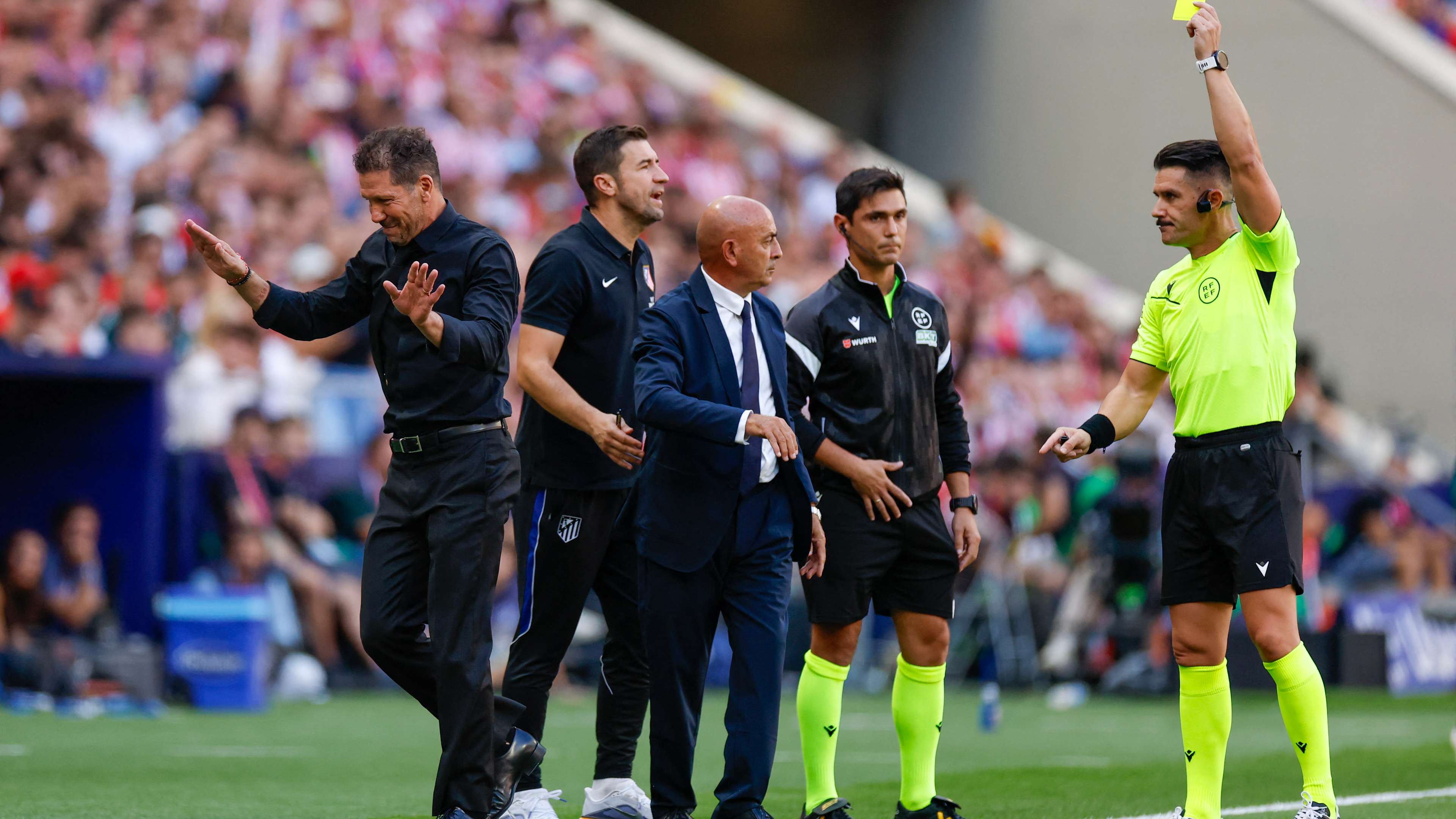
Interestingly, despite the clear nature of the foul, referee Ortiz Arias chose not to issue a card at that moment. Güler, visibly upset, demanded a caution for Baena, arguing that the challenge was reckless. Meanwhile, Atlético Madrid’s coach Diego Simeone expressed his frustration, vocally protesting the decision and the perceived inconsistency in officiating. Such moments of controversy can significantly influence football prediction models, which often rely heavily on historical data, referee tendencies, and incident severity to forecast match outcomes.
By the 18th minute, the stakes heightened further as Güler and Baena clashed again. This recurring confrontation drew attention to the persistent tensions between these talented players and raised questions about the consistency of refereeing. Once again, the referee opted against issuing cards, despite clear evidence of dangerous play. Former referee González re-examined the second incident, emphasizing that Baena’s knee was more perilous than a typical challenge with the leg. He also criticized the decision not to penalize Simeone, noting that several Real Madrid substitutes who protested the decisions were also left unpunished. This situation highlights how subjective refereeing can impact match prediction models, as perceived fairness or bias can sway betting odds and analytical forecasts.
The Broader Context: Football Prediction, Refereeing, and the Evolution of La Liga
These incidents in the Madrid derby exemplify ongoing debates about refereeing standards in La Liga and their implications for football prediction accuracy. In recent years, predictive analytics have become increasingly sophisticated, incorporating variables such as referee behavior, foul frequency, and disciplinary patterns. Controversies like these challenge the reliability of models that depend on consistent officiating, prompting analysts to refine their algorithms to account for potential biases or inconsistencies.
Moreover, the tension between Real Madrid and Atlético Madrid extends beyond individual moments of fouling—it reflects a broader competitive rivalry that often produces unpredictable results. Football prediction models now increasingly factor in psychological factors, team motivation, and in-game tensions, all of which are vividly illustrated in high-pressure fixtures like the Madrid derby. The way referees manage these situations can have a ripple effect, influencing game momentum and, ultimately, the final prediction outcomes.
What Do These Incidents Mean for Future Match Predictions?
As the season progresses, analysts and bettors will closely monitor refereeing patterns and disciplinary decisions, especially in high-profile matches. The controversy surrounding the Madrid derby underscores the importance of integrating qualitative data—such as referee consistency and player reactions—into predictive models to enhance accuracy. For instance, if certain referees are known to overlook dangerous challenges or issue inconsistent cautions, models can adjust probabilities accordingly.
Additionally, understanding the psychological impact of controversial decisions on players and teams can help refine predictions. For example, a team that feels unfairly penalized might become more aggressive or lose composure, affecting their performance. Conversely, a referee’s perceived leniency might embolden players to challenge opponents more aggressively, increasing the likelihood of fouls and disciplinary issues.
The Future of La Liga: Trends and Expectations
This season’s early controversies suggest that La Liga continues to evolve, balancing technical skill with the unpredictability of human refereeing. As clubs like Real Madrid and Atlético Madrid strive for dominance, their encounters become more than mere contests—they are battlegrounds where strategy, psychology, and officiating all intertwine.
For football enthusiasts and prediction enthusiasts alike, these developments offer both challenges and opportunities. Advanced prediction models that incorporate real-time data, referee tendencies, and psychological factors will be crucial in navigating the uncertainties of La Liga’s competitive landscape.
Conclusion: A Season of High Stakes and Unpredictable Outcomes
The seventh round of La Liga has once again demonstrated why football remains the beautiful game—full of passion, controversy, and unpredictable twists. The Madrid derby’s early clashes and contentious refereeing decisions highlight the critical role of officiating in shaping match outcomes and prediction accuracy. As fans and analysts await future fixtures, the key takeaway is clear: understanding the nuances of refereeing, player behavior, and tactical adjustments will be essential for making accurate football predictions this season.
With talented young players like Arda Güler and Álex Baena showcasing their skills—and their fiery temperaments—the season promises to be one of the most exciting and unpredictable in recent memory. Whether you’re a bettor, a football enthusiast, or a casual observer, staying informed about these incidents and their implications will enhance your appreciation of the beautiful game’s complex dynamics.