
VAR Controversy Explained: Why Al-Fateh’s Penalty Against Al-Hilal Was Overturned
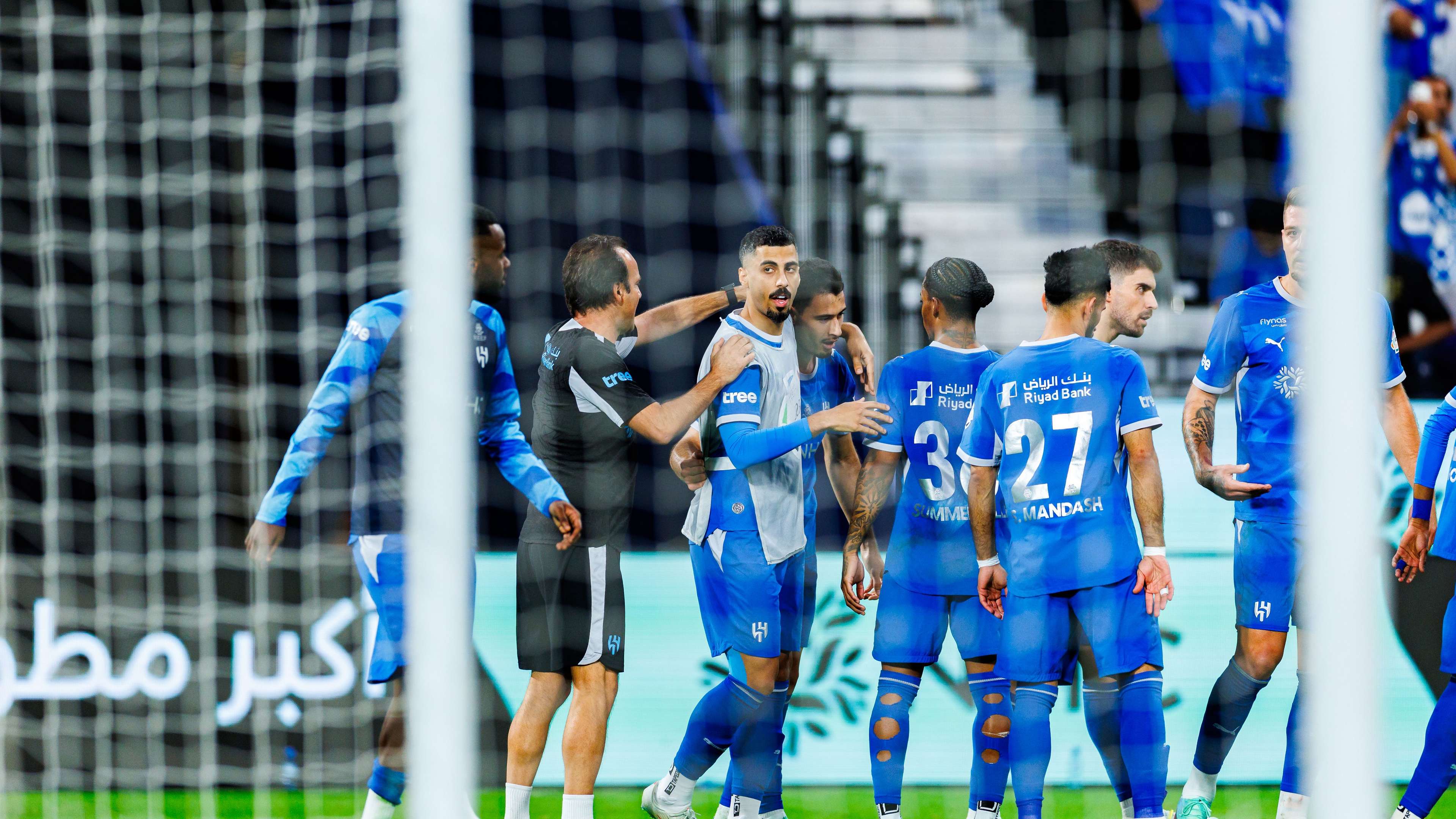
A dramatic refereeing decision at the end of the first half of the Al-Hilal versus Al-Fateh match sparked anger among the visitors’ players, coaching staff and supporters. The referee initially awarded Al-Fateh a penalty after a handball appeal, but changed his decision after reviewing the incident on the pitchside VAR screen.
The reversal came in the 45th minute, turning a potential opportunity to take the lead into a disputed moment that quickly became one of the match’s main talking points. While Al-Fateh’s bench protested the call, a Saudi refereeing analyst later supported the referee’s decision, explaining that the review clarified which player’s arm had been struck by the ball.
How the penalty decision unfolded
The incident began when Al-Fateh players appealed for a penalty following contact between the ball and an arm inside Al-Hilal’s penalty area. The on-field referee initially pointed to the spot, apparently believing that Al-Hilal defender Kalidou Koulibaly had committed a handball offence.
However, the video assistant referee (VAR) team recommended an on-field review. After watching the replay on the monitor, the referee cancelled the penalty and signalled for play to continue. The change of decision immediately drew protests from Al-Fateh’s players and technical staff, who had expected their side to receive a valuable chance from the penalty spot.
Such moments can be especially contentious because the original call is visible to everyone in the stadium, while the reasoning behind a VAR reversal may not be immediately clear. In this case, the key issue was not simply whether the ball had touched an arm. It was identifying whose arm made contact.
Refereeing analyst explains the VAR review
Mohamed Kamal Risha, a refereeing analyst for Al-Riyadiah, said the referee was right to overturn the original decision after reviewing the footage. According to Risha, the replay showed that the ball struck the right arm of Al-Fateh player Mourad Batna—not the arm of Al-Hilal defender Koulibaly.
Risha’s explanation addressed the central confusion surrounding the incident. The initial award was based on the apparent impression that Koulibaly had handled the ball. Once the referee saw the sequence again and established that the contact involved Batna, the basis for awarding Al-Fateh a penalty no longer stood.
“In the 45th minute, the referee made the correct decision to reverse the penalty awarded to Al-Fateh after reviewing the incident on the VAR screen,” Risha said. He added that the footage made clear the ball had struck Batna’s right arm rather than Koulibaly’s hand.
Why identifying the player mattered
Handball decisions are often judged through a combination of factors, including the position of the arm, the player’s movement and the circumstances in which contact occurs. But before those details can be assessed, officials must first determine who was involved in the incident. A replay that changes the perceived identity of the player can therefore alter the entire interpretation of a possible penalty.
That distinction appears to have been decisive in the Al-Hilal–Al-Fateh controversy. The referee’s first view suggested that a defender had committed an offence inside the box. The VAR review provided a clearer picture of the contact and showed that the ball had struck an Al-Fateh player instead. Risha consequently described the reversal as correct.
The episode also highlights the practical role of VAR in football. Video review is not intended to remove every disagreement or guarantee that every decision will satisfy both teams. Its purpose is to help officials correct clear errors by giving them access to additional angles and a slower, more detailed view of key incidents.
Why the decision caused such a strong reaction
The timing added to the intensity. The review took place in the 45th minute, just before half-time, when a penalty could have significantly changed the mood and tactical outlook of the match. For Al-Fateh, the initial award appeared to offer a major chance. The reversal instead left the team frustrated and gave supporters a decision to debate.
Disagreement is common whenever VAR overturns a call, particularly when the crowd has already reacted to the referee’s first signal. Yet the explanation offered by Risha shifted the discussion away from the referee simply changing his mind. The review, he said, revealed that the ball had struck the wrong player for the original penalty decision to stand.
What the incident means for the match conversation
The overturned spot-kick became a major talking point because it combined a high-stakes moment with a change of decision that was not immediately obvious from the stands. Risha’s assessment provided a clear account of what the referee saw on the monitor and why the initial call was withdrawn.
For fans following Saudi Pro League football, the incident is another reminder that VAR reviews can hinge on fine details—not only whether contact occurred, but also who was involved and how the sequence unfolded. The video review did not end the debate among Al-Fateh supporters, but the refereeing analyst’s explanation supported the final outcome: the ball struck Mourad Batna’s right arm, not Kalidou Koulibaly’s hand.
Upcoming fixtures
Al-Hilal’s schedule includes an AFC Champions League Elite fixture on 4 November 2026, followed by a Saudi Pro League match on 6 November. Those upcoming games will quickly turn attention back to the teams’ performances, though the penalty controversy is likely to remain part of the post-match conversation.
For supporters searching for football prediction and analysis, the episode offers a useful reminder that a single refereeing decision can shape the narrative around a match without telling the whole story. In this case, the decisive factor was the VAR evidence: after reviewing the footage, the referee concluded that the contact involved Batna rather than Koulibaly and cancelled Al-Fateh’s penalty.