
Atletico Madrid president calls for calm amid Spanish football tensions
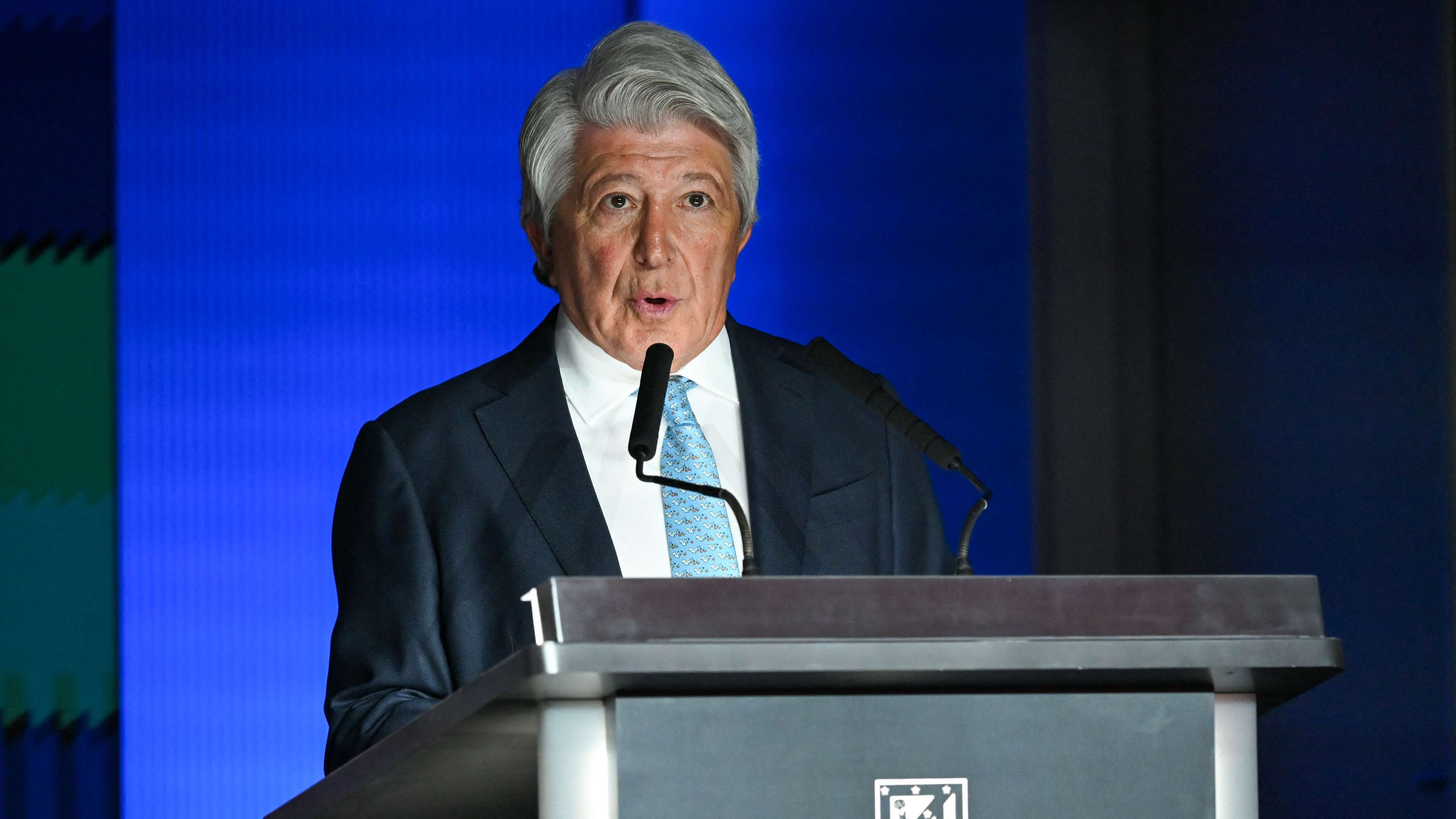
Atletico Madrid president Enrique Cerezo has urged football leaders to put rivalry aside, offering a pointed assessment of Spain’s escalating refereeing debate just hours before his club’s decisive Champions League meeting with Stuttgart. Rather than focus exclusively on the European fixture, Cerezo addressed the disputes dominating headlines across La Liga, including the controversial incident involving Real Madrid midfielder Arda Guler.
His comments, delivered to reporters before Atletico’s match and carried by Spanish radio station COPE, arrived during a particularly tense spell for the country’s leading clubs. Public criticism and counter-criticism have intensified, with officials and executives repeatedly weighing in on refereeing decisions and the conduct of their rivals.
Cerezo urges club leaders to avoid a football “war”
Asked about the atmosphere surrounding Spanish football, Cerezo argued that disagreements should not become personal battles between club executives. “I believe there should be no wars in football, especially between leaders,” he said.
The brief remark was widely interpreted as a call for restraint directed at the leadership of Spain’s biggest clubs, including Real Madrid, Barcelona and Atletico. Their sporting rivalry is longstanding, but recent exchanges have added a sharper edge to debates that already attract intense attention from supporters, broadcasters and the media.
Cerezo’s appeal also reflects a broader concern about the effect of executive-level disputes on the game. When club presidents and senior officials repeatedly challenge one another in public, discussion can shift away from performances and results toward accusations, grievances and the latest refereeing controversy. That environment can make it harder for supporters to separate legitimate questions about officiating from the wider rivalry between clubs.
His intervention was not a detailed proposal for resolving those tensions, but it set out a clear preference: football’s leaders should avoid turning disagreements into ongoing conflict. With major domestic and European fixtures on the calendar, the timing of the message was notable. Atletico needed to keep attention on a demanding Champions League assignment, while the wider Spanish game remained absorbed by off-field arguments.
A pointed comment on complaints about referees
Cerezo was also asked about the regular complaints made by clubs over refereeing in La Liga. The issue has become a recurring feature of the season, with disputed decisions often prompting public statements, post-match debate and close scrutiny of officials.
“We all complain about everything, but the problem is that some exaggerate it and others less so,” Cerezo said, delivering the line with a sarcastic edge. The comment acknowledged that frustration with refereeing is common across football, while suggesting that the scale of the reaction can vary considerably from one club to another.
His words were quickly read as an indirect criticism of the way some teams present their grievances. Cerezo did not name a club, nor did he claim that Atletico are free from disappointment with officials. Instead, he appeared to distinguish between raising concerns and allowing those concerns to dominate the public conversation.
That distinction matters in a competition where every controversial call can be replayed, analysed and debated across television and social media. A decision that once might have remained a post-match talking point can now shape a news cycle for days. Clubs have strong incentives to defend their players and challenge calls they consider unfair, but repeated public disputes can also deepen mistrust among supporters and intensify pressure on referees.
For Atletico, Cerezo’s response offered a way to acknowledge that complaints are part of the sport without endorsing every reaction. It also allowed him to make his point without escalating the dispute by directly naming rival executives. The result was a measured but unmistakably sharp contribution to a debate that shows little sign of disappearing.
Arda Guler incident draws Cerezo’s attention
The most direct part of Cerezo’s remarks concerned a controversial moment involving Real Madrid’s Arda Guler in the club’s previous match against Sevilla. The incident had become a talking point among fans, with questions raised about what happened and whether the referee should have intervened.
Cerezo gave a concise verdict: “Regarding the Arda Guler play, I saw it clearly, but perhaps the referee did not see it.” In his view, the incident was apparent, while the official may have failed to spot it during the match. The comment placed the Atletico president among those who believe the decision deserved closer scrutiny.
His wording stopped short of a detailed technical analysis. Cerezo did not explain which aspect of the play he considered decisive or discuss how the referee’s positioning might have affected the view. But the contrast in his statement was clear: he believed the action was visible, while suggesting that the match official did not register it at the time.
Incidents such as this often generate competing interpretations because viewers can examine replays from multiple angles, whereas referees must make decisions in real time. The availability of video review can help clarify certain moments, but it does not eliminate disagreement over whether an incident meets the threshold for intervention. That is why a single play can become a wider argument about consistency, technology and trust in officiating.
What the comments mean for Atletico and La Liga
Cerezo’s comments combined diplomacy with a pointed assessment of the current football climate. He called for leaders to avoid a war of words, criticised what he described as exaggerated complaints and offered his own view on a high-profile Real Madrid incident. The mix ensured that his remarks would attract attention beyond Atletico’s immediate Champions League preparations.
For supporters, the episode is another reminder that Spanish football’s biggest stories are not always limited to the pitch. Club rivalries, refereeing decisions and public statements can all shape the build-up to important matches. Yet Cerezo’s central message was that leaders should resist allowing those disputes to overwhelm the sport itself.
As Atletico turned toward Stuttgart, the focus returned to the challenge of competing in Europe. Any prediction about the outcome of a Champions League tie must account for the demands of the fixture, the quality of the opposition and the pressure that comes with a decisive night. Cerezo’s remarks did not offer a football prediction or reveal tactical details; instead, they highlighted the charged atmosphere surrounding the game and the wider competition.
Whether his call for calm will influence the tone of future exchanges remains uncertain. For now, his intervention has added another voice to Spain’s debate over leadership, refereeing and rivalry—while underscoring how quickly off-field controversy can become part of the story on a major European matchday.