
Bayern Munich Fight Back to Level Arsenal in Champions League Clash
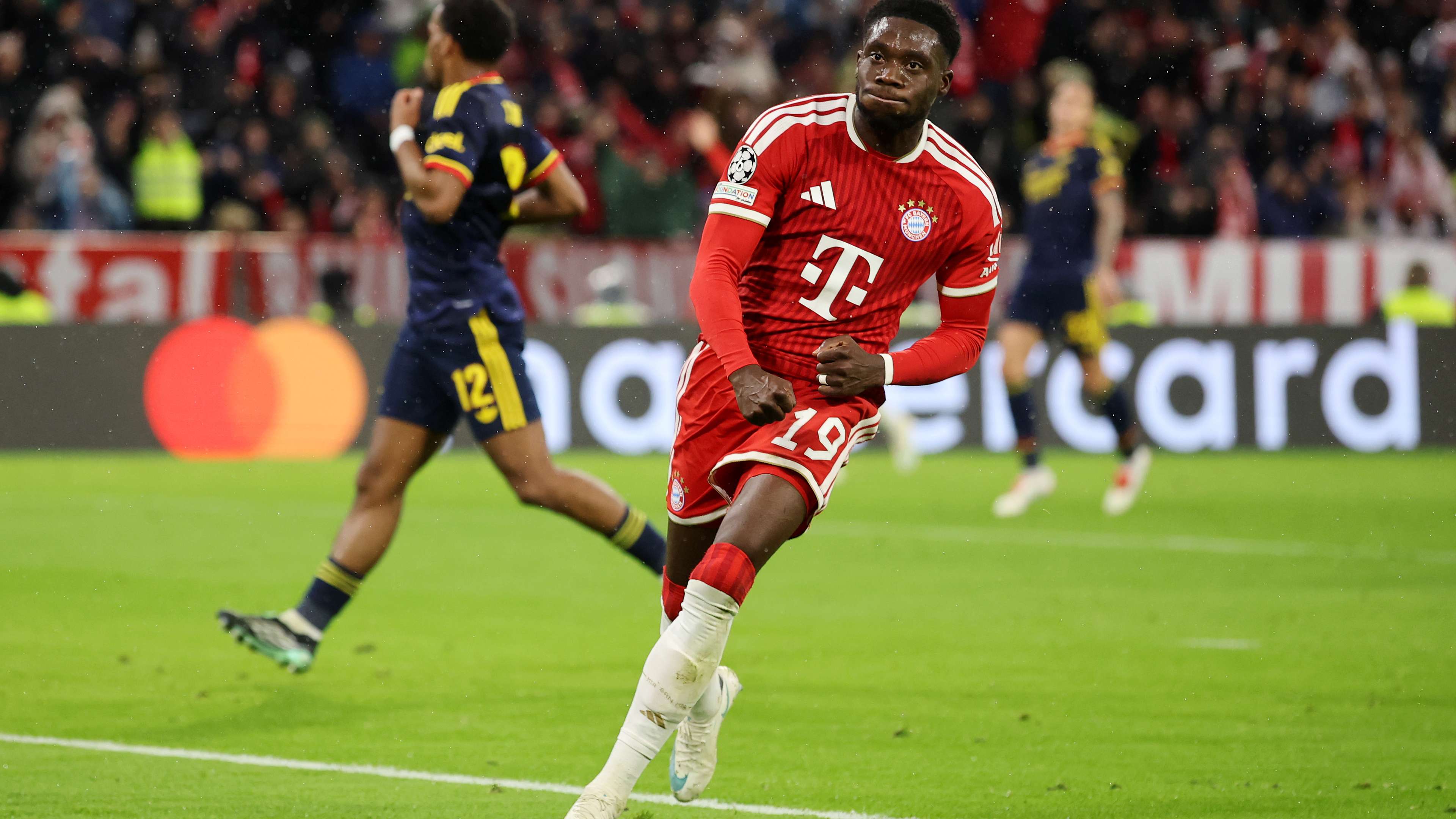
Bayern Munich refused to head into half-time trailing after Alphonso Davies turned Harry Kane’s clever pass into a composed equaliser against Arsenal at the Allianz Arena. The Canadian defender, playing further forward than usual, struck in the 35th minute to make it 1-1 in a lively UEFA Champions League meeting between two European heavyweights.
Arsenal had taken the lead ten minutes earlier through Eberechi Eze, who finished a swift move after receiving a long, accurate pass from Martin Ødegaard. The opening half offered an engaging contest of contrasting approaches: Arsenal looked to exploit space quickly, while Bayern relied on their attacking quality to respond and restore balance before the break.
Eze gives Arsenal the early advantage
The visitors made the breakthrough in the 25th minute. Ødegaard spotted Eze’s run down the left and delivered a well-judged ball into space behind Bayern’s defence. Eze collected it in stride, advanced toward Manuel Neuer and kept his composure in a one-on-one situation, guiding his shot past the goalkeeper to put Arsenal ahead.
The goal rewarded Arsenal’s direct attacking play. Rather than building slowly, the London side used the timing of Eze’s run and Ødegaard’s vision to turn a single pass into a clear scoring opportunity. It also put Bayern under immediate pressure in front of their home crowd, with the German side needing a response to avoid reaching half-time behind.
Neuer was left exposed by the speed of the move, and Eze’s calm finish showed why Arsenal have added another dangerous option to their forward line. His ability to carry the ball at pace and make decisive choices in the penalty area gives the Gunners a different dimension, particularly when opponents leave space behind their defensive line.
Kane and Davies combine for Bayern’s equaliser
Bayern did not take long to answer. In the 35th minute, Kane received possession and picked out Davies with a precisely weighted pass. Davies, who had been deployed as a winger rather than in his familiar full-back role, attacked the space and drove a right-footed shot into the Arsenal net.
The finish was a notable moment for the Canadian international. Davies is best known for his speed and overlapping runs from defence, but his advanced position gave Bayern another outlet in the final third. He made the most of the opportunity, arriving in a dangerous area and finishing decisively to bring the hosts level.
Kane’s contribution was equally important. The England captain’s pass split the defensive shape and gave Davies the chance to shoot without needing to slow the move down. The combination underlined Bayern’s ability to create danger through different routes, even when Arsenal had initially succeeded in disrupting the hosts’ rhythm.
A high-stakes meeting between two European contenders
The fixture brought together two clubs with strong ambitions in the Champions League and contrasting records from the opening rounds. Bayern entered the match with four points after recording a win over Norway’s Bodø/Glimt and a draw against fellow Norwegian side Viking. Arsenal arrived with a perfect start, having claimed victories over Italian opposition Napoli and French club Lille.
Those results shaped the pre-match conversation around the game. Arsenal had the stronger early points return, while Bayern were seeking a more convincing result to strengthen their position in the competition. Yet the first-half scoreline reflected how closely matched the sides could be when their attacking players found room to influence the contest.
For Bayern, the equaliser was a timely response to a setback at home. Falling behind can unsettle even experienced teams, particularly against an opponent capable of counterattacking with speed. Instead, the hosts moved the ball forward with purpose and found a route back into the match through Kane’s awareness and Davies’ attacking instincts.
Arsenal, meanwhile, could take encouragement from the quality of their opening goal and the discipline required to compete away from home. Their ability to progress quickly from midfield into the attacking channels gave Bayern a problem to solve. The challenge after conceding was to maintain that threat while protecting against the hosts’ growing momentum.
What the first-half scoreline means for the match
A 1-1 score at the interval left the contest open, with neither side able to establish lasting control. The next phase would depend on which team could manage the spaces more effectively. Arsenal’s most promising moments came when they released runners behind Bayern’s defence, while the hosts looked dangerous when Kane had time to pick out forward-moving teammates.
Davies’ role also offered a tactical talking point. Using a player with his pace higher up the pitch can stretch a defence and create uncertainty over who should track his runs. At the same time, it asks Bayern to balance their attacking ambition with defensive cover, especially when Arsenal look to break quickly after winning possession.
For fans following the Champions League, the encounter delivered the kind of momentum swings that make elite football compelling: a precise long pass, a confident one-on-one finish, and a rapid response from a team unwilling to accept a deficit. The goals also highlighted the influence of individual quality within carefully constructed team moves.
Football prediction: a close contest likely to continue
Any football prediction based on the first half would point toward a closely fought second period rather than a straightforward outcome. Arsenal had demonstrated that they could hurt Bayern in transition, while the home side showed they could create high-quality chances through Kane’s distribution and Davies’ movement. The balance of the match made control, concentration and the use of substitutions potentially decisive.
Neither team could afford to become careless. Arsenal needed to limit the time Kane had on the ball, while Bayern had to remain alert to Eze’s pace and the runs that could follow Ødegaard’s passing. With both sides carrying attacking threats, another goal would not have been surprising, but the first-half display suggested that small tactical adjustments could matter as much as individual brilliance.
The opening 45 minutes therefore set up an absorbing Champions League battle. Arsenal’s early strike was answered by Bayern’s composed equaliser, leaving the teams level and the outcome unresolved. Davies’ finish ensured the hosts avoided a half-time deficit, while Eze’s goal showed that Arsenal remained capable of testing Bayern’s defence whenever an opportunity opened up.