
Carlos Espí’s Real Madrid Impact Raises Questions Over His Playing Time
Carlos Espí has made an extraordinary start to life at Real Madrid, but the young striker’s influence has so far come in remarkably brief appearances. With three goals from just 38 minutes of football, he has become one of the most efficient finishers in José Mourinho’s squad—and prompted a growing question among supporters: does he deserve a bigger chance?
Espí arrived in a swift move after Gonzalo García left for Fulham, giving Madrid another option in an attack where Kylian Mbappé has established himself as the first-choice centre-forward. The signing was not simply about adding depth. It gave the club a different kind of forward: a tall, penalty-box striker whose instinct is to finish chances quickly and decisively.
According to Marca, Madrid’s head of scouting, Juni Calafat, presented three potential candidates before the club settled on Espí. The decision followed an impressive spell at Levante, where the striker scored 11 goals and helped keep his former side competitive. Ten of those goals arrived from February onwards, when the pressure was intense and almost every fixture carried the feel of a final.
Remarkable Numbers in Limited Minutes
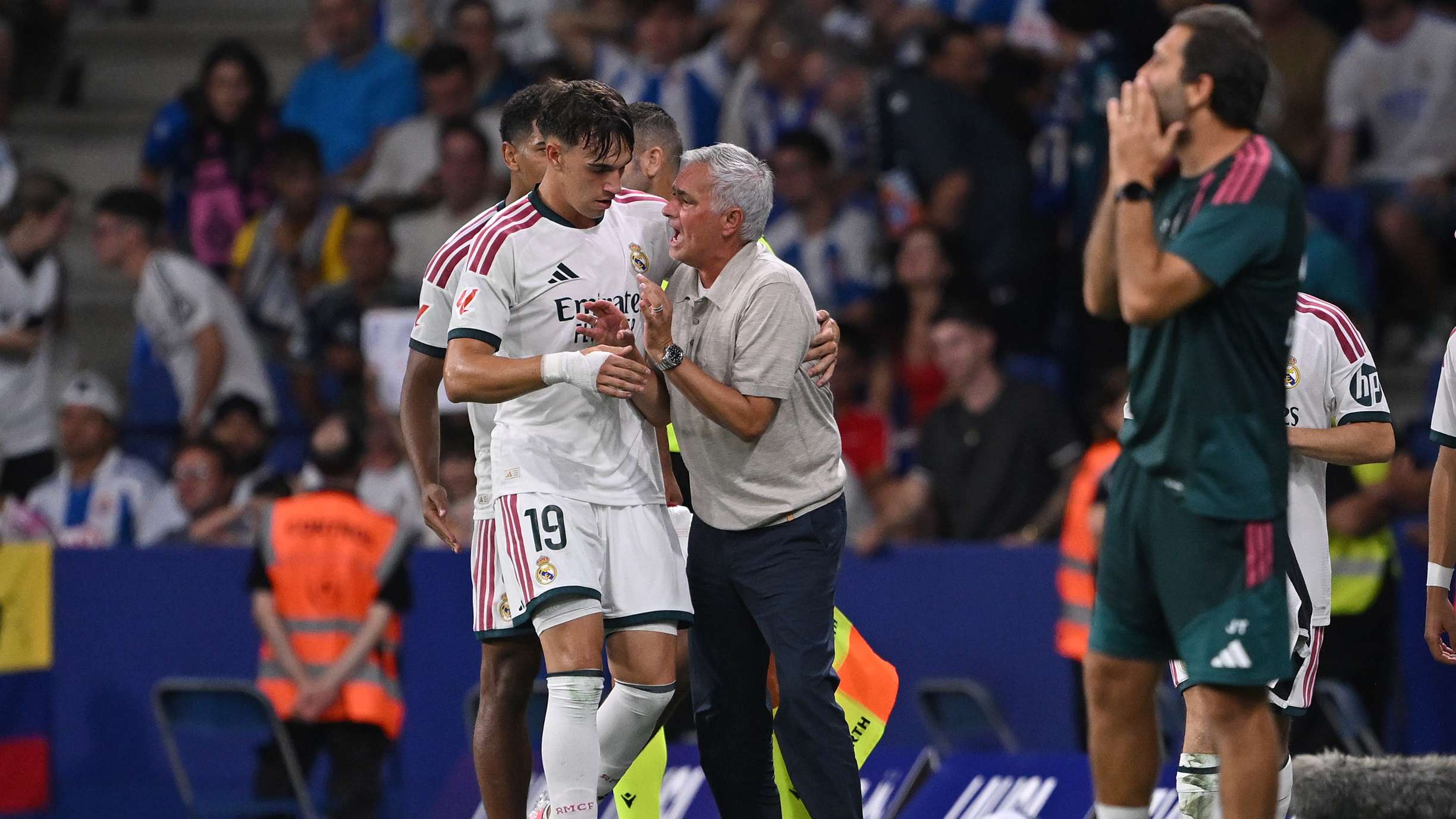
More than two months into the campaign, Espí has yet to start a match. He has played only 38 minutes out of a possible 900, and his longest appearance lasted just 10 minutes, against Espanyol on the opening day of La Liga. Yet his impact has been difficult to overlook: he has scored three times in those short cameos, with only Mbappé’s nine goals placing him ahead of the young forward in Madrid’s scoring list.
The numbers are striking. Espí has registered 29 touches and converted three of them into goals, giving him a scoring rate of better than one goal every 13 minutes. That figure is not a reliable measure of what he would produce over a full season—short appearances can make statistics look unusually dramatic—but it does underline how effectively he has used the opportunities available to him.
His goals have also mattered. Espí helped Madrid secure La Liga victories over Espanyol and Elche, while his strike in Rome shifted the momentum of a tense match, making it 3–2. These are not merely late goals added to comfortable scorelines. They have contributed directly to results and shown that the striker can respond when the team needs a decisive moment.
A Classic Number Nine in a Modern Attack
Espí offers Madrid a profile that has long been valued at the club: a traditional centre-forward who concentrates on occupying defenders, attacking dangerous spaces and finishing moves with minimal touches. Two of his three goals, against Elche and in Rome, came with a first-time finish. Against Espanyol, he took three touches to bring the ball under control before beating goalkeeper Dmitrović.
That variety matters. A first-time finish can punish a defence before it has time to reset, while a composed touch in the area can create the angle needed to beat a goalkeeper. Espí’s early contributions suggest he is comfortable with both, even though his limited playing time has not yet allowed Madrid to assess his all-round game across a full match.
His presence also gives Mourinho a tactical alternative. Mbappé offers pace, movement and a consistent threat in transition, while Espí can provide a more direct target in the box. Depending on the opponent, Madrid could use the young striker to attack crosses, occupy central defenders or change the rhythm of a match when a different kind of presence is needed up front.
Why Has Mourinho Kept Him on the Bench?
Mourinho has reportedly been pleased with Espí since their first meeting, but the manager’s preference for Mbappé as the central striker is understandable. The French forward is one of the team’s most reliable scorers and a major figure in Madrid’s attacking plans. Keeping him on the pitch is often the safest choice when the team needs a goal—or when the coach wants to maintain pressure on an opponent.
Still, the disparity in minutes is notable. Only Endrick, with 35 minutes, has played less than Espí among the forwards mentioned. Endrick was given a half-hour in Rome, three times Espí’s involvement in the match that provided the young Spaniard with his most significant contribution. That contrast may reflect tactical decisions, match circumstances and the manager’s assessment of each player, rather than a simple ranking of their potential.
There is also a practical challenge: a striker cannot build rhythm or demonstrate his complete game through five- or ten-minute appearances alone. Goals are valuable, but regular minutes would help Mourinho judge Espí’s movement without the ball, pressing, link-up play and ability to influence a match when Madrid are not already creating chances.
Sevilla Fixture Could Offer a New Opportunity
The upcoming meeting with Sevilla could provide a useful test. It begins a demanding stretch before Madrid’s highly anticipated Champions League encounter with Leipzig, and Vinícius’s lengthy suspension further changes the options available to Mourinho. The circumstances may create room for Espí and Endrick to make a stronger case for involvement, whether as starters or as substitutes introduced earlier than usual.
For Espí, the immediate goal may not be to displace Mbappé. Instead, he needs a meaningful opportunity: enough time to show whether his sharp finishing can translate into a broader contribution. A start in a domestic fixture, or a planned 20-to-30-minute role, would give the coaching staff more evidence than another brief cameo.
Any prediction about his long-term place in the team should remain cautious. Three goals are an excellent return, but Madrid’s forward line is crowded, and one strong run does not guarantee a regular starting role. Even so, his efficiency has made it increasingly difficult to treat him as a purely developmental option.
A Selection Decision for Mourinho
Madrid now have a compelling balance to manage: Mbappé’s proven scoring power on one side and Espí’s immediate impact on the other. The young striker has done what a substitute is asked to do—enter the match, take his chance and change the scoreline. The next step is deciding whether those performances merit more trust.
Supporters at the Santiago Bernabéu have seen Espí for only four minutes, during the match against Real Sociedad. After watching him score in limited opportunities elsewhere, it is understandable that fans want to see what he can produce on home turf. Whether Mourinho grants that wish will depend on the demands of the schedule, the opposition and the manager’s tactical plan.
For now, Espí’s story is one of promise rather than certainty. He has not played enough to claim a starting place, but he has made a persuasive case for more than occasional scraps of time. Mourinho controls the decision—how to use him, when to introduce him and how many minutes to give him. With the season gathering pace, the striker’s next opportunity could reveal whether his remarkable scoring rate is a brief burst or the beginning of a bigger role at Real Madrid.