
Paris Saint-Germain’s Luis Enrique Confirms Achraf Hakimi Will Miss Upcoming International Matches: A Strategic Decision Prioritizing Player Safety
In an evolving landscape of international football, club managers often face challenging decisions when balancing team commitments with player health and national duty. Recently, Paris Saint-Germain’s head coach, Luis Enrique, provided clarity regarding the future of Morocco international Achraf Hakimi amid ongoing discussions about his participation in upcoming fixtures for the Moroccan national team. This decision underscores the importance of player welfare in modern football and highlights the strategic considerations involved in international duty prediction and management.
Detailed Insights into Hakimi’s Injury Status and PSG’s Approach
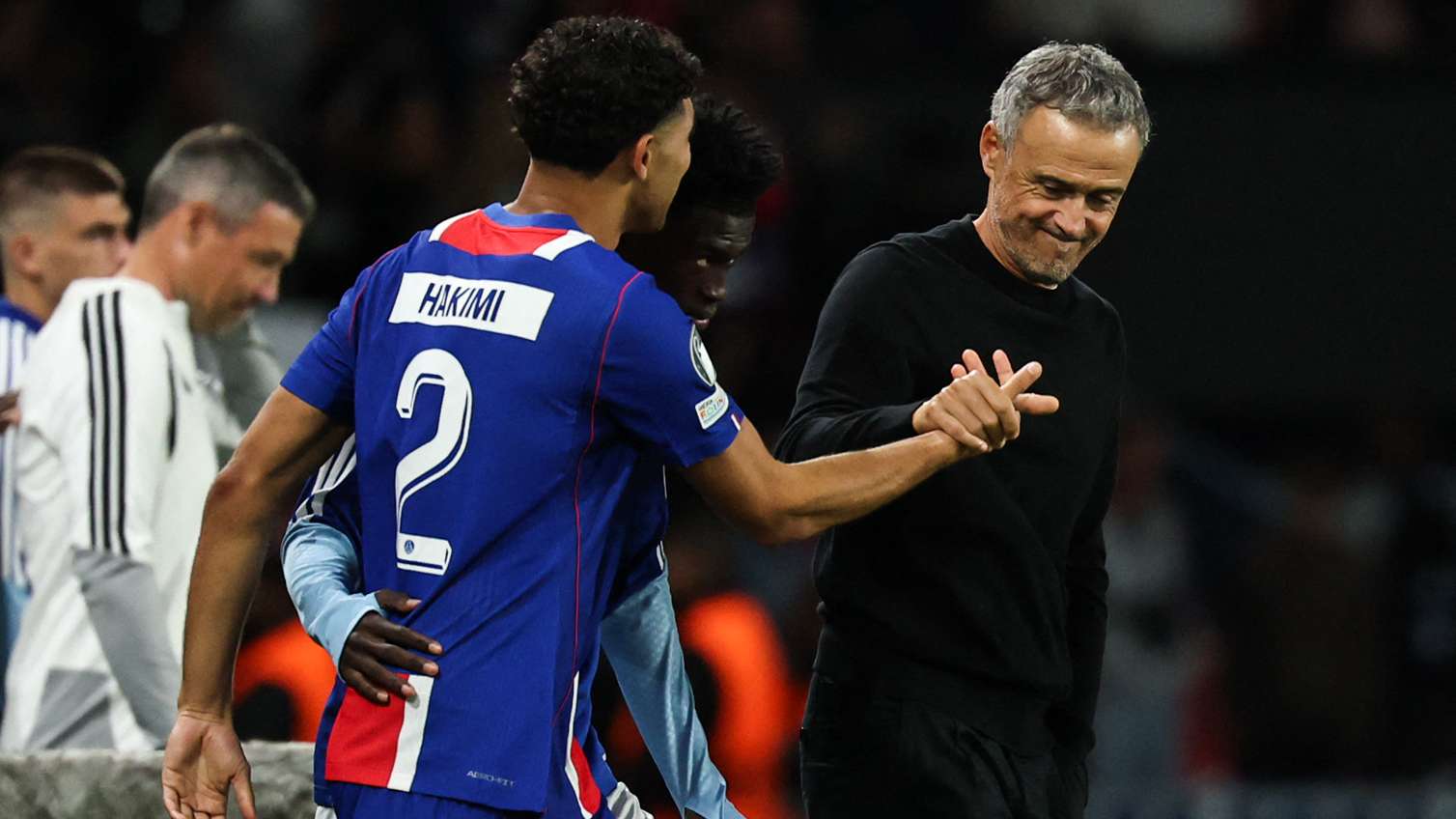
Following PSG’s narrow 2-1 victory over Marseille in Ligue 1—a match that demonstrated the team’s resilience and tactical discipline—Luis Enrique addressed the media to shed light on Hakimi’s current situation. The Moroccan star, known for his exceptional pace, defensive prowess, and offensive contributions on the flank, has become a vital component of PSG’s line-up. However, his fitness remains a concern ahead of the international break.
Enrique explicitly confirmed that Hakimi will not be available for Morocco’s next international fixture, prioritizing his recovery over immediate participation. The decision was not made lightly; it reflects a cautious and responsible approach aimed at safeguarding the player’s long-term health. The Spanish coach emphasized, “I have complete confidence in Hakimi, but he cannot play the next international match.”
Dialogue Between PSG and Morocco’s Technical Staff
To ensure a comprehensive understanding of Hakimi’s condition, PSG’s medical team is actively collaborating with Morocco’s national team staff. These conversations are crucial in assessing whether Hakimi is fit enough to represent his country without risking further injury. Enrique acknowledged this ongoing communication, stating, “We are in contact with the Moroccan national team to find out his medical condition, and we know how important it is for the player to play with the national team.”
This collaborative approach highlights a broader trend within international football—clubs and national teams working together to make informed decisions about player participation, especially when injuries are involved. It also illustrates the delicate balance of prediction and risk management in football, where the health of a player can significantly influence both club and country’s fortunes.
The Significance of International Duty for Achraf Hakimi
For Hakimi, representing Morocco is more than just an obligation; it’s a matter of national pride and personal significance. The full-back has been instrumental in Morocco’s recent successes, including their qualification efforts for major tournaments like the Africa Cup of Nations. His performances have elevated the Moroccan national team’s profile, and missing out on international fixtures can be disappointing for both player and fans.
Enrique acknowledged this emotional connection, saying, “We understand how important it is for him to play with the national team, and he is eager to contribute to Morocco’s success.” However, the PSG boss reiterated that the club’s primary concern remains Hakimi’s health and readiness, emphasizing, “There will be communication, as is the case with everyone.”
The Bigger Picture: Football Prediction and Player Welfare in International Competitions
As football fans eagerly anticipate upcoming international matches, including crucial qualifiers and tournaments, predicting player availability and performance becomes a vital aspect of football analysis. Experts and enthusiasts alike analyze injury reports, training reports, and club statements to make informed predictions about team line-ups, match outcomes, and tournament success.
Hakimi’s case underscores the importance of strategic prediction in football, where understanding injury timelines and recovery processes can influence betting odds, fan expectations, and team strategies. With the Africa Cup of Nations qualifiers on the horizon, the decision not to risk Hakimi exemplifies responsible player management—a trend increasingly recognized as essential for sustainable success in modern football.
Implications for the Upcoming Africa Cup of Nations Qualification
Morocco’s qualification campaign for the Africa Cup of Nations (AFCON) is a critical chapter in their football journey. Scheduled fixtures, such as the match against Gabon on September 26th, are pivotal for their chances of securing a spot in the tournament. Hakimi’s absence could be a significant setback, given his influence on the pitch, but it also provides an opportunity for other players to step up and demonstrate their capabilities.
Enrique’s decision aligns with broader football prediction strategies that consider injury risks, player fatigue, and team dynamics. It also emphasizes the importance of squad depth and tactical flexibility—elements that are often decisive in tight international competitions.
Looking Ahead: Managing Player Fitness and International Commitments
As the football season progresses, clubs and national teams will continue to navigate similar situations with their star players. The emphasis on player health and safety is more prominent than ever, especially given the congested fixture calendar and the physical demands of top-tier football.
For fans, analysts, and betting enthusiasts, staying informed about injury updates and management strategies is essential for accurate predictions and realistic expectations. The Hakimi case exemplifies a responsible and strategic approach to international football prediction, where safeguarding player welfare ultimately benefits all stakeholders involved.
Final Thoughts
In conclusion, Luis Enrique’s transparent communication regarding Achraf Hakimi’s absence from Morocco’s upcoming international fixtures highlights a broader shift toward prioritizing player health in football. While predictions about match outcomes and player performances remain central to the sport’s narrative, ensuring athletes are fit and ready is fundamental to sustained success. As Morocco prepares for critical qualifiers and PSG gears up for the remainder of their Ligue 1 campaign, the focus remains on strategic decision-making that balances competitive ambition with the well-being of the players.
As the football community looks ahead to upcoming fixtures, tournaments, and prediction analyses, Hakimi’s situation serves as a reminder of the importance of responsible management in a sport that continues to captivate millions around the world.