
Ibrahim Hassan Defends Egypt Coach Hossam as Pressure Builds
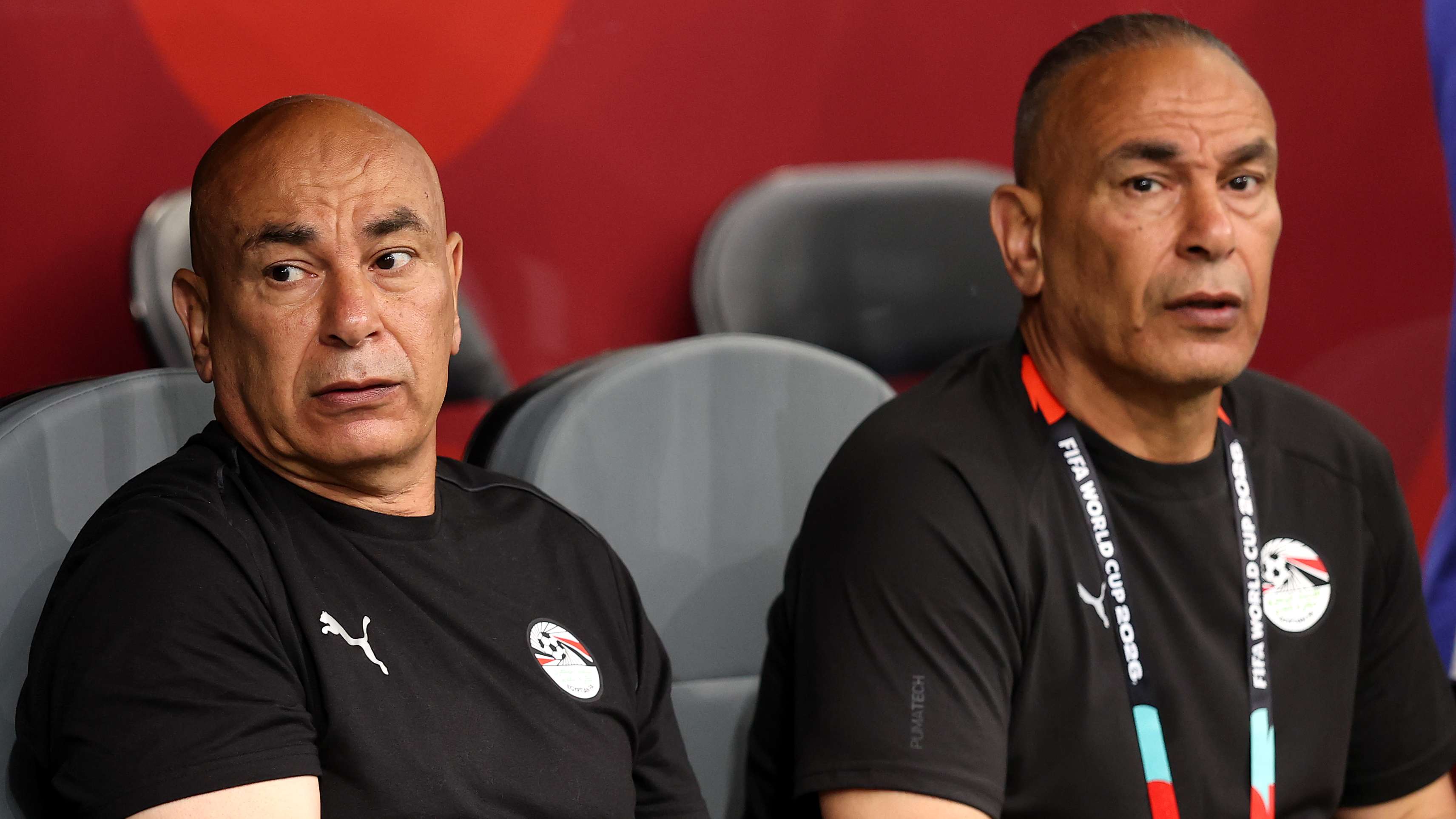
Egypt national team manager Ibrahim Hassan has publicly defended his brother, head coach Hossam Hassan, amid mounting criticism and speculation over the coaching staff’s future. In an emotional statement on Facebook, Ibrahim described the personal sacrifices Hossam has made for the national side, revealed serious health problems he says were kept private, and criticised media figures and former colleagues for what he sees as persistent attacks.
The comments come as reports suggest officials at the Egyptian Football Association (EFA) have discussed whether Hossam should remain in charge. The debate has continued despite Egypt securing qualification for the last 16 of the 2026 World Cup. Ibrahim’s post urged supporters and commentators to consider what the team’s progress has meant to the public, while warning that criticism could damage morale ahead of upcoming fixtures.
“Fear God when it comes to Egypt”
Ibrahim began by questioning why some people appeared determined to undermine the excitement surrounding the national team. He said Egypt’s recent performances had helped reconnect supporters—particularly children and families living abroad—with the country’s flag, shirt and football identity.
According to Ibrahim, the team’s matches had brought Egyptians together and earned the squad respect beyond the country’s borders. He argued that such moments of shared pride should not be dismissed because of disagreements over coaching decisions or individual mistakes.
He portrayed Hossam as a devoted coach who puts his responsibilities to Egypt ahead of personal difficulties. Ibrahim acknowledged that everyone makes mistakes, but said his brother had continued working for the national team through challenging circumstances. He also questioned why, in his view, criticism intensifies before training camps and major matches.
Sharp words for media figures and former colleagues
The team manager also directed his frustration towards some media commentators and former colleagues. Ibrahim said he was troubled by what he described as resentment from people who had once worked alongside the brothers, as well as coverage that minimised the coaching staff’s achievements.
His message was not simply a defence of Hossam’s record. It was also an appeal for a more measured discussion about the national team. Ibrahim suggested that focusing on minor controversies while overlooking progress could weaken public confidence at a time when Egypt needs stability and support.
He also addressed coaches who may hope to take over the national team job. Ibrahim argued that success under the current staff could make the EFA more confident in appointing an Egyptian coach in the future. If the project fails, he warned, decision-makers may become more cautious and favour a foreign appointment instead.
That argument highlights a broader issue in Egyptian football: the national coach is judged not only on results, but also on whether the team appears to be developing a reliable identity. With qualification campaigns and major tournaments placing constant pressure on the staff, every result can shape the debate over continuity, experience and the next appointment.
Ibrahim reveals Hossam’s serious health struggles
The most striking part of Ibrahim’s statement concerned Hossam’s health. He said the coach had suffered angina attacks on more than one occasion during camps, matches and qualifying campaigns. Ibrahim also described emergency treatment involving electric shocks, followed by the insertion of heart stents and a further operation.
Ibrahim said he had initially been told that the procedure would take about an hour, a reassurance intended to prevent him from becoming alarmed. The operation lasted longer than expected, however, and he later learned from the surgeon that it had been unusually complicated. According to Ibrahim, doctors had been concerned that Hossam might not survive the procedure because it involved the arteries of the heart.
These are serious claims, and Ibrahim’s account has not been independently detailed in the statement. Still, the disclosure offers a glimpse of the private strain he says accompanied Hossam’s work with the national side. It also raises questions about the demands placed on coaches, whose responsibilities can continue through travel, training camps and high-pressure matches even when they are dealing with significant health issues.
A touchline appearance despite recovery
Ibrahim recalled that after the operation, Hossam struggled to walk and stand normally. During a match against Brazil, he said, he asked his brother to sit down so that he could avoid worsening his condition. Hossam reportedly refused, believing that players and cameras might notice his absence or weakness and that this could affect the squad’s morale.
Ibrahim said only a small circle knew the full extent of the situation, including doctor Mohamed Abu El Ela and the hospital’s medical team. He described his post as an attempt to explain the sacrifices behind the scenes after what he called a period of ingratitude and sustained attacks. He concluded that the criticism would not force the brothers to abandon their work, insisting that Egypt deserved their commitment.
EFA calls for calm as Egypt prepare for qualifiers
The EFA has separately called for calm and solidarity, urging the public and media to avoid escalating the dispute in ways that could affect the national team’s preparations. The appeal comes before Egypt’s third and fourth matches in the 2027 Africa Cup of Nations qualifying campaign, scheduled against Malawi in November.
Hossam and Ibrahim Hassan will not be on the touchline for those fixtures. FIFA has suspended both men for three matches over incidents connected to Egypt’s match against Argentina at the 2026 World Cup. Their absence adds another layer of uncertainty as the squad looks to maintain its position in Group Two.
Egypt currently lead the group with four points, level with second-placed Angola but ahead on goal difference. Malawi have three points, while South Sudan remain without a point. Egypt opened the campaign with a goalless home draw against Angola before responding with a 5-0 away victory over South Sudan.
Those early results give Egypt a solid platform, but the Malawi fixtures will be an important test of the squad’s depth and ability to perform without its head coach and team manager on the sideline. The team’s immediate priority is to keep collecting points; the wider debate about the coaching staff is likely to continue beyond the international window.
What happens next for Egypt?
For now, Ibrahim’s intervention has shifted attention from coaching rumours to the personal cost he says his brother has paid while serving the national team. Whether the statement changes public opinion or the EFA’s thinking remains uncertain. A strong qualifying run could strengthen the case for continuity, while dropped points may intensify calls for a change.
Any football prediction about Egypt’s next steps must therefore account for more than recent scores. The team has shown it can respond emphatically after a frustrating draw, but its progress will depend on squad performance, tactical organisation and calm around the coaching situation. With Malawi next on the schedule, Egypt will have an immediate opportunity to show that the dispute off the pitch has not disrupted its campaign.