
Feyenoord Fans Question Tjark Ernst After Inter Milan’s Early Champions League Goal
Feyenoord goalkeeper Tjark Ernst faced a wave of criticism from supporters after Inter Milan took an early lead in Tuesday evening’s Champions League match at De Kuip. The decisive moment came in the eighth minute, when defender Yann Bisseck found the net from distance, putting the Rotterdam side under immediate pressure.
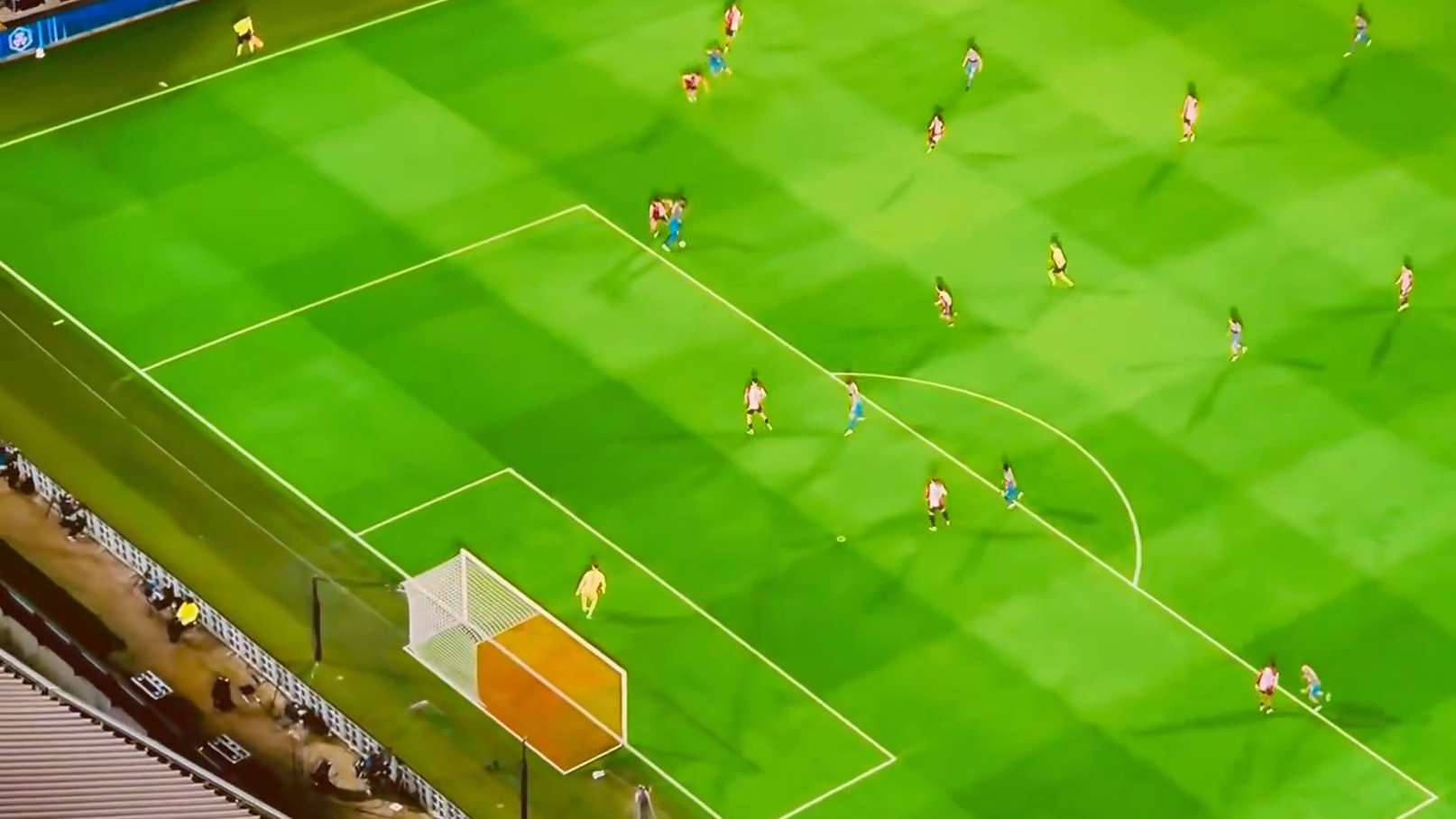
Footage filmed by a fan in the first tier has since intensified the debate. Shot from an elevated angle, the video appears to show Ernst positioned close to his near post as Bisseck struck from roughly 20 metres. The ball travelled into the far corner, prompting questions online about whether the goalkeeper’s positioning left too much space exposed.
Video fuels debate over Ernst’s positioning
Supporters quickly shared their reactions on X, with many focusing on the space between Ernst and the far post. One fan asked why the goalkeeper appeared to be guarding the near corner despite Bisseck shooting from outside the penalty area. Another described the position as difficult to understand, given the distance from which the Inter defender took his chance.
Other comments were more forceful. One viewer argued that Ernst’s positioning was clearly at fault, while another suggested the goalkeeper could have done more to respond to the loose ball. The range of reactions reflects how quickly a single goal can become a wider talking point in football, particularly when supporters are already concerned about their team’s form.
However, a clip from one angle cannot always show every detail that shapes a goalkeeper’s decision. The position of defenders, the shooter’s body shape, the goalkeeper’s view of the ball and the speed of the strike may all influence where a keeper stands. Those factors do not end the discussion, but they are important context when judging a goal from a short social-media video.
Supporters’ confidence in the goalkeeper appears fragile
The reaction suggests that confidence in Ernst among parts of the Feyenoord support has become increasingly delicate. Some fans have described the German goalkeeper as a worrying presence, while others have questioned whether he is currently helping the team settle defensively. The criticism has also prompted calls for head coach Giovanni van Bronckhorst to consider a change between the posts.
One supporter even joked about going to collect former Feyenoord goalkeeper Timon Wellenreuther, who left the club for VfL Wolfsburg last summer. The comment captured the frustration of fans looking for an immediate solution, although a change of goalkeeper would not necessarily address the broader problems visible in the team’s performance.
Ernst’s situation also illustrates the pressure that comes with playing in goal for a major club. A goalkeeper’s mistakes are highly visible, and a goal can quickly become a defining image of a match. When supporters are anxious about results, scrutiny can intensify, making it harder for a player to rebuild confidence with each subsequent appearance.
Not all fans blame Ernst for Feyenoord’s struggles
Not every supporter believes the goalkeeper should carry the blame. Some have warned that personal attacks risk damaging Ernst’s confidence rather than helping the team. Others are frustrated by what they see as a familiar search for a scapegoat whenever Feyenoord underperform.
That argument has merit: football matches are shaped by collective decisions, not just the final action before a goal. Defensive pressure, the space allowed to an opponent, the organisation of the back line and the team’s ability to control possession can all contribute to a scoring opportunity. Bisseck’s strike may have raised questions about Ernst, but it also highlighted the challenge Feyenoord faced in preventing Inter from attacking comfortably.
Team performance raises wider concerns
Supporters’ complaints extended beyond the goalkeeper. Many were unhappy with Feyenoord’s slow circulation of the ball, a perceived lack of courage in possession and the amount of room afforded to Inter’s players. Those concerns point to a broader performance issue: if a team struggles to press, retain the ball or move forward with purpose, pressure on its defence is likely to increase.
Against an experienced opponent such as Inter, small lapses can quickly become costly. Italian sides are often adept at exploiting space and punishing hesitation, so Feyenoord needed to be organised and decisive from the opening minutes. Conceding so early disrupted the home side’s plans and placed extra responsibility on the players to respond while managing the visitors’ threat.
For Van Bronckhorst, the challenge is therefore twofold. He must assess whether Ernst’s positioning or recent performances warrant a change, while also addressing the team’s overall structure and confidence. A goalkeeper switch might satisfy some supporters in the short term, but improvements in defensive coordination and the speed of Feyenoord’s play could be just as important.
What the incident means for Feyenoord’s next steps
The goal has become a talking point not only because of its impact on the match, but because it has sharpened questions about Feyenoord’s direction. Supporters will be watching to see how Ernst responds in future games and whether the coaching staff publicly back him. His reaction under pressure may prove as significant as the debate over his position for Bisseck’s shot.
Any prediction about Feyenoord’s next move should remain cautious. One goal and one supporter-filmed angle are not enough to determine whether Ernst should lose his place, and the club’s decision will depend on training, performance data and the coaching staff’s assessment. What is clear is that the team needs a more convincing collective display to restore confidence.
For now, the discussion at De Kuip is about more than a goalkeeper’s positioning. It reflects the expectations surrounding Feyenoord, the intensity of Champions League football and the fine margins that can shape a match. Ernst is under scrutiny, but the response from the whole team will ultimately determine whether the criticism fades or grows louder.