
New Zealand vs India, 3rd ODI: Bowlers Set the Tone as Rain Threatens Hamilton Decider
The first two matches of the New Zealand–India ODI series have felt like a throwback to a different age of cricket. Runs have been hard to come by, the new ball has moved sharply, and even the Powerplay has offered little of the free-scoring spectacle usually associated with modern white-ball cricket. Instead of a race towards 350, both teams have had to scrap for every boundary and treat a total approaching 200 as a serious challenge.
That shift has made the series an intriguing counterpoint to the recent T20 cricket conversation, in which bowlers have often appeared to be fighting an uphill battle. Rain and surface moisture have helped the seamers, but conditions alone do not explain their impact. India’s young pace attack has repeatedly tested New Zealand’s top order, while the hosts’ bowlers have also made the visitors work for their runs. The third ODI at Seddon Park now offers New Zealand a chance to stay alive—and India an opportunity to seal the series.
India’s young seamers keep New Zealand under pressure
India have benefited from winning the toss in both previous games, but their bowling effort has been impressive in its own right. The visitors are without several of their first-choice fast bowlers, yet their younger options have maintained control and attacked the stumps and outside edge with discipline. When the conditions have called for shorter, harder lengths, Gurnoor Brar’s pace and bounce have added another challenge for New Zealand’s batters.
New Zealand’s attack has responded well, making India’s batters adjust to conditions that are far removed from the high-scoring norm. Virat Kohli was the standout in Auckland, while Daryl Mitchell and KL Rahul showed that measured, confident batting can still succeed on a bowler-friendly surface. Their innings have offered a useful reminder: adapting to conditions is not the same as surrendering the initiative.
India batting coach Sitanshu Kotak believes the experience could benefit his side beyond this series, particularly with a two-match contest to follow. New Zealand batting coach Luke Ronchi described the Wellington pitch as being close to a Test surface. Both coaches have acknowledged that their batters must be prepared to spend time at the crease, manage risk carefully and recognise when conditions—not the scoreboard—are dictating the tempo.
New Zealand need a stronger start
New Zealand enter the third ODI in must-win territory. Their top order has struggled to disrupt India’s new-ball rhythm, and a cautious approach has yet to produce the platform the hosts need. The challenge is not simply to attack from the first over, but to find moments to put pressure back on the bowlers—through smart rotation, decisive running and selective boundary-hitting.
Captain Mitchell Santner will also hope the toss goes his way after India won it in each of the first two matches. A favourable toss could matter if the pitch again offers early movement, although New Zealand will need more than conditions to turn the contest around. They can draw confidence from their strong ODI record at Seddon Park, where their win-loss ratio stands at four.
The series has also arrived at a useful time for both sides. With a World Cup in Africa looming next year, learning to build an innings when the ball is moving and runs are scarce may prove valuable. The top-order batters, in particular, have an opportunity to show that they can adapt before the teams move on to a different challenge.
Match details and Hamilton weather forecast
Match: New Zealand vs India, third ODI
Date: November 10, 2026
Start time: 7:30 AM IST; 3:00 PM local time
Venue: Seddon Park, Hamilton
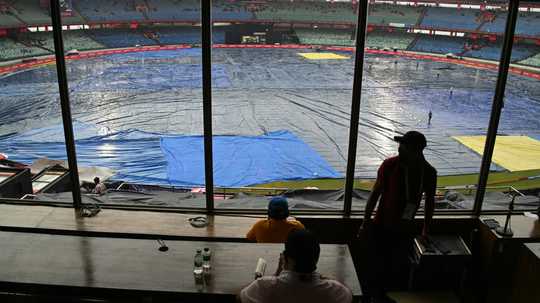
Rain could be the biggest factor in Hamilton. Persistent showers disrupted India’s preparations on the eve of the match, forcing the team to train indoors, and more wet weather is forecast for Tuesday. That raises the possibility of a washout or another shortened contest, potentially disappointing a sellout crowd.
If play does get underway, the recent history of the venue offers a warning for batters. England and West Indies were dismissed for 175 and 161 in the previous two ODIs at Seddon Park last year. Those results do not guarantee another low-scoring game, but they underline why the fast bowlers may again enjoy conditions that reward accuracy and patience.
Team news: Fisher likely to feature for New Zealand
Matt Henry has been advised to target a return in the fourth ODI, while Blair Tickner will miss the next two matches during a mandatory seven-day stand-down period, despite being cleared of concussion. Matt Fisher, who came into the Wellington match as Tickner’s concussion substitute, is expected to start this time. Kristian Clarke has been called up as cover.
Will Young’s place could come under scrutiny after he passed double figures only once in his last 10 ODI innings at home. Nick Kelly is the reserve batter, but selecting him would leave New Zealand with a left-handed-heavy top order. Young’s earlier returns in India and the West Indies may earn him another opportunity.
Probable New Zealand XI: Will Young, Tim Seifert, Henry Nicholls, Daryl Mitchell, Tom Latham (wicketkeeper), Glenn Phillips, Mitchell Santner (captain), Nathan Smith, Kyle Jamieson, Jacob Duffy, Matt Fisher.
India may retain the combination that has served them well so far. Mohammed Siraj has not played in the series, but the younger seamers have made a strong case to continue. Kuldeep Yadav was in good spirits before the match, though the conditions and team balance could again keep the spinner on the sidelines.
Probable India XI: Rohit Sharma, Shubman Gill (captain), Virat Kohli, Shreyas Iyer, Axar Patel, KL Rahul (wicketkeeper), Naman Dhir, Anshul Kamboj, Auqib Nabi, Arshdeep Singh, Gurnoor Brar.
Prediction: a close contest if the weather allows
Any cricket prediction for Hamilton must begin with the forecast. Persistent rain could reduce the match to a short, high-pressure contest—or prevent a result altogether. If enough overs are played, the team that handles the new ball and resists the urge to force the pace should have the advantage. India’s seam attack has looked settled, but New Zealand’s familiarity with Seddon Park and their need to win could make them dangerous.
Ronchi has urged his batters to stay calm even when the scoring rate falls to two or three runs an over. That mindset may be decisive: on a surface where 200 could feel substantial, patience is not passive cricket but a strategy. The team that protects its wickets early and accelerates at the right time may take control of the series.
What the coaches are saying
Sitanshu Kotak on KL Rahul: Kotak praised Rahul’s consistency and composure, saying he has produced important innings and rarely appears under pressure.
Luke Ronchi on batting conditions: Ronchi noted that 200 would have been a major first-innings total in the previous match. He said New Zealand’s batters need to accept quiet periods, remain calm and adapt their plans to the conditions.