
Lionel Messi Makes History as First Footballer to Win the Princess of Asturias Award for Sport Individually
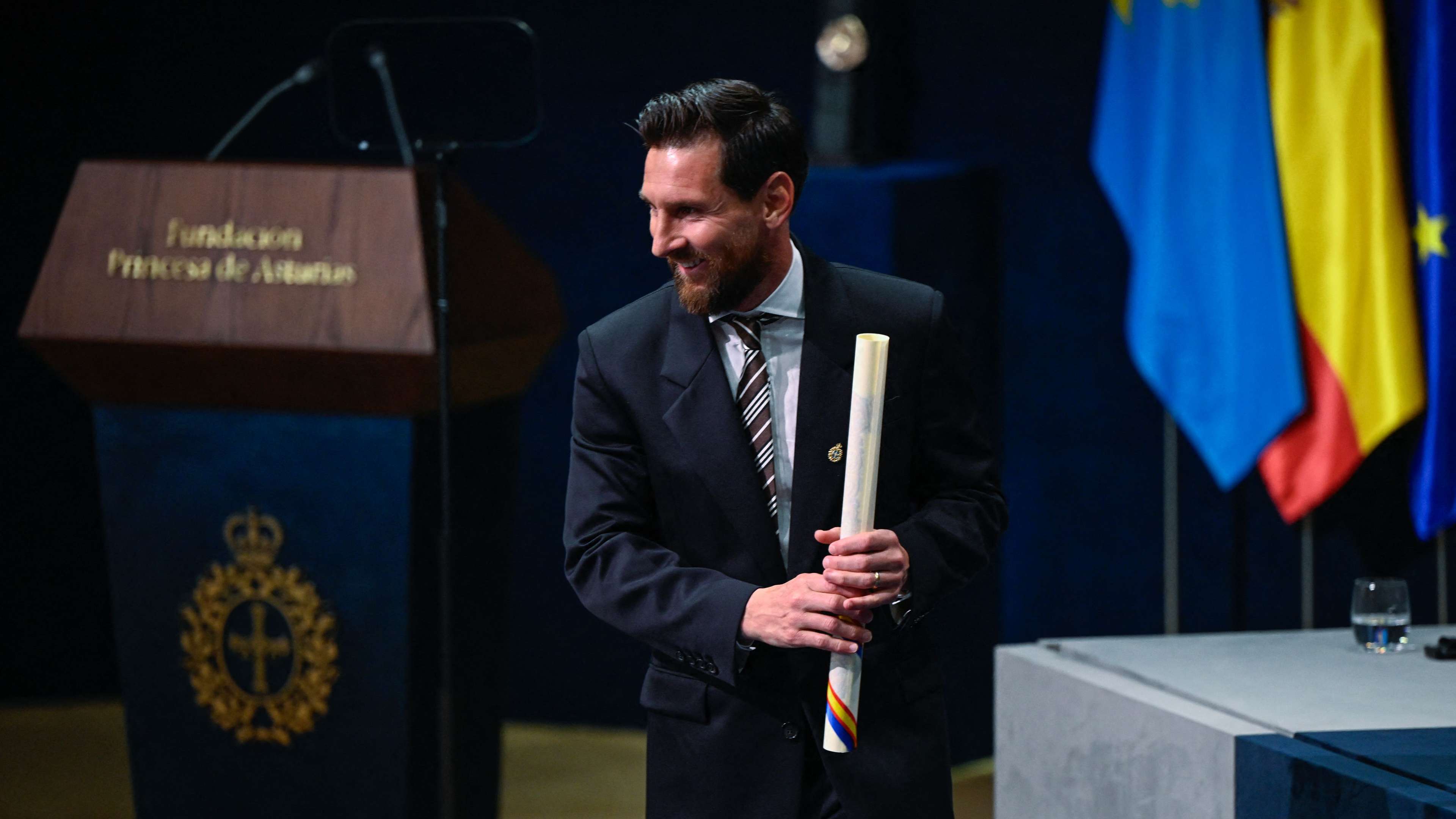
Lionel Messi has added another landmark honour to an extraordinary career, becoming the first footballer to receive the Princess of Asturias Award for Sport as an individual. The Argentine star accepted the prestigious award at Oviedo’s historic Campoamor Theatre, where Spain’s royal family and an international audience gathered to celebrate achievements across sport, culture, science and public life.
The recognition reflects more than Messi’s records, trophies and influence on the pitch. The jury highlighted his sporting excellence alongside his charitable work, humility and ability to earn admiration around the world. In a sport where individual accolades often sit alongside team success, the award also recognises the qualities that have helped Messi remain a defining figure in football across generations.
A historic honour in a landmark setting
King Felipe VI and Queen Letizia presided over the ceremony, joined by Princess Leonor, Infanta Sofía and Queen Sofía. Held in the Campoamor Theatre, the event placed Messi among a distinguished group of award recipients whose contributions span artistic, scientific and humanitarian fields.
The Princess of Asturias Foundation’s jury described Messi as the most decorated player in football history and praised his exceptional talent and sporting career. Its decision also recognised his sustained efforts to improve access to education and healthcare for children facing hardship. The citation pointed to his perseverance, modesty and commitment to the team as reasons he has earned respect far beyond the football community.
For supporters, the award offers a broader way to understand Messi’s legacy. His career is often measured through goals, assists and championships, but the jury’s reasoning placed equal emphasis on how he has carried himself and used his public platform. That combination of elite performance and social commitment helped distinguish his candidacy.
Princess Leonor praises Messi’s football intelligence
One of the ceremony’s most memorable moments came when Princess Leonor spoke about Messi’s remarkable career. She described how he had “turned the exceptional into routine,” drawing attention not only to his technical skill but also to his ability to read a match and make effective decisions in a matter of seconds.
Her remarks captured an important part of Messi’s appeal. His influence is not limited to spectacular goals or moments of individual brilliance. He is also known for recognising space, anticipating opponents’ movements and choosing when to pass, dribble or accelerate an attack. These decisions can appear effortless to spectators, but they reflect years of experience, precision and an unusually clear understanding of the game.
Princess Leonor also emphasised that Messi’s choices frequently serve the team rather than personal recognition. That observation speaks to a central theme of his career: football is a collective sport, and even its most celebrated players depend on cooperation, trust and shared purpose. The ability to combine individual talent with team responsibility has helped keep Messi influential at club and international level.
From childhood challenges to a global football career
Messi’s journey to the top was not without obstacles. As a child, he faced growth-related health challenges, requiring treatment and determination as he pursued his ambitions in football. His story of perseverance has become part of his public image, but it also offers context for the discipline behind his success.
Over the years, Messi has adapted to changing teams, coaches, competitions and expectations while maintaining an exceptional standard. His career has included major honours at club level and international success with Argentina, along with a record-breaking collection of individual awards. Yet the Princess of Asturias recognition places particular weight on the qualities that sit behind those achievements: persistence, humility and dedication to teammates.
For young players, his career provides a reminder that progress is rarely defined by talent alone. Resilience, patience and the ability to contribute to a group can be just as important. That message adds a human dimension to the latest honour and helps explain why Messi’s influence reaches beyond match results.
Charitable work beyond the pitch
Messi’s off-field work was central to the jury’s decision. He has served as a UNICEF ambassador since 2010 and established the Leo Messi Foundation, which supports initiatives focused on children’s education and healthcare. These efforts reflect a commitment to improving opportunities for young people, particularly those living in vulnerable circumstances.
High-profile athletes can draw attention to causes that might otherwise receive less visibility. Messi’s global recognition gives his charitable work a wide platform, while the foundation’s focus on education and health addresses needs that can shape children’s futures long after a sporting headline has faded. The award therefore acknowledges not only what he has achieved in football, but also how he has used his position to support others.
This wider impact is increasingly part of how sporting greatness is judged. Fans may debate statistics, team selections and predictions about future matches, but an athlete’s legacy can also depend on their conduct and contribution outside competition. Messi’s award reflects that broader view of what it means to be a role model.
Messi shares the stage with global cultural and scientific figures
The ceremony celebrated an impressive range of recipients. Patti Smith received the Arts Award and surprised guests with a song during her speech, while writer Julian Barnes was honoured in Literature. Christina Koch received the Concord Award, and historian Timothy Garton Ash was recognised in Social Sciences.
Studio Ghibli was honoured in Communications and Humanities, while scientists David Klenerman, Shankar Balasubramanian and Pascal Mayer received the Scientific and Technical Research Award. The Svalbard Global Seed Vault was recognised in International Cooperation for its role in safeguarding crop diversity for future generations.
Being honoured alongside such figures placed Messi’s achievement in a wider context. The Princess of Asturias Awards recognise contributions that shape society in different ways, from scientific discovery and artistic expression to international cooperation. Messi’s presence among this group underlined how sport can also carry cultural and humanitarian significance.
What the award means for Messi’s legacy
Messi’s Princess of Asturias Award for Sport marks a historic first for football and adds a new dimension to an already remarkable career. It recognises an athlete whose influence has been built through extraordinary performances, but also through consistency, teamwork and a visible commitment to children’s welfare.
As football fans continue to follow his next matches and make their own predictions about what comes next, the award offers a moment to look beyond the immediate competition. Messi’s legacy is still being written, but this honour makes clear that his impact is measured not only by what he has won, but by the respect he has earned and the opportunities he has helped promote for others.