
Iraola Proud of Liverpool Despite 3-0 Defeat to Manchester City
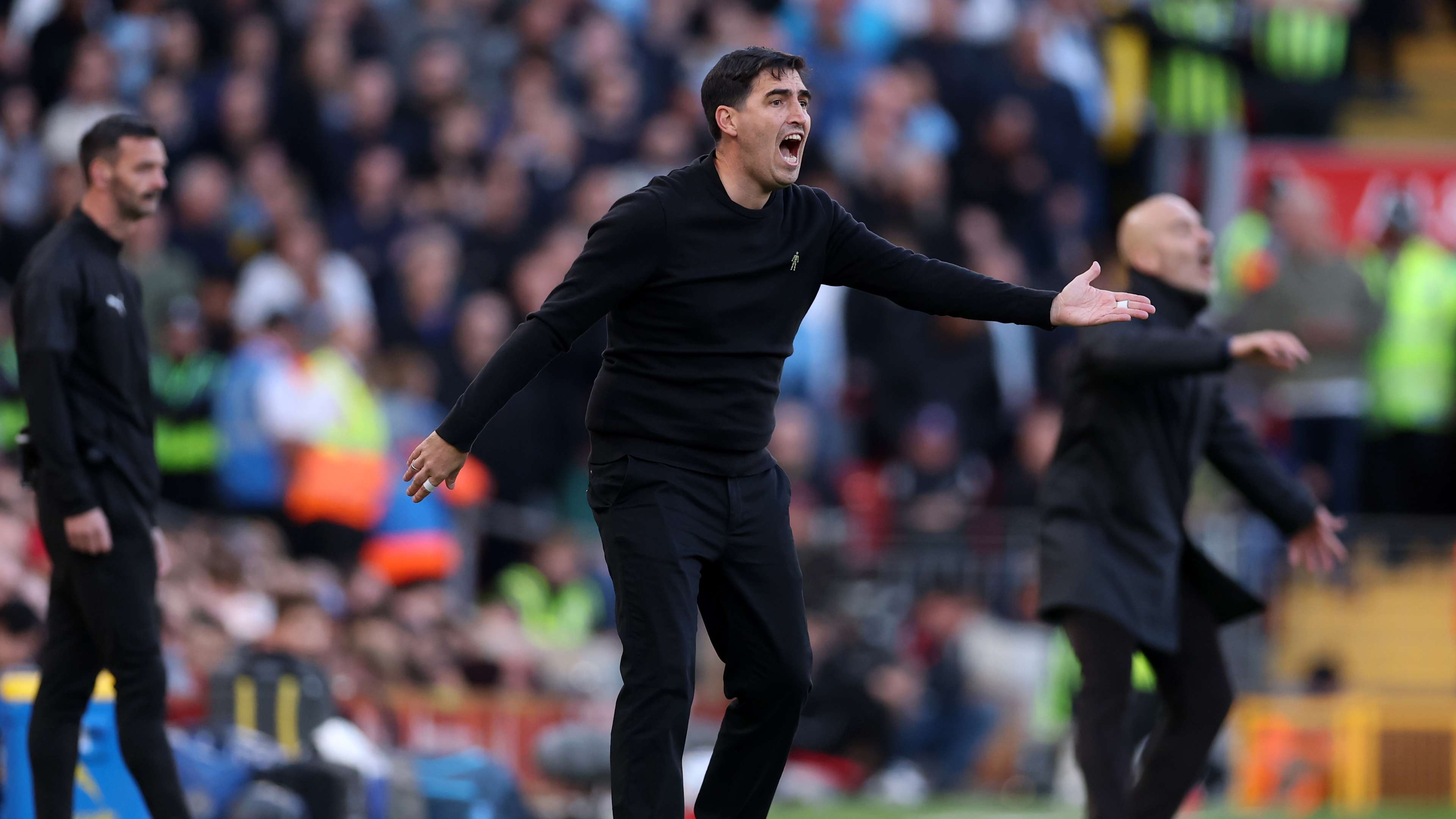
Andoni Iraola said he remained proud of his Liverpool players after their 3-0 defeat to Manchester City, describing the Premier League clash at Anfield as two very different matches. Liverpool competed strongly while both teams had 11 players on the pitch, but Ryan Gravenberch’s dismissal in the 62nd minute changed the contest and helped City take control.
The result was decisive on the scoreboard, yet Iraola’s assessment focused on the contrast between Liverpool’s promising first hour and the difficult spell that followed. He felt his side had defended well, grown into the game and begun to create opportunities before the red card left them facing a far tougher challenge against one of the league’s most dangerous opponents.
Red Card Changes the Shape of the Match
There was little to separate the teams before Gravenberch was sent off. Liverpool had limited Manchester City’s clear chances in the first half and, according to Iraola, improved as the match progressed. The home side’s energy and the Anfield crowd were also helping to build momentum when the dismissal disrupted their plans.
“We played two different matches,” Iraola said after the final whistle. “The first was before the red card, and the second was after it. During the first 60 minutes, the players’ performance was excellent. After the red card, Manchester City were better than us.”
The sending-off forced Liverpool to adjust their approach. Playing with 10 men against City makes it harder to press effectively, protect space and keep possession, particularly when the opposition can move the ball quickly across the pitch. Liverpool then conceded before making a substitution, leaving Iraola’s side with the additional challenge of chasing the game while a player down.
Once City took the lead, Liverpool had to balance the need to attack with the risk of leaving gaps at the back. That is a difficult calculation for any team, and especially against opponents capable of exploiting small pockets of space. City went on to score three times, turning a closely contested encounter into a convincing away victory.
Iraola Questions the First Yellow Card
Iraola also expressed frustration with the decision that contributed to Gravenberch’s dismissal. He argued that the midfielder’s first yellow card was harsh, describing the incident as an ordinary foul rather than an offence that warranted a booking.
“The first yellow card was just a kick on the toe. It was nothing. It was an ordinary foul,” he said.
Disciplinary decisions can have an outsized impact in high-level football, particularly when a player is already on a booking. A second yellow card not only removes a player from the match but also changes the tactical choices available to the coach. Liverpool’s shape, pressing triggers and substitution plans all had to be reconsidered after Gravenberch’s departure.
Iraola suggested the timing was especially painful because Liverpool were beginning to make their effort count. The team had grown more competitive and was starting to turn its work into attacking opportunities. With the crowd behind them, the hosts appeared to be building belief before the match shifted in City’s favour.
Positive Signs Despite the Scoreline
Although the defeat offered no points or immediate reward, Iraola highlighted aspects of Liverpool’s performance that he considered encouraging. He said the team had given up very few chances in the opening half and had shown the commitment required to challenge City while the match remained 11 against 11.
“We conceded very few chances in the first half,” he said. “We put in a very good performance, and in the second half we were turning that into chances.”
That distinction matters when assessing a result beyond the final score. A 3-0 loss can suggest a one-sided contest, but the red card meant the game’s final phase unfolded under circumstances very different from those of the opening hour. Liverpool’s early defensive organisation and growing attacking threat offered evidence that the team had been able to compete before being reduced to 10 men.
Iraola did not try to disguise the disappointment. Liverpool lost, and the result was damaging, but he said he enjoyed the effort his players produced and praised their determination. His comments reflected a coach looking for lessons as well as accountability: the team must review how it handled the dismissal, while also retaining the confidence gained from its stronger periods.
What the Result Could Mean for Liverpool
The match provides several talking points for Liverpool supporters and anyone considering a football prediction ahead of the club’s next fixtures. City’s ability to punish a numerical disadvantage underlined their quality, while Liverpool’s first-hour display suggested the contest could have remained more balanced without the red card.
For future matches, Liverpool’s response will be important. The coaching staff will need to assess the team’s discipline, how quickly it can adapt when a player is sent off and whether the promising attacking moments can be sustained against other opponents. Those factors may prove more useful for predicting Liverpool’s near-term form than the scoreline alone.
At the same time, Manchester City’s performance showed why they remain difficult to contain. Even before the dismissal, Liverpool had to work hard to limit their chances. With an extra player, City were able to apply greater pressure and make their advantage count. Their three goals reflected both the circumstances and their ability to take control once the match opened up.
Injuries Create Uncertainty Ahead of Europe
Liverpool’s attention now turns to the Champions League, but Iraola was cautious when asked whether injured players might return for the midweek fixture. With only two days between matches, he said it would be difficult to know who would be available.
“It will be difficult; there are only two days left. Nobody knows what will happen,” he said.
The short recovery window leaves the medical staff with limited time to evaluate players and determine whether they are fit to travel or take part. Any return could strengthen Liverpool’s options, but rushing an injured player back carries its own risks. Team selection will therefore depend on late fitness checks and how the squad responds after the demanding loss to City.
For Iraola, the immediate challenge is to help Liverpool move on without ignoring what went wrong. The result was a setback, but his message was clear: the team showed quality and commitment before the dismissal, and the players should take pride in that effort. The next test will be whether Liverpool can carry those positive signs into Europe while learning from the moments that allowed the match to slip away.