
2006 World Cup Final: Italy’s Triumph, Zidane’s Red Card and a Night of High Drama
The 2006 FIFA World Cup final remains one of the most unforgettable matches in football history. Played at Berlin’s Olympiastadion on July 9, the contest brought together Italy and France in a tense, dramatic showdown that ended with Italy lifting the trophy after a penalty shootout. Goals from Marco Materazzi and Zinedine Zidane set the tone, but the match is remembered just as much for Zidane’s shocking dismissal as for the result.
More than two decades later, the final still invites debate, emotion and analysis. It was a fittingly theatrical conclusion to a tournament shaped by pressure and uncertainty: a battle between an Italian team seeking redemption amid a domestic football scandal and a French side inspired by the remarkable final chapter of Zidane’s international career.
A final shaped by pressure and expectation
Berlin’s Olympiastadion has hosted major events across generations, but few nights have matched the intensity of the 2006 final. The atmosphere was charged before kick-off, with supporters from both nations filling the stands and millions more watching around the world. Every touch carried significance, and the sense that the match could turn on a single moment never faded.
Italy arrived in Germany under an unusually harsh spotlight. The Calciopoli scandal had shaken Italian football, raising questions about the sport’s integrity and placing additional pressure on the national team. On the pitch, however, the Azzurri displayed the qualities that had long defined their strongest sides: defensive organization, composure under pressure and the ability to punish opponents when opportunities appeared.
France, meanwhile, had grown stronger as the tournament progressed. After a challenging start, the team found rhythm through its experienced core, with Zidane directing play and giving the side a sense of control. The final was also set to be his last match as a professional footballer, adding a powerful personal dimension to an already historic occasion.
Zidane’s penalty and Materazzi’s response
The final began at a breathless pace. France took the lead in the seventh minute when Zidane converted a penalty with extraordinary confidence. His chipped effort struck the underside of the crossbar and crossed the line, briefly leaving the stadium in disbelief. It was a bold finish in the biggest match of his career, and it immediately gave the French captain a defining moment.
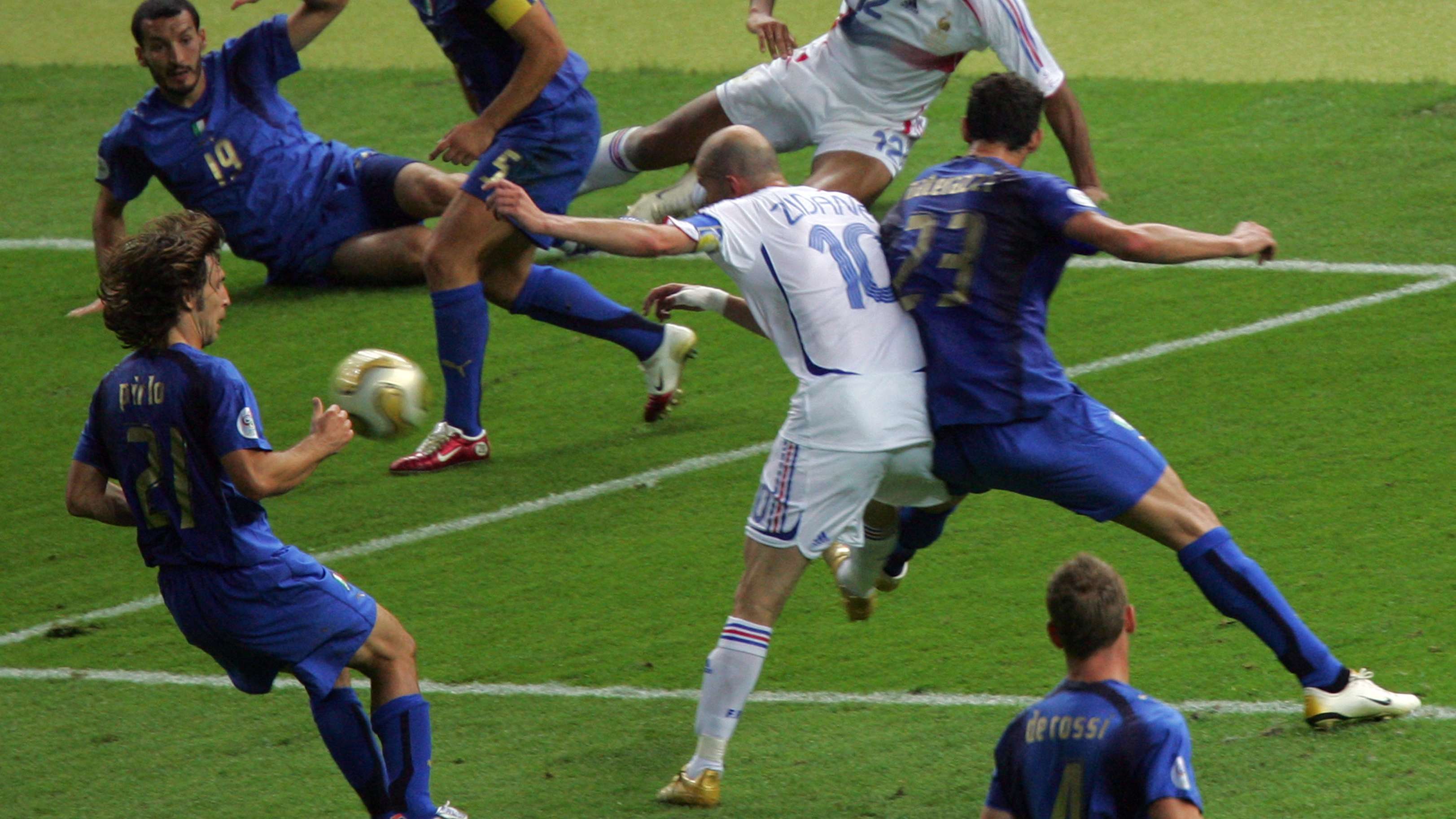
Italy responded with the kind of set-piece execution that had become a major strength during the tournament. In the 19th minute, Andrea Pirlo delivered a corner into the penalty area, where Materazzi rose above the French defence to head the ball past goalkeeper Fabien Barthez. The equalizer restored balance and confirmed that Italy would not be intimidated by the occasion.
From there, the match settled into a demanding contest of tactical discipline and individual quality. Italy looked to protect its defensive shape while finding openings through Pirlo’s passing and the movement of its forwards. France relied on Zidane’s vision, the energy of its midfield and the experience of players who had navigated major international matches before.
Extra time and the moment that changed the final
Neither side could find a winner in regular time, sending the final into extra time. The pressure rose with every minute, and the match seemed to be moving toward a penalty shootout. Yet the most famous incident of the night arrived before the teams could reach that conclusion.
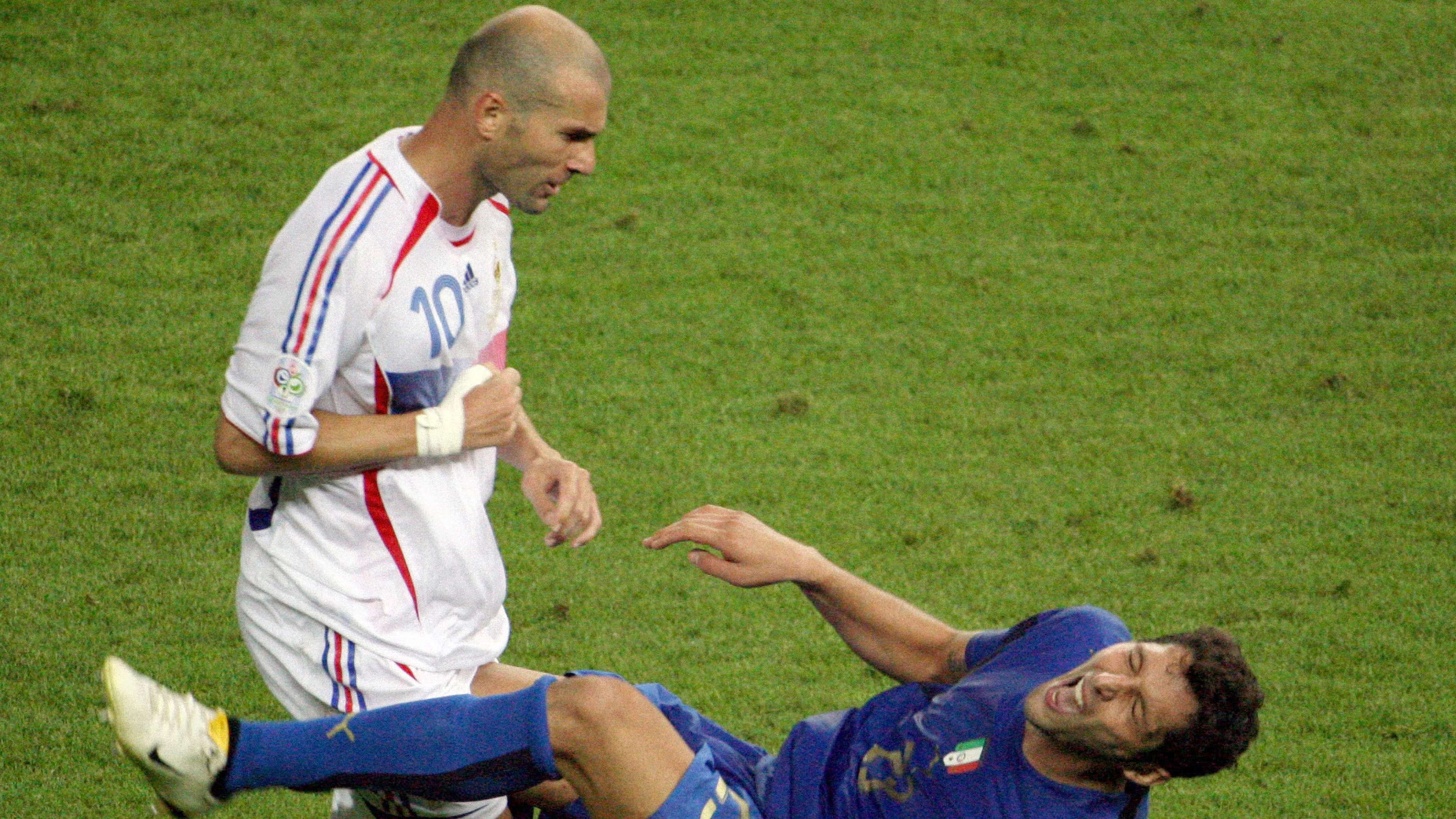
In the 110th minute, Zidane was sent off after striking Materazzi with his head in the chest. The referee did not appear to see the incident directly, but, after consulting with the fourth official, showed the French captain a red card. Zidane walked past the World Cup trophy on his way off the pitch—a lasting image that captured the strange mixture of triumph, disbelief and disappointment surrounding his final appearance.
The dismissal transformed the closing stages. France had to finish extra time with ten players, while Italy faced the challenge of staying composed against a team still capable of creating danger. The incident became one of the most discussed moments in sporting history, prompting years of questions about what had been said between the two players. Whatever the exchange, the consequences were immediate: France lost its captain and playmaker at the most critical point of the match.
Italy wins the penalty shootout
With the score still 1–1 after extra time, the World Cup title would be decided from the penalty spot. The shootout placed extraordinary pressure on every taker, but Italy handled the challenge with remarkable calm. Italian players converted their attempts, while France’s David Trezeguet struck the crossbar and saw the ball rebound without crossing the line.
Fabio Grosso stepped forward to take Italy’s decisive penalty. His successful kick secured a 5–3 shootout victory and sent the Italian players rushing toward him in celebration. The win gave Italy its fourth men’s World Cup title and offered a powerful answer to the doubts surrounding the national team before the tournament.
For France, the defeat was painful, particularly because the team had competed so evenly through 120 minutes. Zidane’s sending-off became the defining image, overshadowing much of the football that had made the final compelling. Italy’s victory, by contrast, was built on resilience, concentration and the ability to keep functioning when the match became emotionally turbulent.
Why the 2006 final still matters
The 2006 World Cup final endures because it combined tactical tension with unforgettable human drama. It featured an audacious penalty, a defender’s crucial equalizer, a red card involving one of the sport’s greatest players and a shootout that delivered Italy the trophy. Few finals have offered such a sharp contrast between collective achievement and individual heartbreak.
It also provides a reminder that football matches are shaped by more than tactics and statistics. Nerves, decisions and moments of personal conflict can alter the course of a game in seconds. Italy’s disciplined performance and successful penalties became the foundation of a historic triumph, while Zidane’s final act ensured that the match would be remembered as both a sporting contest and a story of dramatic consequence.
Looking back at the final
Any prediction before kick-off could have pointed to a close contest between two experienced teams, but few could have anticipated the precise sequence of events that followed. Italy and France delivered a final worthy of the World Cup stage, one that continues to attract fans revisiting classic football matches and debating its pivotal moments.
Italy ultimately left Berlin as champions. Zidane departed the pitch before the final whistle, and Materazzi became both scorer and central figure in the night’s most controversial episode. Together, those contrasting stories gave the 2006 final its enduring power: a match in which the trophy was decided by penalties, but the memories were shaped by every dramatic turn that came before them.