
Harry Kane’s Ballon d’Or win could reshape how football views the centre-forward
Harry Kane believes his success as a striker is about more than goals. The Bayern Munich and England forward says his ability to drop into midfield, create chances and contribute defensively makes his approach different from that of a traditional centre-forward—and could influence how young footballers understand the position.
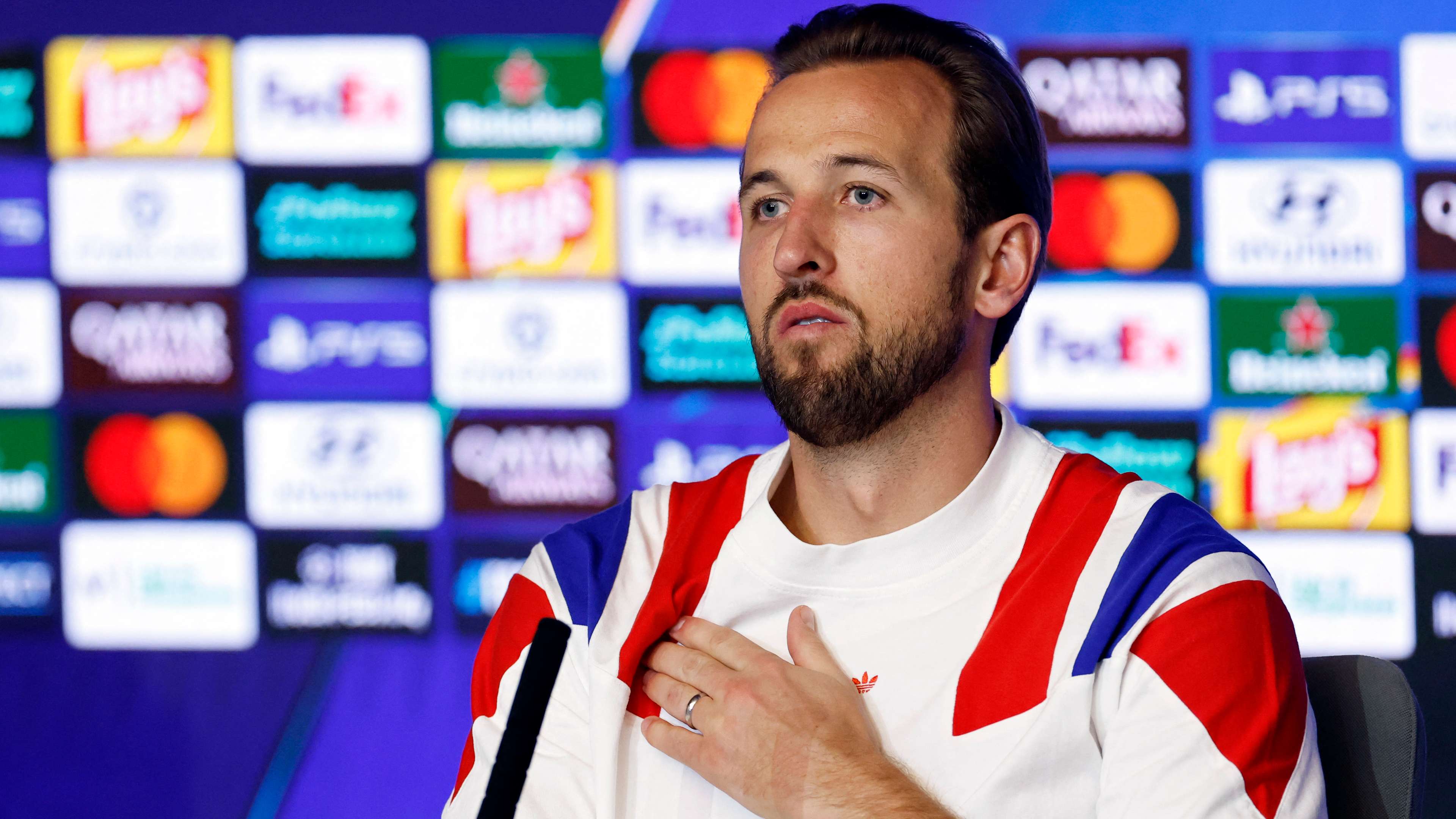
Speaking to the “Tribuna” website, Kane described himself as an unusual Ballon d’Or winner, pointing to the combination of his scoring record and all-round contribution. At 33, he says he is proud that his style may help broaden expectations of what a striker can do.
“There are not many strikers who play the way I play and produce the numbers I produce, while at the same time dropping back into midfield, contributing defensively and helping in many aspects,” he said.
Kane’s comments capture a wider shift in modern football. Forwards are increasingly expected not only to finish attacks but also to help build them, press opponents and create space for teammates. Kane believes his own career offers a clear example of how those responsibilities can fit alongside an elite goalscoring record.
A different blueprint for the modern striker
The classic centre-forward is often imagined as a player who stays high up the pitch, occupies defenders and waits for service inside the penalty area. Kane can perform those duties, but he is also comfortable moving away from the box to connect play. By dropping into deeper areas, he can receive the ball, link with midfielders and help Bayern progress up the field.
That movement can create difficult decisions for opposing defenders. If a centre-back follows Kane into midfield, space may open behind the defensive line for a teammate to attack. If the defender holds position, Kane can turn and influence the game with his passing. His positioning therefore offers Bayern more than a direct route to goal: it can also change the shape of an attack.
His contribution does not end when his team loses possession. Kane has also highlighted his willingness to help defensively, reflecting the demands placed on forwards in today’s high-intensity game. Teams often rely on attackers to lead the press, close passing lanes and make it harder for opponents to build from the back.
For aspiring players, the message is that a striker’s value can be measured in several ways. Finishing remains essential, but awareness, movement, passing and work rate can make a forward more influential across the full 90 minutes. Kane hopes his example gives younger players a broader understanding of the role.
From early setbacks to football’s highest individual honour
Kane also reflected on the difficult stages of his rise. He said his journey differed from those of other Ballon d’Or winners and acknowledged that not everyone expected him to reach the top when his career was beginning. Rather than presenting his success as a straight path, he credited persistence and effort for helping him overcome setbacks.
“After difficult moments, especially at the beginning of my career, perhaps some people did not expect me to reach this level,” Kane said. “But thanks to hard work, resilience and determination, I was able to achieve it.”
That account is part of what makes his career particularly relevant to young footballers. Progress in professional sport is rarely perfectly predictable: players can face limited opportunities, criticism or periods when their development stalls. Kane’s experience suggests that early doubts do not have to define a player’s eventual level, although reaching the top still requires sustained work and the ability to respond to adversity.
He also pushed back against the idea that his qualities went unnoticed throughout his career. Kane said people who understand football have long appreciated his playing style and his approach to matches. His remarks underline a distinction between public expectations and the detailed assessment of those who focus on a player’s tactical contribution as well as their headline statistics.
Why Kane’s style matters to the next generation
Kane’s influence may extend beyond his own performances because his game challenges a narrow definition of a striker. A young forward watching him can see that dropping deep does not necessarily mean abandoning the goal-scoring role. Instead, intelligent movement can help a team create better chances—and a striker can remain a prolific finisher while also acting as a playmaker.
That balance is especially valuable in modern tactical systems, where teams adjust their shape according to the opponent and the flow of a match. A forward who can hold up the ball, combine with midfielders, deliver a pass and still arrive in the box gives a coach more options. Kane’s versatility can make him effective in different phases of play, whether Bayern need a focal point in attack or a link between the midfield and the front line.
There is also a useful lesson in how to assess players. Goals and assists are easy to track, but they do not capture every action that helps a team. A forward’s movement may open space for another scorer; a defensive press may force an opponent into a mistake; a pass from deep may begin an attack several moments before the final shot. Kane’s case encourages supporters to look beyond the simplest statistics when judging a striker’s impact.
What to watch in Bayern’s next fixture
Bayern are scheduled to face Werder Bremen in their next Bundesliga match on 7 November 2026. Kane’s role will be one of the key talking points: will he stay close to the penalty area to threaten the defence, or move deeper to help Bayern control possession and create openings?
Any match prediction should account for more than Kane’s finishing. His ability to draw defenders out of position, combine with teammates and contribute to the press could shape the contest even if he is not the player who scores. For Bayern supporters, watching where he receives the ball—and how the team uses the space his movement creates—may be just as revealing as the final score.
Kane’s Ballon d’Or achievement has placed him among football’s most celebrated players, but his ambition is not limited to collecting individual honours. He wants his style to encourage a wider view of the centre-forward position: one in which goals remain vital, yet creativity, teamwork and defensive effort are part of the same job. If future generations follow that example, Kane’s legacy may be measured not only by what he scored, but also by how he helped redefine what a striker can be.