
Hasan Mahmud’s Injury Raises Fresh Concerns Over Bangladesh’s Pace-Bowling Workload
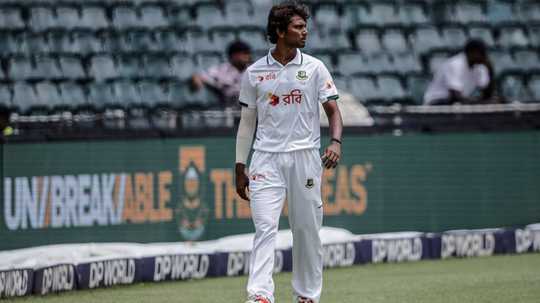
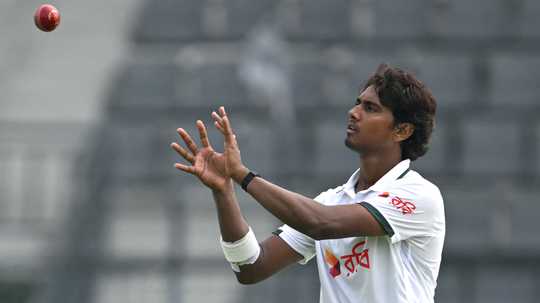
Bangladesh’s pace attack has been dealt another setback, with Hasan Mahmud expected to miss the next Test against South Africa after his tennis elbow problem returned. The injury is a worrying development for a fast bowler who has become one of the team’s most dependable options—and whose workload has climbed sharply while Nahid Rana has been unavailable.
Hasan is expected to return home to begin rehabilitation. His absence would leave Bangladesh needing to reconsider how they manage their seamers for the remainder of the series, especially as the team looks to balance immediate results with the longer-term health of its quicks. For supporters following the cricket, the situation also raises a difficult question: how much can Bangladesh continue to rely on one bowler before that dependence carries a greater cost?
From a promising county stint to an injury setback
The elbow issue first became a significant concern during the Bangladesh Premier League, and it later ruled Hasan out of the home series against Pakistan. At the time, he had not played enough competitive cricket after recovering to be considered ready for a return to Test action.
Hasan subsequently joined Kent in English county cricket, where a strong run of performances helped restore his standing. He showed control, consistency and the ability to vary his pace, using both conventional seam movement and wobble-seam deliveries to trouble batters. While much of the recent attention has focused on the quicker Nahid Rana, Hasan has built his reputation through disciplined spells and dependable execution.
That form made him an increasingly valuable part of Bangladesh’s plans. But good performances can bring an unintended consequence: a bowler who is in rhythm is often asked to deliver more. With Rana sidelined, Hasan’s role expanded, and the demands on his body increased at a time when his elbow still required careful management.
The numbers show how heavily Bangladesh relied on Hasan
The workload figures underline the scale of Hasan’s contribution. Across the period in question, he bowled 176.4 overs—47.9 per cent of the total overs delivered by Bangladesh’s pace attack. Taskin Ahmed sent down 101 overs, Ebadot Hossain 62.4 and Shoriful Islam 29. Together, those three quicks bowled 192.1 overs.
Those totals do not, on their own, explain the cause of an injury. Fast-bowling strain can depend on a range of factors, including technique, recovery time, match conditions and the intensity of each spell. Still, the comparison illustrates how much of Bangladesh’s pace workload fell to Hasan. Rana’s absence from the Test series against Australia and the West Indies, the one-off Test against Afghanistan and the opening Test against South Africa further increased the pressure on the remaining bowlers.
For team management, that creates a selection and planning challenge. A bowler may be fit enough to take the field in the short term while still carrying an injury that needs more time to settle. Bangladesh’s prediction of its best attack for the next Test will therefore depend not only on form, but also on medical assessments and the availability of alternatives.
A recurring problem with roots in Hasan’s early career
Hasan’s tennis elbow is not a new concern. The problem reportedly dates back to his Under-19 days, when he first felt discomfort during a stint in the Dhaka Premier League, Bangladesh’s leading List A competition. It became more prominent during the Adommo Tournament in February and March, when an impingement condition caused increasing pain while bowling.
He has been managing the discomfort with taping, but a member of the Bangladesh Cricket Board’s medical team has indicated that this should be seen as a way to control the problem rather than cure it. Taping may help limit stress or provide support, but it cannot replace adequate recovery if the underlying tissue needs time to heal.
The medical explanation is particularly relevant for fast bowlers who use their wrists to drive the ball hard into the pitch. Repeating that action can place stress around the elbow, and a sudden jolt or a change in mechanics may aggravate the area. The doctor suggested Hasan could have microscopic tears—small injuries that may not be visible but can still cause persistent pain.
Such damage can become more serious if the bowler continues to play without sufficient recovery. The concern is that repeated loading may prevent the affected fibres from repairing properly. Over time, the pain can become persistent, and a more substantial tear could create a longer-term problem. That is why a short-term workaround may not be enough if the injury keeps returning.
Why workload management matters for Bangladesh
There is also a possible link between fatigue and Hasan’s bowling action. It is understood that he may rely more heavily on his wrist when his body begins to tire. If that happens, the elbow could face additional strain precisely when he has already delivered a demanding number of overs. It is not possible to determine the full cause from workload figures alone, but the possibility strengthens the case for monitoring his technique and recovery closely.
Hasan’s situation also highlights a broader challenge for Bangladesh: building enough depth in the pace attack to avoid overburdening a small group of frontline bowlers. Injuries are part of professional sport, but teams can reduce the risk of one absence turning into another by rotating players where possible, managing spells and ensuring recovering bowlers are not rushed back.
For now, the immediate priority is Hasan’s rehabilitation. His recent form has made him an important asset, but protecting his ability to contribute over the long term may matter more than asking him to push through another match. Bangladesh will need other seamers to share the load, while the medical staff determine when Hasan can safely return.
The setback is frustrating for a bowler who had worked his way back into contention and delivered consistently under pressure. It is also a reminder that a successful cricket prediction about Bangladesh’s pace attack cannot rest on reputation or recent results alone. Fitness, workload and recovery will be just as important when the team decides how to approach the next Test.