
Mac Allister’s clash with Ødegaard sparks debate after Arsenal beat Liverpool
A heated confrontation between Liverpool and Arsenal players became one of the main talking points after the Premier League champions secured a narrow 1-0 victory at Anfield. The flashpoint involved Alexis Mac Allister, Martin Ødegaard and Noni Madueke, drawing sharp criticism from television pundits and reigniting debate about how football officials should handle confrontations between players.
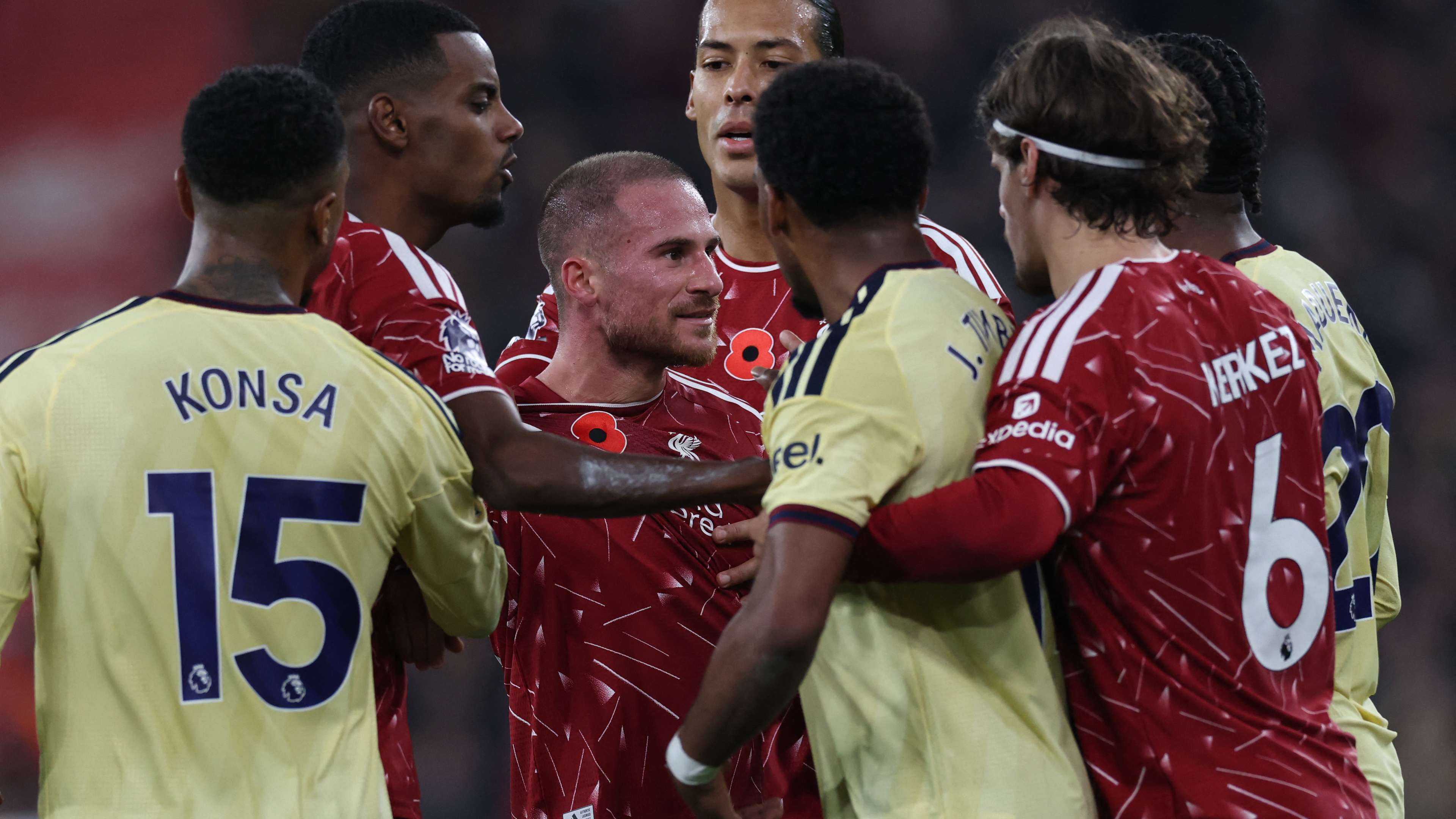
The incident came in the 79th minute of an already tense contest. Arsenal captain Ødegaard was down on his knees and elbows, apparently in discomfort, when Liverpool midfielder Mac Allister leaned towards him, said something and struck the back of his head. The gesture was difficult to interpret as friendly, and Arsenal players quickly moved in to challenge the Argentine.
What happened during the Anfield confrontation?
Arsenal right-back Jurrien Timber was among the first to confront Mac Allister. Players from both teams soon gathered around the pair, turning the exchange into a wider scrum. Madueke then approached Mac Allister and made contact with him forehead to forehead. Mac Allister went to ground, prompting further reactions from players nearby.
Referee Andrew Madley booked Mac Allister and Timber. Madueke, who had already received a yellow card, was not shown another, leaving Liverpool supporters frustrated. The decision was reviewed by video assistant referee Stuart Attwell, who judged the contact to be neither violent nor brutal enough to warrant a recommendation for a red card for violent conduct.
The episode highlighted a familiar challenge for referees: distinguishing between an aggressive act, an attempt to intimidate an opponent and an exaggerated reaction. In a high-stakes football match, those judgments can quickly become part of the post-match conversation—especially when a player who has already been cautioned is involved.
Neville and Carragher criticise Mac Allister
On Sky Sports, former Manchester United defender Gary Neville supported the decision not to send Madueke off, while condemning the way Mac Allister reacted. Neville described the contact as a “little nudge with the head” and said the Liverpool midfielder’s response was “a bit over the top.” He added: “Get up. Embarrassing.”
Neville also questioned Mac Allister’s role in starting the confrontation, pointing to the earlier slap on Ødegaard’s head. He called that action unnecessary, arguing that the Liverpool player had created a situation that could easily have escalated in an already emotionally charged match.
Jamie Carragher, a former Liverpool defender and supporter, was more forceful. He said football needed to call out exaggerated reactions and confrontational behaviour rather than treating such incidents as an unavoidable part of the game. Carragher also called for a joined-up response involving refereeing officials, the Premier League and club managers, so players understand that head-to-head confrontations will be dealt with consistently.
The debate reflects a broader issue in the sport. Players often rush into disputes to defend teammates, while opponents may use minimal contact to provoke a reaction. When those exchanges end in dramatic falls or crowded confrontations, officials must judge not only the contact itself but also the context and the players’ responses.
Liverpool also question penalty decision involving Timber
The late clash was not the only refereeing decision to frustrate Liverpool. Earlier in the first half, the hosts appealed for a penalty after Timber pulled Alexander Isak’s shirt inside the Arsenal penalty area. The contact appeared to affect the Swedish striker’s attempt to reach a cross, which he narrowly missed with his head.
Referee Madley did not award a spot-kick, and the incident did not result in a penalty after review. Former refereeing chief Keith Hackett described the decision as clearly wrong. Liverpool manager Andoni Iraola also expressed his dissatisfaction, suggesting Isak might have received the call had he gone to ground.
Iraola said it should not be necessary for a player to fall to attract the referee’s attention, but acknowledged that players may feel pressure to do so if they believe a foul will otherwise go unpunished. That concern goes to the heart of the penalty-area debate: officials are expected to penalise clear holding, yet players and coaches often argue that similar contact is treated differently from match to match.
For Liverpool, the missed appeal added to the frustration of a narrow defeat. For Arsenal, the decision was one of several moments they had to navigate while protecting their lead. Such calls can shape the mood around a match even when they do not change the scoreline, and they are likely to remain a talking point among supporters and pundits.
Arsenal take the points as the table shifts
Kai Havertz scored the decisive goal in the 16th minute, giving Arsenal a 1-0 win and helping the champions return to the top of the Premier League table. The result strengthened their position in a tight title race, with Manchester City and Brighton & Hove Albion among the closest challengers.
Liverpool, meanwhile, slipped behind Chelsea into fifth place after suffering their second defeat of the season. The result will concern the Reds not only because of the points lost, but also because it came in a match where they felt key decisions had gone against them. Arsenal leave Anfield with the victory, while Liverpool are left to assess both their performance and the moments that shaped the contest.
For fans searching for football predictions and analysis, the match offered a reminder of how fine the margins can be in the Premier League. A single goal, a disputed penalty appeal or a moment of indiscipline can influence the result and the league standings. Arsenal’s composure in front of goal proved decisive, but the clash involving Mac Allister and the unanswered questions over the penalty decision ensured the final whistle did not end the discussion.