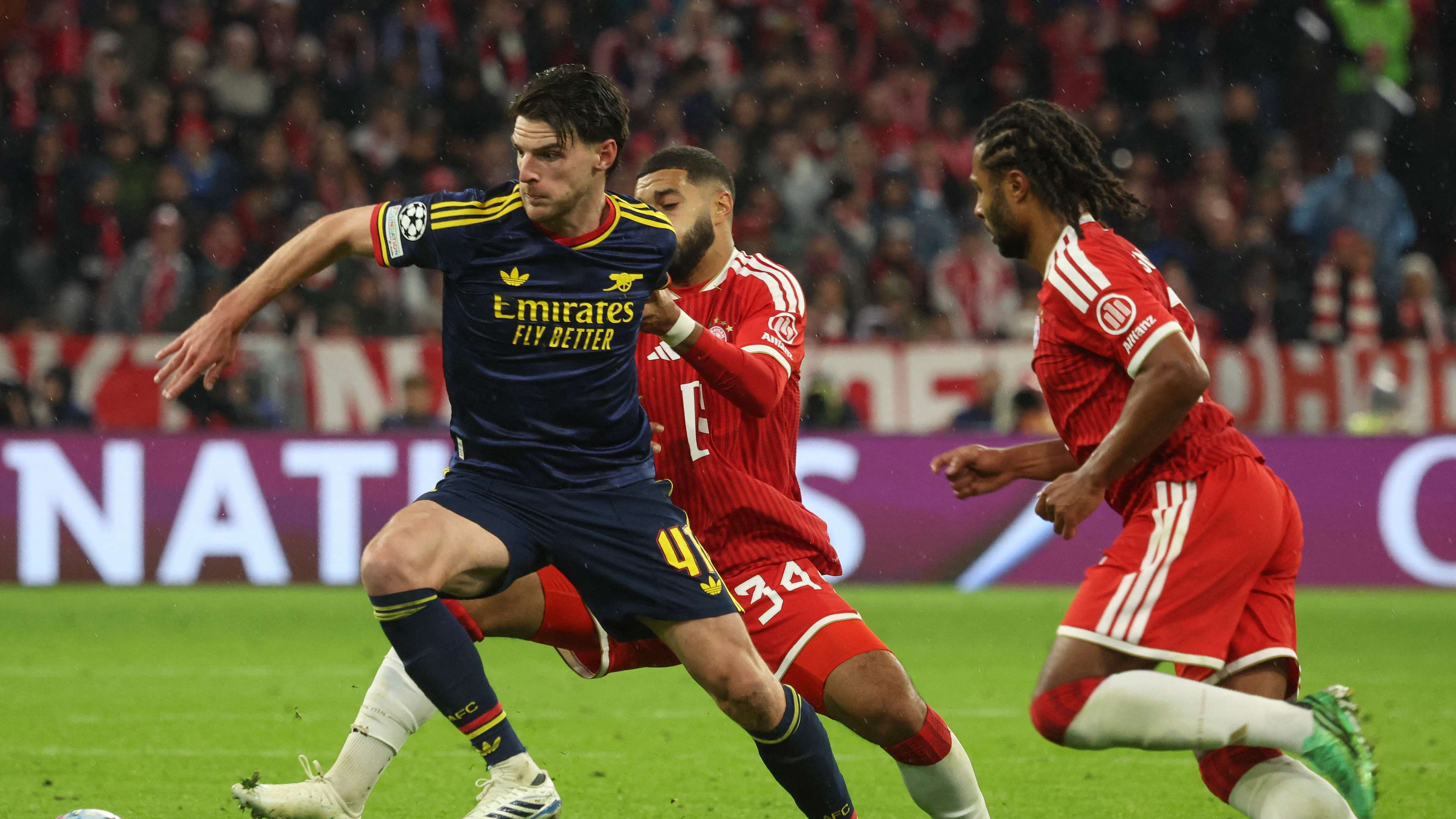

Kane’s Penalty Puts Bayern Munich Ahead After Arsenal Strike First
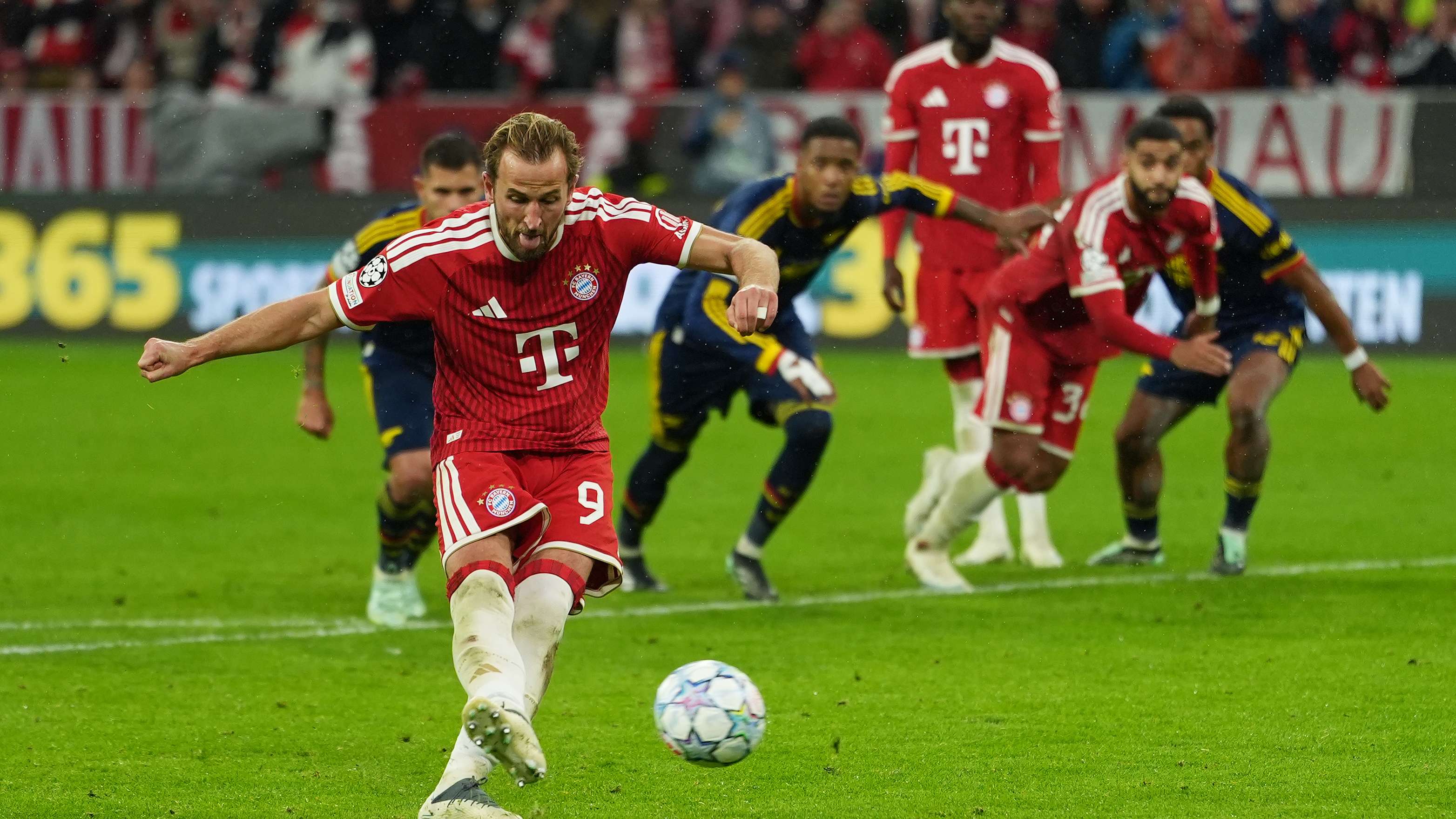
Harry Kane gave Bayern Munich the advantage against Arsenal in a tense UEFA Champions League meeting at the Allianz Arena, converting a second-half penalty after helping create the opening goal of the contest. The England captain’s finish lifted the Bavarian side into a 2-1 lead, turning an absorbing game of football into a test of Arsenal’s response.
The decisive moment arrived in the 60th minute, when Kane’s goalbound effort struck the arm of Arsenal defender Jurrien Timber inside the penalty area. After the referee awarded the spot-kick, Kane stepped forward and struck the ball powerfully into the top corner, to the right of goalkeeper David Raya. Raya had little chance of reaching the effort, and Bayern’s supporters celebrated a goal that shifted the momentum firmly toward the hosts.
Arsenal take the lead through Eze
Arsenal had started brightly and opened the scoring in the 25th minute through Eberechi Eze. The midfielder timed his run to meet a long, precise pass from Martin Ødegaard, who spotted space behind Bayern’s defence and delivered the ball down the left channel.
Eze accelerated toward goal, faced Manuel Neuer one-on-one and kept his composure to guide the ball into the net. The finish rewarded Arsenal’s willingness to attack quickly and exploit the space available in transition. It also gave the visitors an early platform in a difficult away fixture, where controlling Bayern’s tempo and limiting the hosts’ chances would be crucial.
For Bayern, conceding first did not lead to panic. The German side responded by increasing the pressure and looking for ways to stretch Arsenal’s defensive shape. That adjustment soon paid off, with Kane playing a central role in the equaliser.
Kane creates Bayern’s equaliser
Ten minutes after Arsenal went ahead, Kane threaded a pinpoint pass into the path of Alphonso Davies. The Canadian, deployed in a more advanced wide role on the night, moved into space and finished with his right foot in the 35th minute.
The goal highlighted the value of Kane’s vision as well as his finishing. While he is widely recognised as one of football’s most reliable centre-forwards, his ability to drop deeper, link play and release runners can make Bayern difficult to defend. Davies’ attacking position added another dimension, forcing Arsenal to account for a player who could threaten from the flank as well as support the midfield.
That equaliser reset the contest and gave Bayern renewed confidence. Arsenal had shown their threat on the break, but the hosts demonstrated how quickly they could turn possession into a dangerous chance when Kane found room to operate.
Penalty changes the balance of the match
Kane’s penalty put Bayern in front just after the hour mark and gave the home side a significant advantage in a closely fought Champions League encounter. The decision followed Timber’s handball as he attempted to deal with Kane’s shot, leaving Arsenal with little time to reorganise before the spot-kick.
For Bayern, the goal was the reward for sustained pressure and Kane’s ability to influence key moments. For Arsenal, it created an immediate challenge: the visitors needed to recover their attacking rhythm while avoiding further openings for Bayern’s forward line. The match’s next phase would therefore depend not only on individual quality but also on game management, defensive discipline and the effectiveness of each team’s substitutions.
In a fixture between two sides with ambitions of progressing deep into the competition, the swing from an Arsenal lead to a Bayern advantage underlined how quickly a Champions League match can change. Eze’s composed finish had put the visitors in control early, but Bayern’s response showed the experience and attacking depth that make the Allianz Arena such a demanding venue.
Contrasting Champions League starts
The teams entered the match with different records from their opening fixtures. Bayern had collected four points, following a win over Norwegian side Bodø/Glimt and a draw against fellow German club Viking. Arsenal, meanwhile, had won both of their first two Champions League matches, beating Italian opposition Napoli and French side Lille.
Those contrasting starts added importance to the meeting. Arsenal were looking to maintain their perfect record and strengthen their position in the competition, while Bayern were seeking to build on their opening victory and improve on the points dropped in their draw. A result against a direct European rival could prove influential as the league phase develops, particularly in a format where every point can affect qualification and seeding.
The fixture also offered an intriguing tactical contest. Arsenal’s early goal came from a direct pass and a fast run into space, while Bayern’s equaliser was built around Kane’s ability to connect midfield and attack. The penalty, meanwhile, came from pressure inside the box—an area where Bayern’s movement and persistence can force defenders into difficult decisions.
What the result could mean for both sides
Bayern’s lead gave them a valuable opportunity to take control of the match, but Arsenal’s attacking quality meant the contest remained open. The Gunners had already shown they could hurt Bayern when Ødegaard found Eze in behind, and their ability to create another clear chance would be central to any comeback attempt.
For Bayern, protecting the advantage required more than simply defending deep. Keeping possession, using the width offered by Davies and limiting Arsenal’s counterattacks were all important considerations. Kane’s presence also gave the hosts an outlet capable of holding up the ball and bringing teammates into play, helping Bayern relieve pressure when needed.
Any football prediction about the closing stages would need to account for both teams’ attacking strengths and the narrow margin separating them. Bayern had the lead and home support, but Arsenal had already demonstrated the pace and composure to score. In a match shaped by rapid momentum shifts, the final outcome would depend on which side handled the pressure most effectively.
Kane’s penalty was the headline moment, yet Bayern’s comeback was built on a broader response: Davies’ equaliser, improved attacking movement and the persistence that led to the handball decision. Arsenal’s early breakthrough ensured the match remained competitive, while the hosts’ ability to answer it made for a compelling Champions League battle at the Allianz Arena.