
Ramesh Powar Emerges as Leading Candidate for BCCI Senior Selection Committee
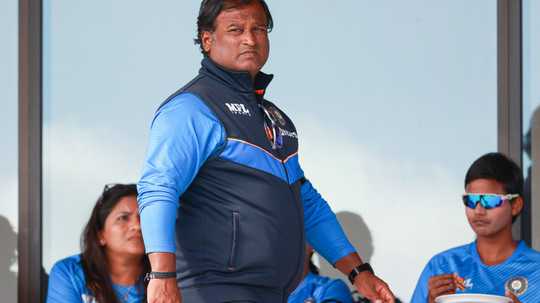
Former India spinner Ramesh Powar is reportedly the leading candidate to join the Board of Control for Cricket in India’s senior men’s selection committee, with the appointment expected to strengthen a panel now headed by Pragyan Ojha. Ojha is currently serving as chairman on an interim basis, and the Cricket Advisory Committee (CAC) has been assessing candidates to fill the vacant position.
The selection process follows the October 14 deadline for applications. The CAC is understood to have interviewed four or five candidates on October 15, including former India opener Wasim Jaffer. Powar, who represented India in two Test matches and 31 One-Day Internationals, is now believed to have won the committee’s confidence. If confirmed, his appointment would bring international playing experience and familiarity with domestic cricket administration to the senior selection group.
Powar’s experience and selection background
Powar’s name has featured in discussions for more than one position. He was also interviewed for a role on the junior selection panel and had initially been considered for its chairmanship. The current indication, however, is that he could instead be co-opted into the senior committee as Ajit Agarkar’s successor.
That potential move would place a former international cricketer with experience across multiple formats in a role that carries significant responsibility. Senior selectors help identify players for India’s national squads, weigh form and fitness, and consider how individual choices fit into the team’s requirements. Their decisions can shape the direction of the side across a demanding calendar of bilateral cricket and major tournaments.
Other candidates reportedly interviewed for the senior position included former Baroda players Connor Williams and Jacob Martin, along with Mumbai’s Salil Ankola. Jaffer was also among those considered. Parthiv Patel, who was reportedly viewed as a strong contender to lead a new selection committee, is understood not to have applied and was not among those interviewed.
Centre of Excellence set for a continuing role
One notable development is the expected involvement of the BCCI’s Centre of Excellence (CoE) in future selection discussions. The organisation’s secretary, Devajit Saikia, previously explained why VVS Laxman attended a selection committee meeting in Guwahati earlier this month. Laxman, who leads the CoE, is understood to have also joined an online meeting on Friday to discuss India’s Test and ODI squads for the upcoming New Zealand tour.
His continued presence at selection meetings would give selectors a more direct view of players’ rehabilitation, injury status and availability. That information can be especially important when a squad is being chosen around a tight international schedule, or when a player is returning from a long-term injury. A selection decision is not based on performance alone: medical assessments, workload management and readiness to compete all play a part.
A permanent CoE representative could also help connect national selection with the BCCI’s player-development and fitness systems. The arrangement may make it easier to distinguish between a player who is unavailable, one who is close to returning, and one who is ready for a full international workload. It is not yet clear what formal role the CoE will have in the committee’s decision-making, but its regular participation would add a practical fitness perspective to squad discussions.
Junior selection committee appointments also taking shape
Attention is also turning to the junior selection panel, where several names are being discussed for regional positions. Former India fast bowler Dodda Ganesh, from Karnataka, could be in line to become the junior committee’s chairman. Powar had initially been considered for that leadership role before the possibility of his appointment to the senior panel gained momentum.
For the North Zone position, Arun Sharma of Jammu and Kashmir is reportedly a candidate. The 53-year-old played 65 first-class matches and 47 List A games between 1994 and 2009, giving him experience of the domestic game across two formats. His potential appointment would add a regional voice with a substantial playing background to the junior selection structure.
Other possible regional representatives include former Gujarat player L. Pawar for the West Zone and a candidate named Bora from Assam for the East Zone. The latter is believed to be Deep Bora, who is 54. Pankaj Singh has been mentioned as a possible Central Zone representative, although that appointment has not been confirmed. These names remain subject to the BCCI’s final decisions.
Why the appointments matter for Indian cricket
Selection committees influence more than the composition of a single squad. At senior level, selectors must balance current form with experience, assess depth across positions and prepare teams for different conditions. At junior level, the task is equally important in a different way: identifying emerging players who may be ready for higher levels of domestic and international cricket.
For fans following cricket prediction and team-selection discussions, the changes could offer clues about how the BCCI wants to organise its decision-making. A committee with former international players, domestic experience and regular access to fitness information may be better equipped to assess both immediate needs and longer-term potential. Still, appointments alone do not guarantee particular results; performances, injuries and conditions will continue to shape every squad and match outlook.
Powar’s reported emergence as the favourite is therefore part of a wider reshaping of India’s selection framework. The senior committee is expected to gain a new member, while the junior panel’s leadership and zonal representation remain under consideration. Until the BCCI makes official announcements, the reported appointments should be treated as developments in progress. Once confirmed, the composition of both panels will be closely watched by players, supporters and analysts assessing the future direction of Indian cricket.