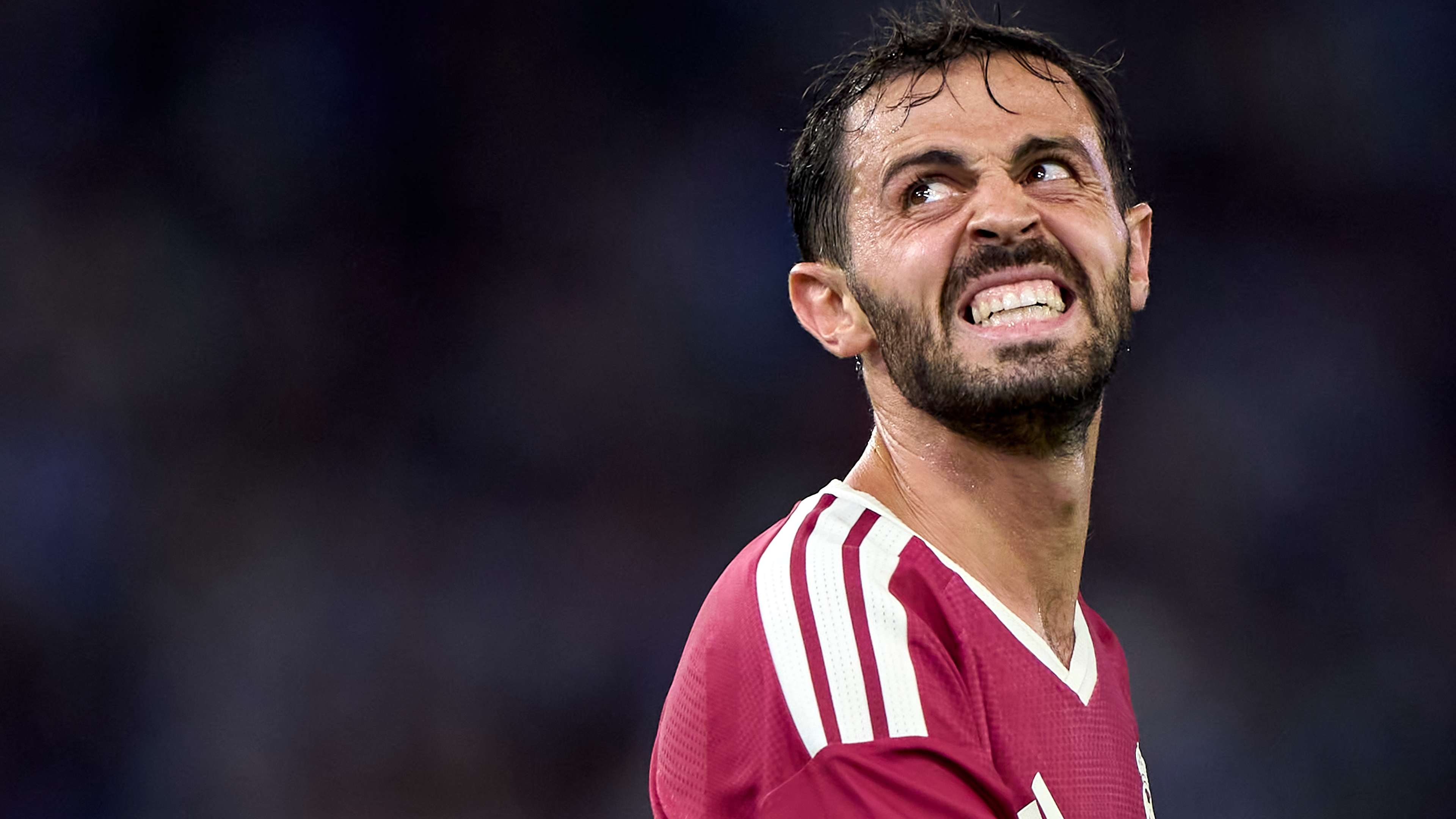

Bernardo Silva Faces a Defining Clásico After Real Madrid Role Shrinks
Bernardo Silva’s first Clásico in a Real Madrid shirt arrives with an unexpected storyline. The Portuguese midfielder once appeared close to joining Barcelona, but ultimately chose Madrid. Now, after beginning his new chapter at the Santiago Bernabéu with hopes of becoming a central figure, he is fighting to reclaim a regular place in midfield.
The contrast has attracted attention in Catalonia. Spanish newspaper Sport, which closely follows Barcelona, has highlighted the irony: Bernardo turned down the possibility of wearing the blaugrana shirt, only to approach his first meeting with Barça as a player whose position in Madrid’s starting line-up is far from secure.
For the 31-year-old, the upcoming fixture is more than a rivalry match. It is a chance to show that his decision to join Real Madrid can still deliver the prominent role he expected—and that he remains capable of influencing the biggest games in European football.
From Manchester City mainstay to Madrid’s new arrival
Bernardo arrived in Madrid after ending a nine-season spell at Manchester City, where he established himself as one of the team’s most versatile and technically gifted players. Comfortable operating in central midfield, on the wing or between the lines, he brought experience, close control and a reputation for helping dictate the pace of a match.
His move to Real Madrid on a free transfer appeared to offer an appealing fit. The club gained an accomplished international with a wealth of experience at the highest level, while Bernardo seemed positioned to become an important part of José Mourinho’s plans. At his unveiling, he made clear how quickly he had made up his mind: “When Real Madrid called me, I did not hesitate.”
That decision closed the door on a potential Barcelona move and placed him on the opposite side of one of football’s most closely watched rivalries. Yet a high-profile arrival does not guarantee a permanent starting place, particularly at a club where competition for midfield positions is intense.
Competition changes the picture
According to Sport, Mourinho initially included Bernardo in his starting line-up. His early involvement suggested that the coach intended to use his experience and passing ability as part of Madrid’s midfield structure. The situation became more difficult as other options returned to fitness and younger players strengthened their claims for minutes.
Aurélien Tchouaméni’s return added another established presence to the midfield, while Arda Güler’s emergence gave Madrid an additional creative option. With several players competing for a limited number of places, Bernardo’s role narrowed. Rather than building momentum through regular starts, he began receiving only brief opportunities in selected matches.
The reported figures underline how quickly the change occurred. Bernardo started Madrid’s first two league rounds, then made only two further starts in the next 11 games for which he was available. He was left on the bench seven times during that stretch and did not feature against Villarreal or Elche, according to the report.
Those numbers do not tell the whole story of a player’s contribution, but they do point to a clear challenge: Bernardo must convince Mourinho that his strengths are needed in a side with several competing midfield profiles. His ability to retain possession and link play could be valuable, but the coach’s selections suggest that reputation alone will not secure his place.
Limited minutes with Portugal add to the concern
The reduction in club playing time also followed Bernardo into the latest international break. Sport reports that he played just eight minutes across four matches for Portugal. International selection and minutes depend on a range of factors, but the limited involvement adds to the sense that the midfielder is currently short of the rhythm and responsibility he enjoyed at Manchester City.
For an experienced player, the challenge is not simply to wait for an opening. He must make an impression when opportunities arrive, while adapting to the tactical demands and competition within a new squad. The Clásico could provide exactly that kind of stage—if Mourinho decides Bernardo is the right choice for the occasion.
Champions League goal offers a timely boost
There was, however, a promising response in the Champions League. Bernardo started against Leipzig on Wednesday and scored his first goal for Real Madrid in a 4-1 victory. The performance offered a timely reminder of the qualities that made him such an influential player in England: intelligent movement, composure in possession and the ability to contribute in the final third.
One goal cannot erase weeks of questions about his place, but it may strengthen his case for more opportunities. A strong display in a major European match can also help a new signing build confidence and establish a connection with supporters. For Bernardo, the key will be turning that moment into consistent influence rather than treating it as a one-off highlight.
Clásico prediction: a chance to change the narrative
As the Barcelona–Real Madrid clash approaches, Bernardo’s involvement remains a major talking point. The prediction is difficult because his recent selection suggests he is not guaranteed a starting role, while his Champions League goal gives Mourinho a reason to consider him. Whether he begins on the pitch or waits among the substitutes, his performance could shape how the next stage of his Madrid career is viewed.
Barcelona will look to exploit any uncertainty in Madrid’s midfield, while Real will need control, discipline and creativity in a match where small details can decide the result. Bernardo’s experience in high-pressure football could be useful, especially if the game becomes stretched or Madrid need a player capable of keeping possession under pressure. But he will have to demonstrate that he can meet the physical and tactical demands of this particular contest.
The wider question is whether Bernardo’s move represents a temporary adjustment or the beginning of a more limited role than he anticipated. His career at Manchester City showed that he can thrive in demanding systems, but Madrid’s crowded midfield requires patience as well as sharp performances whenever chances arise.
For now, the Clásico offers a compelling test. Bernardo chose Real Madrid when Barcelona was also a possibility. A strong showing against his former potential destination would not settle every question, but it could help validate that decision—and give him a platform to turn a difficult start into a meaningful place in Madrid’s season.