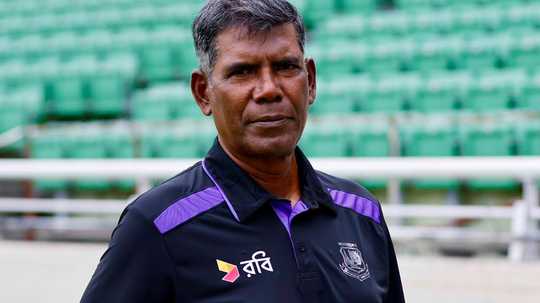

Sarowar Imran Says Bangladesh Women’s Team Needed to Leave Its Comfort Zone
Former Bangladesh women’s head coach Sarowar Imran believes his demanding approach to training and player fitness contributed to his departure from the role. The Bangladesh Cricket Board (BCB) did not renew his contract after it expired in October 2026, following the Asian Games, and later appointed David Hemp as his replacement.
The coaching change has prompted discussion about how to balance discipline, player welfare and performance in international cricket. Sarowar says he was trying to raise standards and challenge habits he considered barriers to progress. However, reports indicate that the board had concerns about his temperament, while some senior players had also raised complaints about his behaviour.
Coach says he was not asked to explain his side
Speaking to Ekattur TV on Tuesday, November 10, Sarowar said the BCB did not contact him after the Asian Games and Asia Cup to discuss concerns before deciding that he would not travel with the team to Australia. He said he learned another coach would take charge through a letter from the board.
“BCB did not communicate with me after the Asian Games and Asia Cup,” Sarowar said, describing the letter as the only communication he received about the decision. His account highlights a gap between the coach’s understanding of events and the concerns reportedly shared with the board by members of the squad.
Sarowar had previously spoken about unrest in the dressing room after Bangladesh’s exit from the Asian Games. The BCB considered issuing him a show-cause notice, but ultimately dropped the plan, taking his long service to Bangladesh cricket into account. The board has cited concerns over his temperament in connection with the decision not to extend his contract.
Sarowar defends his demanding coaching style
Sarowar argued that the women’s team had become too comfortable and that staff members were reluctant to challenge players. He said he saw coaches and support personnel agreeing to requests rather than pushing athletes to maintain demanding training standards.
As an example, he claimed that a spinner might stop after bowling 30 deliveries and that a coach would accept the decision. He also criticised training sessions in which only one or two batters faced extended practice, saying he began intervening because he believed the existing approach was not producing enough improvement.
His comments reflect a familiar debate in team sport: whether strict, direct coaching accelerates development or risks damaging trust and morale. A coach may need to set firm expectations, particularly when preparing players for international competition, but effective discipline also depends on communication, consistency and respect. The challenge is not simply to demand more; it is to make sure players understand how the work connects to better performance.
Sarowar said that if scolding players was being described as ill temper, he did not believe Bangladesh cricket could improve without a stronger approach. He also stressed that he viewed coaching as a professional responsibility rather than a friendship. In his view, a coach must be willing to make difficult decisions—including dropping a player—when performance or preparation requires it.
Fitness concerns at the centre of his criticism
Fitness was another major issue raised by Sarowar. He claimed that more than half of Bangladesh’s first-choice players did not meet the required standard, with most below average, some at a moderate level and only a couple reaching what he considered a proper benchmark.
Those figures are Sarowar’s assessment, rather than independently verified results from a published fitness test. Still, the issue is significant for any team aiming to compete consistently at international level. Fitness affects more than endurance: it can influence fielding range, recovery between matches, bowling workloads and a player’s ability to maintain concentration late in an innings.
Sarowar argued that a team cannot expect to become a world champion through limited practice alone. His remarks point to the broader demands of modern cricket, where technical skill must be supported by conditioning, repeatable training and careful workload management. A clear fitness programme—with transparent benchmarks and individual plans—can help players understand what is expected and track their progress over time.
Team relationships and the road ahead
Asked whether factions existed within the squad, Sarowar said he could not confirm that players were divided into groups. He did suggest, however, that captain Nigar Sultana was closer to some teammates than to others. His comments add another layer to questions about communication and unity, although they do not establish that formal divisions existed in the team.
For the BCB and the new coaching staff, the next challenge is to create an environment that combines high standards with open dialogue. That means setting clear expectations for fitness and training while giving players a constructive way to raise concerns. It also means ensuring that coaches can hold athletes accountable without allowing disagreements to undermine confidence or team cohesion.
Sarowar, who guided Bangladesh in the country’s inaugural Test against India in 2000, said he had overseen seven or eight tours and felt that the end of his tenure followed failures on one or two tours. He maintained that he knew his own capabilities and did not believe his reputation had been diminished by the decision.
His departure leaves an important question for Bangladesh women’s cricket: how can the team improve without losing the trust of its players? There is no simple prediction for how the coaching change will affect results. The answer will depend on the standards set under David Hemp, the support provided by the board and whether players and staff can work together toward measurable goals. For supporters following Bangladesh cricket, the focus will now be on whether the team can turn discussions about discipline and fitness into sustained progress on the field.