
Javier Tebas Defends Goebbels Comparison as Mourinho Apology Row Grows
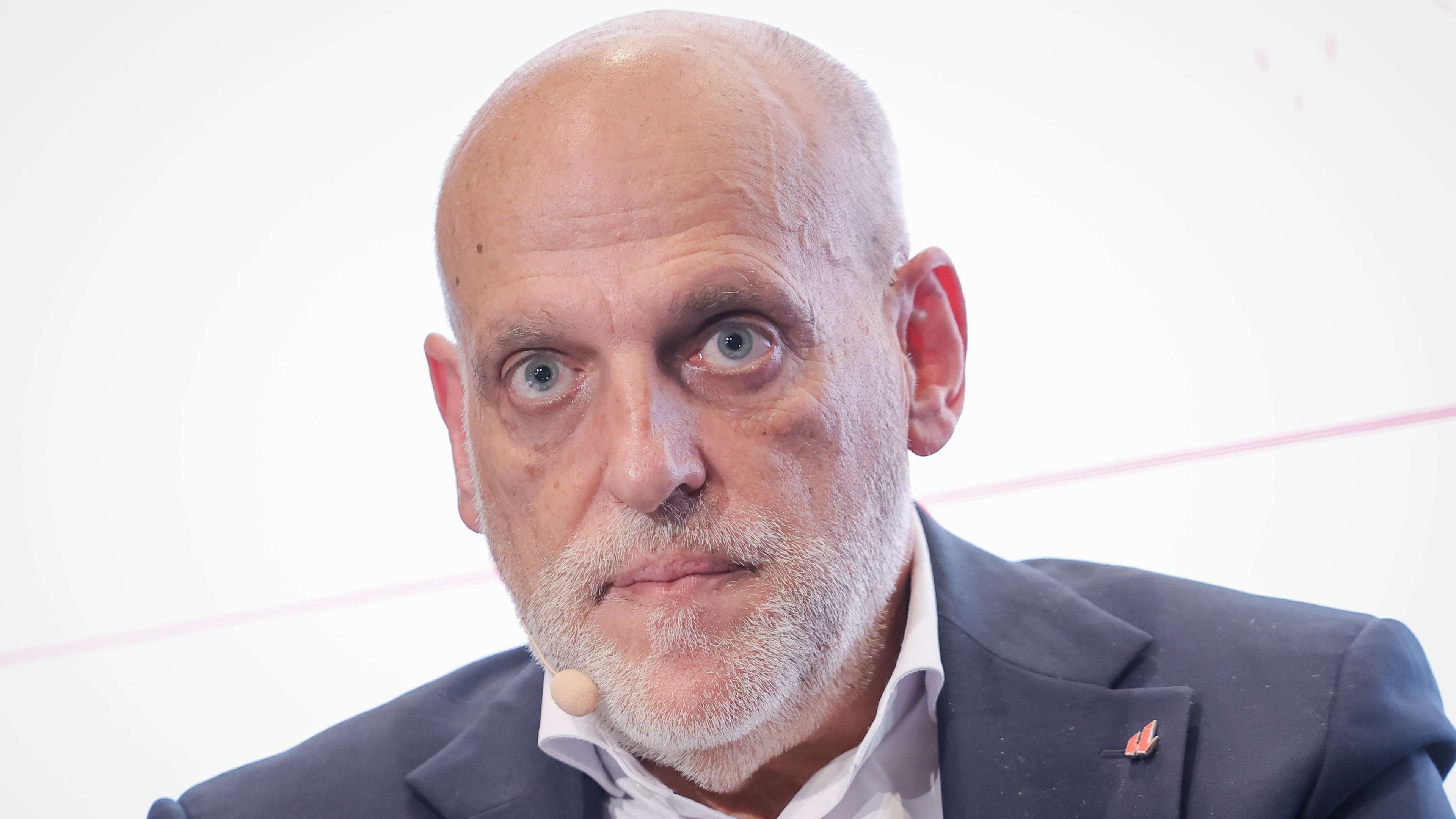
LaLiga president Javier Tebas has renewed his defence of remarks comparing the communication tactics of Real Madrid’s television channel with methods associated with Joseph Goebbels, the Nazi propaganda minister. The comments have triggered a sharp public dispute involving Real Madrid, Spain’s sports authorities and former club coach José Mourinho.
Tebas said his comparison concerned propaganda techniques alone and was not intended to equate Real Madrid, its supporters or the club’s beliefs with Nazi ideology. His clarification followed criticism from José Manuel Rodríguez Uribes, president of Spain’s Higher Sports Council, who urged the league chief to withdraw the remarks and apologise to the club.
Tebas Says His Comparison Was About Communication Methods
In a post on X, formerly Twitter, Tebas argued that references to Goebbels have appeared in political commentary and news coverage when writers discuss propaganda or the manipulation of public opinion. He shared examples, including press articles, editorials and statements from political figures, to support his position that the comparison was focused on communication methods rather than ideology.
The controversy centres on Tebas’s criticism of Real Madrid’s television channel, which has frequently questioned refereeing decisions and the treatment of the club. His remarks drew immediate attention because invoking a senior figure in Nazi Germany carries profound historical weight, particularly in a public dispute involving one of football’s most prominent institutions.
Critics have argued that the comparison was inappropriate and risked trivialising the crimes of the Nazi regime. Tebas, however, maintained that the target of his comments was a style of communication—not Real Madrid’s fans or the club as a whole. The distinction has become central to the debate, though it has not stopped calls for him to apologise.
Mourinho Reference Adds a New Twist
Tebas’s post also took aim at the timing of comments about an apology from Mourinho, the former Real Madrid manager. Addressing Rodríguez Uribes, the LaLiga president wrote: “What a coincidence that Mourinho and you should both come out talking about an apology, isn’t it? It must be a case of extraordinary telepathy.”
The pointed line suggested Tebas saw a connection between the two calls for an apology. However, the post was deleted from his X account a little over an hour after it was published. Its brief appearance added another layer to an already heated exchange, prompting fresh questions about the relationship between the league president, the sports authorities and figures connected to Real Madrid.
The deletion does not, by itself, explain whether Tebas changed his position or simply chose to remove the message. His broader defence, as reported in the post, was that his words had been taken beyond their intended meaning. The episode illustrates how quickly a social-media exchange can become a major football story, especially when it involves a league chief and a club with a global audience.
Why the Dispute Matters to Spanish Football
The argument is more than a clash of personalities. Real Madrid and LaLiga have regularly found themselves on opposite sides of debates over refereeing, governance and the public image of Spanish football. The club’s media platform gives it a direct way to communicate with supporters and challenge decisions, while the league has its own responsibility to defend the competition and its officials.
That tension makes language especially important. In modern football, clubs and governing bodies use social media, television and online video to shape the conversation around matches. A dispute over how a club communicates can quickly become a broader argument about accountability, bias and the influence of media coverage on fans’ perceptions.
For supporters, the issue may also affect how they interpret controversial decisions. Repeated criticism of referees can reinforce the belief that a team is being treated unfairly, even when individual incidents remain open to debate. At the same time, clubs argue that public scrutiny is necessary to demand consistency and transparency. Finding a balance between legitimate criticism and inflammatory rhetoric remains a challenge across the sport.
Football Prediction and the Upcoming Real Madrid Fixture
The controversy arrives as attention turns back to the pitch. Real Madrid are scheduled to face Sevilla in LaLiga on October 19, 2026, with the fixture expected to draw significant interest from supporters and football prediction audiences. The match offers a chance for the team to shift the focus from off-field headlines to performance, although the wider dispute may continue to follow the club into the build-up.
Any prediction for a meeting between Real Madrid and Sevilla should account for more than reputation alone. Recent form, player availability, tactical choices and the demands of the schedule can all influence the outcome. Real Madrid’s ability to control possession and create chances will be closely watched, while Sevilla may look to disrupt the hosts’ rhythm and exploit transitions. As with any football prediction, those factors are indicators rather than guarantees.
The fixture also highlights how quickly the sporting narrative can change. A high-profile disagreement may dominate headlines during the week, but a decisive result or controversial refereeing moment can redirect attention in an instant. That is one reason disputes between clubs, leagues and public officials often resonate so widely: they connect the match itself with questions about trust and authority in football.
A Debate Likely to Continue
Tebas’s defence has clarified the argument he says he was making, but it has not ended the dispute. Rodríguez Uribes had called for an apology, while Mourinho’s comments became part of Tebas’s now-deleted social-media post. Whether the league president will issue a further statement—or whether the parties will move on—remains uncertain.
For now, the episode underlines the risks of using historically charged comparisons in football’s increasingly combative media environment. Tebas insists his remarks were limited to propaganda methods, but the reaction shows that intent and impact can be viewed very differently. As LaLiga’s season continues, the challenge for all sides will be to debate communication and governance without allowing the argument to overshadow the game itself.