
Manchester United’s Media Storm: When Every Football Match Becomes a Story
At Manchester United, the football rarely stops when the final whistle blows. A defeat can fuel days of debate across television, podcasts and YouTube, while a managerial decision or a player’s performance quickly becomes the subject of fresh analysis. The club’s struggle to regain its place among English football’s leading sides has unfolded alongside a second, increasingly powerful story: the rise of a media industry built around United’s fortunes.
That attention is hardly surprising. United remain one of the world’s most recognisable clubs, with a history of major trophies, a global fan base and an enduring presence in the Premier League conversation. But the tone of coverage has changed. Former players are no longer limited to brief post-match interviews. Many now host their own programmes, build digital audiences and shape the debate around the club throughout the week.
The result is a familiar but unusual cycle: United play, the pundits react, clips spread online and the next match arrives under the weight of everything said before it. For supporters, the constant scrutiny can offer insight into the club’s problems. It can also make every setback feel like another episode in a never-ending series.
Former United players lead the conversation
Among the most influential voices is Gary Neville, whose media work has grown well beyond traditional television analysis. Since launching The Overlap in 2021, he has helped build a major platform spanning interviews, video clips and football discussion. Its appeal reflects the appetite for candid opinions about one of the sport’s biggest clubs.
After United’s heavy 3-0 defeat to Bournemouth, Neville delivered a particularly pointed assessment. He questioned the professionalism and daily habits of some players, arguing that representing Manchester United should demand commitment well beyond the 90 minutes on the pitch. His criticism was not simply about tactics or a misplaced pass; it concerned preparation, discipline and the standards expected at Old Trafford.
Wayne Rooney added his own forceful view on Stick to Football, calling for the players to receive a strong wake-up call. Roy Keane, another former captain known for his uncompromising style, also questioned how secure manager Michael Carrick and his coaching staff should feel. Such remarks travel quickly online, where a short clip can reach supporters far beyond the original programme’s audience.
Neville’s influence also extends into the digital landscape. His involvement in acquiring a network of YouTube channels associated with prominent United creator Mark Goldbridge illustrates how traditional punditry and fan-led content are increasingly connected. Goldbridge, whose real name is Brent Di Cesare, has built a substantial audience through passionate match reactions and outspoken commentary. Together, these platforms help ensure that United remain part of the daily football conversation, whatever the result.
Predictions, rivalries and the power of a viral clip
The debate is not limited to Neville, Rooney and Keane. Paul Scholes and Nicky Butt, both members of United’s celebrated Class of ’92, also discuss the team on their podcast, The Good, the Bad and the Football. Their experience gives their opinions particular weight, but it also means their predictions can attract intense attention—especially when they concern current players.
Before a Manchester derby, Scholes and Butt made dismissive comments about Lisandro Martínez’s ability to cope physically with Erling Haaland. Butt suggested the striker could overpower the Argentine defender, while Scholes offered an even more dramatic prediction. United went on to win 2-0, and Martínez produced an impressive performance against Haaland.
The contrast between the prediction and the match became a story in its own right. Martínez later made clear that he was unhappy with the remarks, saying he was not concerned by outside criticism and would be willing to address Scholes directly. The episode shows how modern football analysis can move beyond tactics: a forecast can become a personal dispute, then a viral talking point that continues long after the match.
For pundits, bold claims can make a programme more compelling. For players, however, criticism from celebrated former teammates may feel different from comments by an unfamiliar commentator. Former stars understand the pressure of playing for United, but their status can also make their words especially difficult to ignore.
Carrick tries to keep outside noise at a distance
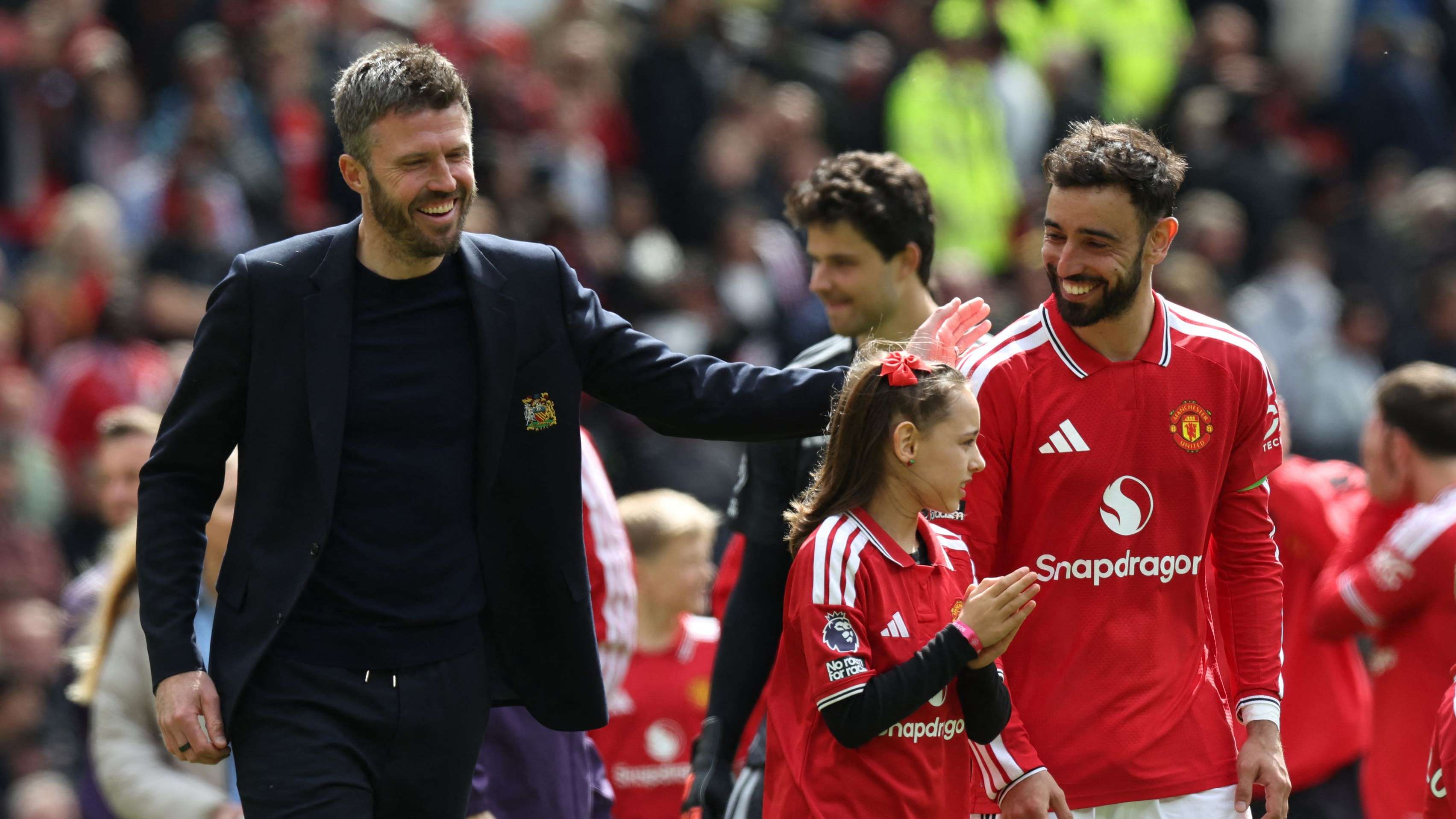
With the club under close scrutiny, Carrick has sought to focus on the work in front of him rather than the wider media debate. Asked about criticism from former colleagues, he said he does not regularly seek out comments that he considers unhelpful. His attention, he explained, is on what the players produce, the atmosphere at Old Trafford and the supporters who follow the team.
That approach reflects a practical challenge for any manager at a high-profile club. Every team selection, substitution and result is examined by people with different audiences and competing interpretations. A coach cannot control the conversation, but can try to prevent it from distracting the squad from preparation and performance.
For United, the immediate football question remains whether the team can turn attention into results. The upcoming Premier League meeting with Chelsea offers Carrick another opportunity to shape the narrative on the pitch. Any prediction about the outcome, however, must account for the uncertainty that has defined United’s season: one performance can prompt renewed optimism, while another poor result can restart the criticism.
Do the legends help United—or add pressure?
The central argument is not simply whether former players are too harsh. It is whether their public criticism helps restore standards or makes an already difficult environment more demanding for current players. Erik ten Hag, the club’s former manager, previously acknowledged that criticism from prominent figures could affect players psychologically. He also suggested that former stars might use their experience to offer support as well as judgement.
At the same time, the emotional connection is real. Neville has spoken about how difficult it is to analyse United, admitting that his attachment to the club can influence his response when the team falls short. He spent 19 years at Old Trafford and won 18 major honours, giving him a clear sense of the standards he believes the club should meet. Butt has likewise argued that his criticism comes from a lifelong connection to United, not a desire to undermine the players.
That distinction may be sincere, but intention does not settle the impact. A detailed critique can identify problems that supporters and club officials should address. Yet repeated, highly personal commentary can also turn a poor run into a constant source of pressure. The challenge is finding a balance between accountability and a media cycle that rewards the strongest reaction.
A global brand in an always-on football economy
United’s enormous popularity helps explain why the coverage keeps growing. The club continues to attract major commercial interest and large crowds at Old Trafford despite falling short of the Premier League title since 2013. Matchday demand and worldwide recognition have proved more resilient than the team’s recent results.
This creates a complicated relationship between sporting success and public attention. A disappointing performance may damage confidence among supporters, but it can also generate extensive discussion, reaction videos and new podcast episodes. That does not mean the club creates crises deliberately. It does mean that United’s fame can turn almost any development—good or bad—into valuable content.
The old slogan “Hated, adored, never ignored” captures the club’s lasting place in football culture. In the past, trophies and iconic players often commanded the headlines. Today, managerial uncertainty, player criticism and online debate can keep United just as visible. The question is whether that attention will help the club confront its problems or simply keep the cycle turning.
For now, the answer remains uncertain. Carrick is trying to guide the team back toward consistency, while former United players and digital creators continue to examine every decision. Supporters still want the same outcome: a return to winning football, not merely another week at the centre of the news. Until results improve, every match will bring not only a fresh prediction, but another round of debate about what Manchester United must do to recover.