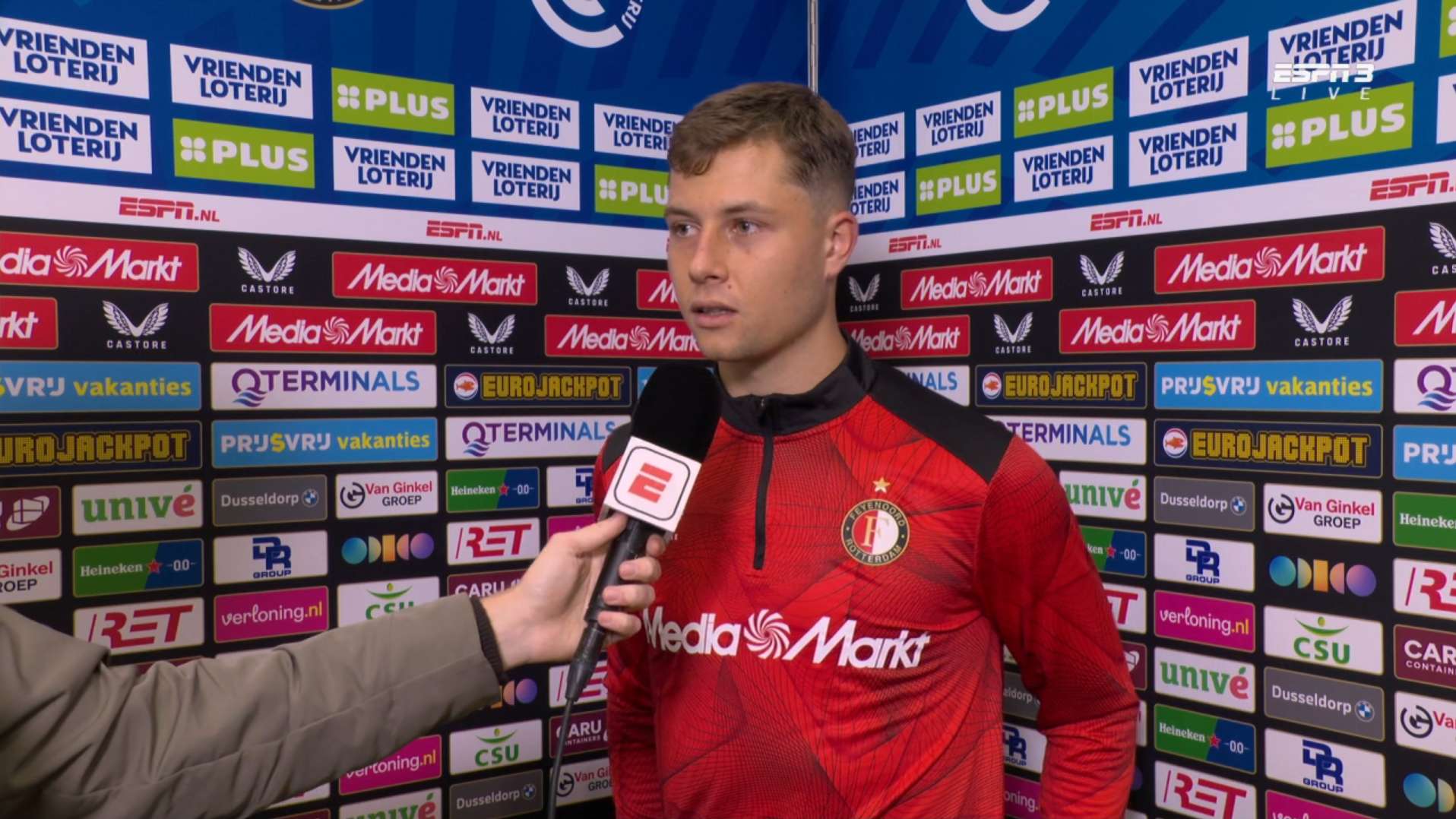

Tjark Ernst’s Third Straight Clean Sheet Helps Feyenoord Beat AZ
Feyenoord continued their impressive defensive run on Saturday night, defeating AZ 2-0 to record a third consecutive clean sheet. Goalkeeper Tjark Ernst played a key role in the shutout, following commanding wins over PEC Zwolle and FC Utrecht, and said the team’s collective defending was behind the latest result.
The Rotterdam side had opened this run with a remarkable 7-0 victory against PEC Zwolle before beating FC Utrecht 5-0. Their win over AZ was more closely contested, but Feyenoord again prevented their opponents from scoring. For Ernst, keeping the ball out of the net was a reward for the work being done across the entire team—not just by the goalkeeper and defenders.
Feyenoord’s defence delivers against a dangerous AZ
Speaking to ESPN after the match, Ernst described the clean sheet as a positive achievement for both himself and his teammates. He noted that Feyenoord had defended effectively as a unit in each of their last three games, with players working together to limit opposition chances and protect the goal.
That collective effort was particularly important against AZ, whom Ernst recognised as a strong attacking opponent. Feyenoord also dealt well with crosses, an area that can create uncertainty for any defence when attackers are waiting in the penalty area. By managing those deliveries and staying organised, the home side kept AZ from turning pressure into a goal.
Three clean sheets in a row offer an encouraging sign for Feyenoord as the season develops. While the earlier scorelines against PEC Zwolle and FC Utrecht were emphatic, a 2-0 victory over AZ provided a different kind of test: maintaining defensive concentration against a capable rival while also producing enough in attack to secure the points.
VAR review overturns penalty decision
The most debated moment involving Ernst came shortly before half-time. AZ appeared to have been awarded a penalty after the goalkeeper challenged Mexx Meerdink, but referee Danny Makkelie was asked by the video assistant referee to review the incident on the pitchside monitor. After watching the footage, Makkelie overturned his original decision and ruled that no penalty should be given.
Ernst said he did not feel that he had made contact with Meerdink during the incident. He explained that he told the referee as much at the time and later spoke briefly with Makkelie after the final whistle. According to the goalkeeper, the official acknowledged that there may have been slight contact but considered it insufficient to warrant a spot-kick.
The direction of the ball was also part of the discussion. Ernst pointed out that it was travelling away from goal and appeared to be going out of play, rather than moving towards a clear scoring opportunity. He later recognised that his foot seemed to move slightly in the footage, but said he had not felt anything during the challenge itself.
Ernst backs the referee’s final call
Although Ernst was relieved that the penalty was not awarded, he also said he believed the final decision was correct. In his view, the contact was minimal and the ball’s path reduced the likelihood that Meerdink would have been able to turn the situation into a goal-scoring chance.
Penalty decisions often attract close scrutiny, especially when a goalkeeper is involved and the video review changes the referee’s initial call. This incident offered a clear example of how VAR can prompt a second look at the details of a challenge. Rather than focusing solely on whether contact occurred, the review also considered its nature and the circumstances around the ball.
For Feyenoord, the decision helped preserve their lead heading into the break, but the team still had to complete the job after half-time. The final 2-0 scoreline reflected a disciplined performance in which the defence remained composed and Ernst recorded another clean sheet.
What the result means for Feyenoord
Feyenoord’s latest victory strengthens the sense of momentum built over their recent matches. Scoring freely in the wins over PEC Zwolle and FC Utrecht showed the team’s attacking potential, while the result against AZ highlighted its ability to combine forward threat with defensive control. That balance can be important as the club faces a demanding schedule across domestic and European competition.
Ernst’s personal run of three clean sheets is notable, but the goalkeeper was quick to share credit. His comments underline a broader point about football: a shutout is rarely the achievement of one player alone. Defenders must track runners, midfielders need to apply pressure and the whole side has to respond quickly when possession is lost. Goalkeepers then provide the final layer of protection when opponents do find a way through.
Feyenoord’s upcoming fixtures include a Champions League match against Como on 15 October 2026, followed by a Europa League meeting with HBS on 16 October. The schedule will bring different tactical challenges, and the team’s recent defensive form could prove valuable as it looks to maintain its standards in multiple competitions.
Feyenoord prediction: confidence built on defensive consistency
Any football prediction for Feyenoord’s next stretch of fixtures should account for both their attacking output and their improving defensive record. Three successive clean sheets suggest growing organisation, while the team’s ability to score heavily in earlier matches shows that it can create chances. However, European fixtures can present unfamiliar opponents and different styles, so consistency—not recent scorelines alone—will be the key measure.
Ernst’s performance against AZ and his calm response to the VAR incident provide further evidence of a goalkeeper growing comfortable in a high-pressure role. If Feyenoord continue to defend crosses effectively, protect the space in front of goal and support their keeper as a unit, they will have a solid platform for the challenges ahead. For now, the 2-0 win over AZ gives the Rotterdam club another reason for confidence—and Ernst another clean sheet to celebrate.