
Violence Erupts After FC Utrecht’s 1-0 Cup Win Over Kozakken Boys
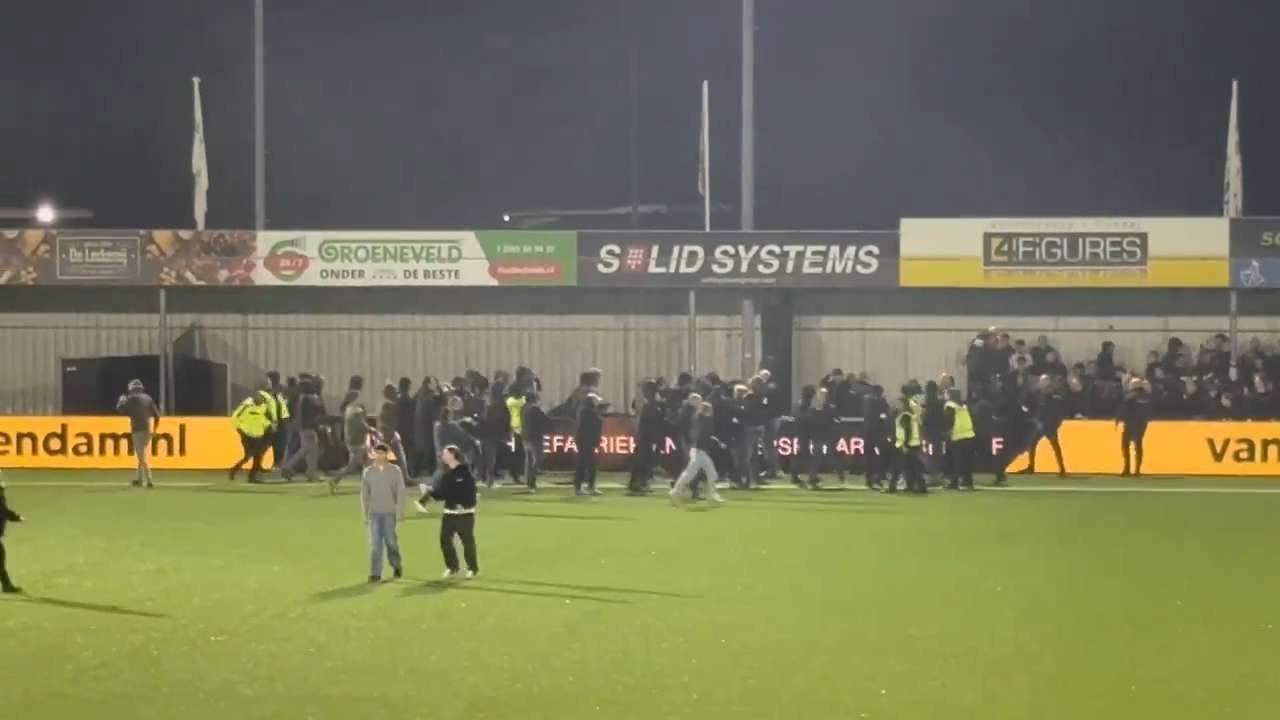
A football match that began in an unusually relaxed setting ended in disorder on Thursday evening, after supporters of Kozakken Boys and FC Utrecht clashed on the pitch in Werkendam. Police intervened to separate the groups following FC Utrecht’s narrow 1-0 victory, according to Dutch newspaper De Telegraaf.
Reports from the ground described people wearing black jackets attacking one another after the final whistle. Journalist Jeroen Kapteijns said the trouble escalated on the pitch, with individuals who had come from the FC Utrecht section moving towards home supporters. Footage shared from the scene appeared to show a wheelie bin being thrown during the disorder.
Police separate supporters after the final whistle
Officers directed FC Utrecht supporters towards their bus, while police dogs were used to move Kozakken Boys supporters away from the pitch. The intervention was intended to prevent further confrontations and clear the playing area. Details about injuries, arrests or damage were not included in the initial reports.
The scenes were particularly striking because the match had been played in a more open and accessible environment than many professional fixtures. Kapteijns noted that spectators could watch without the imposing fences and barriers commonly found at larger stadiums, creating a setting where fans could enjoy the game with a drink in hand. The post-match violence sharply contrasted with that atmosphere.
In his account, the journalist criticised the people involved, describing their behaviour as a disgrace to cup football. He also questioned the presence of groups whose clothing and conduct, in his view, suggested they had arrived with an aggressive agenda rather than to support either team. Those observations reflect his assessment of the incident; the circumstances and identities of those involved were not independently established in the available reports.
Panagiotou goal decides the cup tie
On the pitch, FC Utrecht secured progress with a 1-0 away win over Kozakken Boys. Defender Nikolas Panagiotou scored the decisive goal, giving the visitors a result that was settled by a single moment in a closely contested cup match.
The narrow scoreline meant the contest remained competitive, but the football itself was soon overshadowed by events after the whistle. For players, staff and supporters who had come to Werkendam for the match, the post-game disorder became the defining story of the evening.
That contrast is familiar in cup competitions, where teams from different levels of the football pyramid meet in grounds that can feel more intimate than major league venues. Such fixtures often offer a distinctive atmosphere: visiting supporters are closer to the action, local fans get a rare occasion against a higher-profile opponent, and the match can feel like a community event. Maintaining that welcoming environment depends on supporters respecting one another and the venue.
Why safety matters at open football grounds
Smaller grounds can provide a more personal matchday experience, but their open layouts may also make it harder to keep rival groups apart if tensions rise. Organisers must balance accessibility with practical safety measures, including clear stewarding plans, communication between clubs and police, and routes that allow visiting fans to leave without crossing paths with home supporters.
That does not mean every lower-league or cup fixture requires the same barriers and restrictions used at the largest stadiums. Instead, the incident underlines the importance of assessing risks for each match. A calm atmosphere before kick-off is valuable, but it should be supported by preparation for the period immediately after the game, when emotions can be high and crowds begin moving at once.
Supporter behaviour also plays a central role. A football match is a contest between teams, not an invitation for violence between spectators. Throwing objects, entering the pitch or confronting opposing fans can put players, staff, families and other supporters in danger. Such actions can also lead to police investigations, stadium bans and consequences for clubs, depending on what authorities establish.
Match prediction and what comes next
For anyone looking ahead to FC Utrecht’s next league fixture, the result in Werkendam offers a modest boost in confidence: the team completed its cup assignment and kept its opponents from scoring. Still, one close cup win is not enough to guarantee an easy next match. A sensible football prediction should consider recent form, team selection, injuries, home advantage and the demands of the schedule rather than relying on a single result.
Kozakken Boys, meanwhile, will be left to reflect on a difficult evening in which the sporting outcome and the conduct of some spectators became separate concerns. The club’s next appearance in the Tweede Divisie will provide an opportunity to refocus on football, while FC Utrecht will turn its attention back to league competition after advancing from the cup tie.
The key takeaway from Werkendam is therefore twofold: FC Utrecht earned a 1-0 victory through Panagiotou’s goal, but the post-match clashes exposed how quickly a welcoming football occasion can be damaged. Police acted to separate the groups, and further information may clarify what led to the confrontation. Until then, the priority remains clear—protecting supporters and ensuring that cup football is remembered for the match, not violence in the stands or on the pitch.