
USA Cricket Governance Reset: Three Independent Directors Named in Bankruptcy Reorganization Plan
USA Cricket’s proposed path out of bankruptcy now has a leadership team. Court-appointed trustee Mark Dennis has named Selina Kaing, Patrick Singleton and Norman Wain as independent directors who could take control of the governing body once its Chapter 11 reorganization plan is approved and becomes effective.
The appointments are part of a wider effort to stabilize American cricket, restore the organization’s suspended International Cricket Council (ICC) membership and rebuild confidence in its administration. The plan also includes financial support from American Cricket Enterprises (ACE), the owners of Major League Cricket (MLC), which has offered up to $3.145 million in additional financing to help USA Cricket meet its operating costs while ICC funding remains unavailable.
For players, supporters and investors, the leadership change is more than a boardroom reshuffle. It could shape the future of cricket in the United States as the country prepares to host the sport at the Los Angeles 2028 Olympic Games. Any prediction about how quickly USA Cricket can recover remains uncertain, but the reorganization documents set out a clearer route—and a demanding list of priorities.
When could the new board take office?
The proposed directors were selected through a process observed by the ICC and the United States Olympic & Paralympic Committee (USOPC). Under the plan, they would assume office automatically when the reorganization takes effect. At that point, the terms of all current USA Cricket directors would end.
The trustee has sought a confirmation hearing around January 15, 2027, or, at the latest, January 22. A court confirmation order for the financing arrangements is required by January 29. Those dates are procedural targets, not guarantees: the transition depends on court approval and the plan’s other conditions being satisfied.
If the process proceeds as proposed, the new leadership could begin its work early in 2027. Its immediate challenge will be to move beyond the internal divisions and administrative failures that helped push USA Cricket into bankruptcy and contributed to its ICC suspension in September 2025.
Who are the three independent directors?
Selina Kaing
Kaing brings more than 20 years of experience in technology and corporate leadership, including executive roles at Google, Marvell, Disney and Nestlé. She also has a substantial background in American Olympic sport. Her previous positions include chair of the US Fencing Foundation’s Board of Trustees, as well as vice-president and board adviser at USA Fencing.
That combination of commercial and sports governance experience could be valuable as USA Cricket works to improve its oversight, manage its finances and rebuild relationships with key partners.
Patrick Singleton
Singleton is a three-time Olympian from Bermuda with experience in international sports administration. He served on the International Olympic Committee’s Athletes’ Commission from 2016 to 2020 and has held executive responsibilities with the World Olympians Association. He also has a direct connection to cricket, having played amateur cricket for Bermuda’s Southampton Rangers.
His background in athlete representation may be particularly relevant as USA Cricket develops a board structure that gives players a defined voice in decision-making.
Norman Wain
Wain offers experience in the day-to-day management of a major American national governing body. From 2010 to 2024, he served as chief of business and legal affairs and general counsel at USA Track & Field. His legal and operational expertise could help the reorganized organization navigate compliance requirements, commercial negotiations and its bid for recognition from the USOPC.
A transitional board with significant authority
The proposed directors are expected to serve three-year terms, but the plan’s most consequential feature may be the authority they hold before ICC membership is restored. The amended constitution appears designed to reduce the risk of elections becoming another source of factional conflict while the organization remains under intense scrutiny.
The longer-term structure envisages a board of nine to eleven directors, with qualifying athlete representatives holding at least 33.3% of voting power. However, the documents do not set a firm deadline for returning to elections among the wider membership. Nor do they explicitly rule out elections before the Los Angeles Olympics.
Because the transitional arrangement is linked to ICC reinstatement rather than a fixed election date, independent oversight could continue for an extended period. Athlete representation may still be possible during that time, but the full return to membership-led governance is less clearly defined.
The cautious approach reflects a difficult history. USA Cricket’s predecessor, the United States of America Cricket Association (USACA), was suspended by the ICC three times between 2005 and 2015 and expelled in 2017. USA Cricket was established as a fresh start, yet it later faced many of the same governance challenges. The ICC will likely want convincing evidence of lasting reform before restoring full confidence in the organization.
Three priorities: ICC reinstatement, ACE agreement and USOPC recognition
The new directors will face three immediate tasks: securing ICC reinstatement, completing a definitive commercial agreement with ACE, and meeting the governance standards required for USOPC recognition as a national governing body.
The ACE negotiations are especially sensitive. Disagreements between the organization and the previous USA Cricket leadership over a long-form commercial agreement were among the major sources of friction before the bankruptcy filing. Under the plan, the new board must work with ACE in good faith to finalize an agreement consistent with the economic and structural terms of the original 2019 term sheet. The final deal must also address concerns previously raised by the ICC before it replaces the existing arrangement.
That agreement could influence how professional cricket and the national governing body operate alongside one another. A clearer framework may help define responsibilities, protect the interests of both parties and reduce the risk that commercial disputes again undermine cricket administration.
Funding designed for a prolonged recovery
ACE’s additional financing facility, worth up to $3.145 million, is intended to support working capital and operating expenses while USA Cricket remains suspended and unable to access ICC funding. The facility adds to financing contemplated under the July settlement.
Notably, the plan makes provision for support extending beyond the 2028 Olympics and into 2029. That does not mean the ICC has decided to keep USA Cricket suspended through LA28. It does, however, show that the parties are preparing for a recovery that could take longer than hoped, rather than assuming reinstatement is imminent.
The reorganized organization would also have to provide ACE with monthly written updates on its reinstatement efforts, including material communications with the ICC and USOPC. The reporting requirement gives ACE ongoing visibility as its financial commitments and future commercial relationship remain closely connected to USA Cricket’s return to international recognition.
Governance challenges meet cricket’s growing footprint
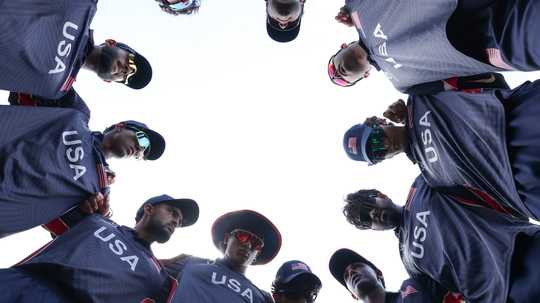
The stakes are high because American cricket is expanding even as its national administration struggles to regain stability. The USA team has made progress on the field, including winning World Cup League 2 after a demanding three-year campaign. Meanwhile, private investment is helping build a more substantial professional infrastructure.
The Los Angeles Knight Riders have established a venue in Pomona that is slated to host cricket during the 2028 Olympics. Washington Freedom has also broken ground on a privately funded, 10,000-capacity stadium in Frederick, Maryland, planned as the franchise’s permanent home.
This contrast—growing facilities and professional ambition alongside a suspended governing body—makes the reorganization particularly important. A successful recovery could help align the national team, domestic competitions, commercial partners and Olympic preparations under a more credible administrative structure. A failure to resolve governance questions, by contrast, could leave the sport’s expanding footprint without the stable national leadership needed to support it.
The November reorganization plan provides the most detailed roadmap yet for USA Cricket’s institutional revival. The key test will not simply be whether the organization exits bankruptcy. It will be whether its new directors can secure ICC reinstatement, conclude a workable agreement with ACE, satisfy USOPC standards and establish durable governance beyond the transitional period. Any prediction of a smooth or rapid turnaround should be treated cautiously—but the appointments give American cricket a defined leadership team and a concrete set of milestones to pursue.