
Milan Derby Recreates a Piece of Football History as Both Sides Trade Early Goals
The latest Milan derby began at a breathless pace, delivering an opening spell that brought one of the fixture’s most remarkable historical matches back into focus. Milan struck twice inside the first 10 minutes, putting Inter in an unusually difficult position before the visitors could settle into the contest.
Christian Pulisic opened the scoring in the fourth minute, giving Milan an immediate advantage. Adrien Rabiot then doubled the lead in the 10th, leaving Inter two goals behind before the match had fully found its rhythm. The rapid start was not simply a dramatic derby moment: it was an exceptionally rare situation for Inter in Italian league football.
Inter face a rare early two-goal deficit
Football statistician Mister Chip highlighted the significance of Milan’s start in a post on X. Inter had not been trailing by two goals against a league opponent within the opening 10 minutes since 2 December 2016, when Napoli went on to beat them 3-0.
The statistic offered a measure of just how unusual the opening was for the Nerazzurri. Inter are accustomed to competing near the top of Italian football, and an early deficit of that size can force a team to abandon its preferred approach. Instead of building attacks patiently, the side trailing must take greater risks, commit more players forward and remain alert to the counterattack.
That challenge is even sharper in a derby. Milan and Inter share the San Siro, but the rivalry gives every goal extra weight. A fast start can energise one half of the stadium while putting immediate pressure on the other team to respond.
A striking echo of the 1949 Milan derby
The opening minutes also recalled a famous meeting between the clubs on 6 November 1949. On that occasion, Milan forward Enrico Candiani scored twice in the first seven minutes, creating a similarly startling early advantage.
That historic match, however, did not follow the script Milan supporters might have expected. Inter produced a remarkable comeback and won 6-5 in one of the most extraordinary games in the derby’s long history. The result remains a reminder that even a commanding early lead offers no guarantee in a fixture where momentum can change quickly.
The comparison did not mean the modern match was destined to repeat the same ending. Rather, it gave the latest encounter an added historical dimension: Milan had recreated the kind of rapid start that once preceded an unforgettable Inter response. For supporters and neutrals alike, that connection made every subsequent attack feel more significant.
Inter respond, but Milan restore their advantage
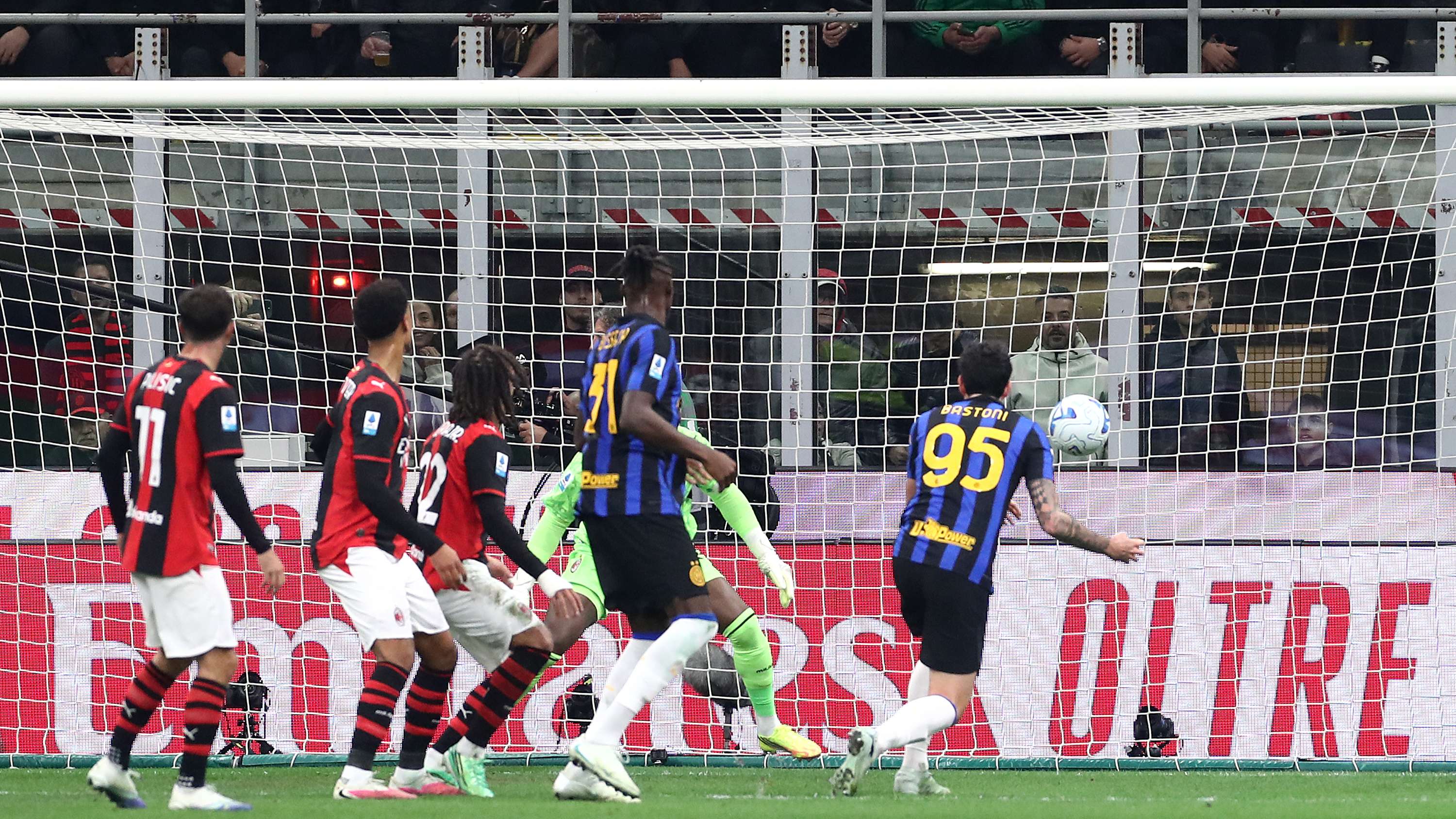
Inter began working their way back into the contest after falling behind. Alessandro Bastoni scored in the 22nd minute, reducing the deficit and giving the visitors a foothold. His goal changed the atmosphere of the match, offering Inter a reason to believe they could recover while reminding Milan that the game was far from settled.
Milan answered just before half-time. Diego Moreira scored in the 43rd minute to restore the home side’s two-goal cushion, ensuring Milan went into the break with a 3-1 advantage. The timing was crucial: Inter had started to build momentum, but Moreira’s goal checked that progress and gave Milan renewed control heading into the second half.
The first-half pattern showcased the contrasting demands of derby football. Milan made the most of their early opportunities, while Inter had to chase the game. Bastoni’s strike suggested the visitors were capable of creating a response, but Moreira’s finish demonstrated Milan’s ability to punish any lapse in concentration.
What the opening could mean for the match
A two-goal lead can provide a team with room to manage the tempo, but it can also invite pressure if the side in front retreats too deeply. Milan’s challenge after the break was to balance defensive organisation with enough attacking threat to keep Inter from committing everyone forward. Inter, meanwhile, needed to find a way to sustain their comeback without leaving space for Milan to exploit.
That tactical tension is part of what makes a Milan derby compelling. The team behind must push for goals, but every additional attacker can create openings at the other end. The side with the lead must decide whether to protect its advantage or continue pressing for another goal. In a match already shaped by quick scoring, those choices can have a major impact.
For fans following the fixture through a football prediction lens, the first-half events offered plenty to consider, but not an easy conclusion. Milan’s early finishing and two-goal advantage pointed to a strong position, while Inter’s reply showed that the visitors remained dangerous. The 1949 comeback also served as a historical reminder that derby leads can be overturned, even when the circumstances appear daunting.
A derby shaped by history and momentum
The latest meeting delivered more than a dramatic scoreline. It connected the present to two notable points in the rivalry’s past: Inter’s rare early league deficit and the 1949 derby in which Milan’s quick goals were followed by a stunning Nerazzurri comeback.
By half-time, Milan had restored their two-goal advantage after Inter briefly threatened to shift the momentum. Whether that lead would be enough depended on the teams’ decisions and execution in the second half. What was already clear, however, was that the derby had begun in exceptional fashion—fast, unpredictable and rich with historical echoes.
From Pulisic’s fourth-minute opener to Rabiot’s early second, Bastoni’s response and Moreira’s timely finish, the first half gave supporters a compelling reminder of why this fixture remains one of Italian football’s most closely watched contests. The history made the start memorable; the goals ensured the match had a story of its own.