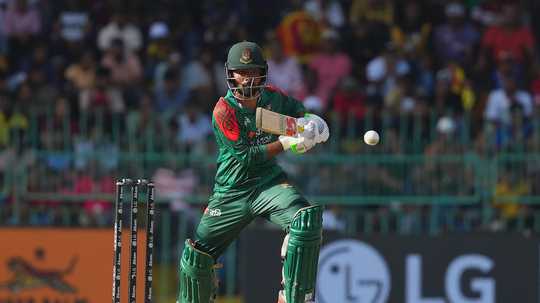

Hridoy Calls for Action as Bangladesh’s Away ODI Struggles Continue
Bangladesh stand-in captain Towhid Hridoy has admitted that the team’s promises to improve have not translated into results in one-day international cricket, particularly on overseas tours. His candid assessment followed a seven-wicket defeat to Afghanistan in the ongoing tri-nation series—a loss that ended Bangladesh’s campaign and confirmed Afghanistan’s place in the final against Zimbabwe.
The defeat extended a troubling run away from home. Across their last 16 ODIs outside Bangladesh, the Tigers have managed only two wins, with the remaining matches ending in defeat. Their recent record against Afghanistan has been especially difficult: Bangladesh have now lost five consecutive ODIs to the side.
Speaking to reporters after the latest match on Wednesday, October 21, Hridoy acknowledged that the team must move beyond identifying its problems and start addressing them through better performances. He said adapting quickly to unfamiliar conditions and responding intelligently to the demands of each match were essential—areas where Bangladesh have not been consistent enough.
Overseas Conditions Expose Bangladesh’s Batting Weakness
Hridoy pointed to the batting unit as a major reason for the team’s struggles abroad. In recent away matches, Bangladesh have repeatedly failed to build stable innings, leaving the entire side under pressure. When early wickets fall, the middle order has often been unable to slow the collapse or create a platform for a competitive total.
That pattern contrasts with Bangladesh’s stronger performances at home, where their batters have generally looked more comfortable and productive. Familiar pitches, local conditions and support from home crowds can all help, but Hridoy’s comments underline a broader challenge: successful international teams must be able to adjust when those advantages disappear.
Bangladesh have shown at home that they can compete with leading opponents, recording victories against Australia, New Zealand and Pakistan. Hridoy said those results should not be ignored when assessing the team’s potential. At the same time, he acknowledged that past success cannot excuse repeated failures on tour. The key, he suggested, is to develop the skills and approach needed to reproduce strong performances in different environments.
Adaptability Is More Than a Pre-Match Talking Point
For Bangladesh, adapting abroad means more than making technical adjustments. Batters must assess the pace and bounce of the surface, understand how conditions change during an innings, and choose scoring options that suit the match situation. A plan that works at home may not be effective on a different pitch or against a bowling attack with contrasting strengths.
That makes preparation and decision-making central to the team’s recovery. Players need to recognise when to attack, when to protect their wickets and how to build partnerships after a difficult start. In ODI cricket, a measured recovery can be just as important as a fast opening, particularly when a side loses early wickets and needs to rebuild its innings.
Captain Highlights Mindset and Game Awareness
Hridoy also identified mindset and game awareness as areas that need attention. He warned that an overly defensive approach can make it difficult to succeed at international level, but his comments also pointed to the danger of losing wickets in clusters. When a batting side collapses as a group, it can quickly surrender control of a match.
In his view, Bangladesh need to plan more effectively for those moments. That means recognising when the game is slipping away and responding with calm, purposeful cricket rather than allowing pressure to dictate every decision. A batter who can absorb pressure, rotate the strike and build a partnership may give the rest of the lineup time to recover.
Game awareness is especially important in ODIs because the format demands a balance between preserving wickets and maintaining a useful scoring rate. A team cannot simply defend for long periods, but reckless shots can deepen a crisis. The strongest sides read the match as it develops and adjust their approach accordingly—whether that involves rebuilding after a poor start or accelerating once a partnership is established.
Bangladesh Need Players to Take Responsibility
One of Hridoy’s clearest concerns was the lack of players capable of lifting the team from a difficult position. He said Bangladesh sometimes lose several wickets in quick succession without anyone taking responsibility for stabilising the innings. In those situations, one or two batters need to remain composed, take charge of the partnership and help turn a damaging position into a manageable one.
That does not necessarily require a single player to produce a spectacular innings every time. A recovery can come through disciplined shot selection, smart running, communication between the batters and a willingness to value the next partnership. Those details can prevent a collapse from becoming a total breakdown and give the lower order a more realistic chance to contribute.
Hridoy acknowledged that Bangladesh may lack the kind of exceptional match-winners who can consistently take a team forward from adversity. His observation reflects a wider challenge for the squad: developing players who can combine individual confidence with responsibility for the team’s needs. Such qualities are built through experience, but also through clear roles and the ability to make sound decisions under pressure.
What the Defeat Means for Bangladesh’s ODI Outlook
Afghanistan’s seven-wicket win not only eliminated Bangladesh from the tri-nation competition but also reinforced the urgency of addressing the team’s away record. For supporters following the series, the result offers a reminder that a strong reputation or past home victories cannot guarantee success in a new setting. Consistency across conditions remains one of the defining measures of a competitive ODI side.
Any prediction about Bangladesh’s next steps will depend on how quickly the team turns these admissions into practical improvements. The immediate priorities are clear: strengthen overseas batting, improve recovery plans after early wickets, and make better decisions as match situations change. Coaches and players will also need to examine whether preparation for unfamiliar surfaces is giving the batting group enough confidence to execute its plans.
Hridoy’s comments were frank, but they also left room for optimism. Bangladesh have demonstrated that they can beat high-quality opponents, particularly at home. The task now is to carry that belief into away contests and prove it through disciplined performances rather than words alone. Until the team can show greater resilience abroad, its ODI campaign will continue to be judged by the same question: can Bangladesh adapt when conditions and pressure are no longer in their favour?