
South African Stars Set to Strengthen ILT20 as Scheduling Clash Is Avoided
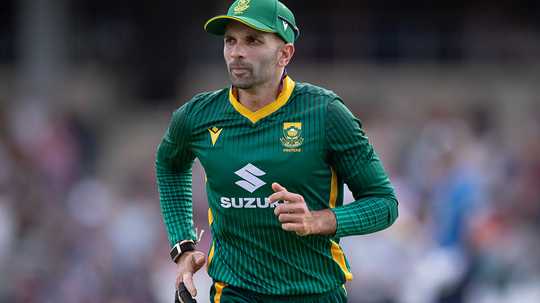
South African cricket talent will make a welcome return to the International League T20 (ILT20) this season after a scheduling change removed the clash that had kept many of the country’s leading players away for four years. With the UAE competition running from November 21 to December 20 and South Africa’s SA20 beginning on December 26, several prominent Proteas can take part in both tournaments’ wider cricket calendar without facing the same direct conflict.
The change has opened the door for six South Africans to join Season 5 squads, including powerful T20 batters Heinrich Klaasen and David Miller. Their arrival adds international experience and proven match-winning ability to a tournament seeking to establish itself among the leading franchise competitions. For fans, it also creates fresh storylines—and plenty to consider when making an ILT20 prediction about which teams may contend for the title.
David Miller Welcomes His First ILT20 Opportunity
Miller, one of T20 cricket’s most respected finishers, said he had followed the league and was pleased to finally have the chance to compete in it. The left-hander is familiar with Dubai, having played cricket in the city on several previous occasions, although he has not spent as much time there in recent years.
He believes the participation of South African players can raise the standard of the competition. South Africa has produced a deep pool of high-quality cricketers, and their inclusion gives teams more options across batting, bowling and all-round roles. In a tournament already featuring a substantial overseas contingent, that added depth should make team selection and match-ups even more compelling.
Miller has wanted to play in the ILT20 for some time, but the crowded international and franchise schedule made it difficult to find a suitable window. The SA20 overlap was the central obstacle in previous seasons. This year, the gap between the two competitions has made participation possible, and Miller said he was happy to take advantage of the opportunity.
Why the Calendar Matters
Franchise leagues around the world compete for a limited number of weeks in an increasingly busy cricket calendar. Players must balance national commitments, domestic tournaments, recovery and travel, while leagues need access to the best available talent. A small change in scheduling can therefore have a significant effect on squad strength.
For the ILT20, avoiding a direct clash with the SA20 is especially valuable. South African players are not only popular with supporters; many bring experience in high-pressure T20 matches and a detailed understanding of conditions in different leagues. Their availability can improve competition across the tournament rather than benefiting just one team.
Klaasen Sees the ILT20 as a Major Test
Klaasen, a former world No. 1 T20 international batter, is also eager to make his mark. He described the ILT20 as one of the world’s top four or five franchise leagues, while stressing that its reputation comes with a high level of competition. In his view, players cannot expect success simply by arriving and relying on their reputation; they need to be prepared to perform from the outset.
The hard-hitting batter will captain the Gulf Giants, who won the inaugural ILT20 season. That history gives the franchise an established benchmark, but repeating a championship campaign will require consistency across a new set of matches and opponents. Klaasen’s leadership and middle-order power could prove important, particularly in close contests where a late surge can change the outcome.
His availability is also linked to South Africa’s international schedule. With no international cricket or domestic franchise commitments at home during this window, he has been able to take up the opportunity. Having retired from international cricket, Klaasen can focus on preparing for the league, but he has made clear that experience does not remove the need for hard work.
Preparation, Fitness and Match Analysis
Klaasen emphasised the importance of maintaining fitness, training with purpose and sharpening the skills required for the demands of T20 cricket. He also noted that modern preparation involves more than batting practice: players use analysts, video review and performance data to understand opponents, identify scoring options and plan for specific conditions.
That preparation can be particularly useful in the UAE, where pitch pace, boundaries and weather may vary between venues. Batters need to judge when to attack and when to build an innings, while bowlers must adapt their lengths and pace changes to the surface. For supporters assessing a cricket prediction, those details can matter as much as a team’s headline names.
Six South Africans Across the Season 5 Squads
Klaasen and Miller headline a six-player South African group. Faf du Plessis will represent Dubai Capitals, while Tabraiz Shamsi joins the Gulf Giants. Lizaad Williams is part of the MI Emirates squad, and George Linde will play for Sharjah Warriorz.
The group offers a useful mix of skills. Du Plessis brings leadership and top-order experience; Shamsi adds a wicket-taking spin option; Williams strengthens the pace attack; and Linde provides left-arm spin alongside batting depth. Together with Klaasen’s explosive stroke play and Miller’s finishing ability, the South Africans could influence games in several different ways.
What Their Arrival Could Mean for the Competition
The return of South African talent gives the ILT20 a stronger international profile and creates additional competition for places. It may also affect how teams approach the tournament: captains have more experienced options, coaches can build varied combinations, and opponents must account for players who are accustomed to performing under pressure.
That does not guarantee success for any individual or franchise. T20 outcomes can turn quickly, and a strong squad still needs effective partnerships, disciplined bowling and sharp fielding. But the presence of six established South Africans adds quality and intrigue to a season that begins in Dubai on November 21 and concludes on December 20.
With the scheduling barrier finally removed, players who have long watched the ILT20 from the sidelines now have the chance to shape it on the field. Their participation should make the tournament more competitive—and give fans fresh reasons to follow every match, debate each team’s prospects and refine their ILT20 prediction as the season unfolds.