
Barcelona vs Real Betis: Disallowed Lo Celso Goal Sparks Refereeing Row
Real Betis’ defeat to Barcelona has prompted a fresh debate about refereeing standards in La Liga, after VAR ruled out a Giovani Lo Celso goal that would have brought the Andalusian side level before half-time. Spanish outlet Defensa Central, which is widely regarded as sympathetic to Real Madrid, criticised the decision and argued that it gave Barcelona an important advantage in the title race.
The flashpoint came at a crucial stage of a lively match at La Cartuja. With Barcelona leading 2-1, Lo Celso struck a powerful effort past goalkeeper Joan Garcia. Betis briefly celebrated what appeared to be an equaliser, only for referee Ricardo de Burgos Bengoetxea to review the build-up with the video assistant referee and disallow the goal for a handball by Cucho Hernandez.
The decision left Betis players and coaching staff furious. Their frustration was not simply about the handball itself, but also about when it occurred and how closely it was connected to Lo Celso’s finish. The incident happened earlier in the attacking move, raising questions among Betis supporters about whether it should have been considered decisive.
Why VAR overturned Lo Celso’s goal
According to the reports cited by Defensa Central, the handball followed a heavy collision involving Cucho Hernandez and Barcelona midfielder Pedri. The contact appeared accidental, and Betis’ argument was that the challenge may have involved a foul by the Barcelona player before the ball touched Hernandez’s hand.
Under football’s handball rules, an accidental touch can still lead to a goal being disallowed if the player who handles the ball immediately scores, or if the touch directly creates a scoring opportunity for a teammate. The key issue in this case was the connection between the handball and Lo Celso’s later strike. VAR officials judged the incident to be relevant enough to cancel the goal, while Betis questioned whether the sequence was direct enough to justify intervention.
That distinction is central to many modern VAR controversies. Video technology is intended to correct clear and significant errors, but reviews can also leave fans debating how far back officials should examine an attacking move. A decision may follow the letter of the rules while still feeling harsh to the team that loses a goal—particularly when the handball is unintentional and several actions occur before the finish.
A dramatic first half at La Cartuja
The controversy came amid an energetic contest that began at a high tempo. Barcelona took the lead in the ninth minute through Lamine Yamal, whose early goal gave the visitors a strong start. Betis responded by putting pressure on the Catalan defence and found an equaliser when Valentin Gomez headed home after Barcelona failed to clear a corner cleanly.
Barcelona regained the advantage in the 40th minute through Rodri Hernandez, setting up the moment that would dominate the half-time discussion. Lo Celso’s disallowed effort seemed to have restored parity once again, but the VAR review ensured Barcelona went into the break in front.
For Betis, the timing was especially painful. A 2-2 scoreline would have changed the atmosphere and tactical balance of the match, giving the home side renewed belief before the second half. Instead, they had to regroup while feeling that a major opportunity had been taken away.
Pellegrini protests as tensions rise
Betis manager Manuel Pellegrini made his anger clear after the decision. The Chilean protested strongly to the officials and was shown a yellow card. His reaction reflected the stakes of the moment: the disallowed goal was not a minor detail, but a potential turning point in a match between two sides with ambitions of securing valuable league points.
Defensa Central presented the call as another example of what it described as recurring controversy in Spanish football. The outlet argued that the ruling denied Betis a fair route back into the game and added to concerns about the consistency of officiating in La Liga. That interpretation should be understood as commentary rather than an official finding, but it captures the wider frustration that can follow a high-profile VAR decision.
More drama after the break
The second half brought further incidents. Barcelona extended their advantage before Ez Abde—also known as Abdessamad Ezzalzouli—scored in the 52nd minute to reduce the deficit and give Betis a renewed push. The goal kept the contest alive, but the match remained unsettled, with physical challenges and confrontations adding to the tension.
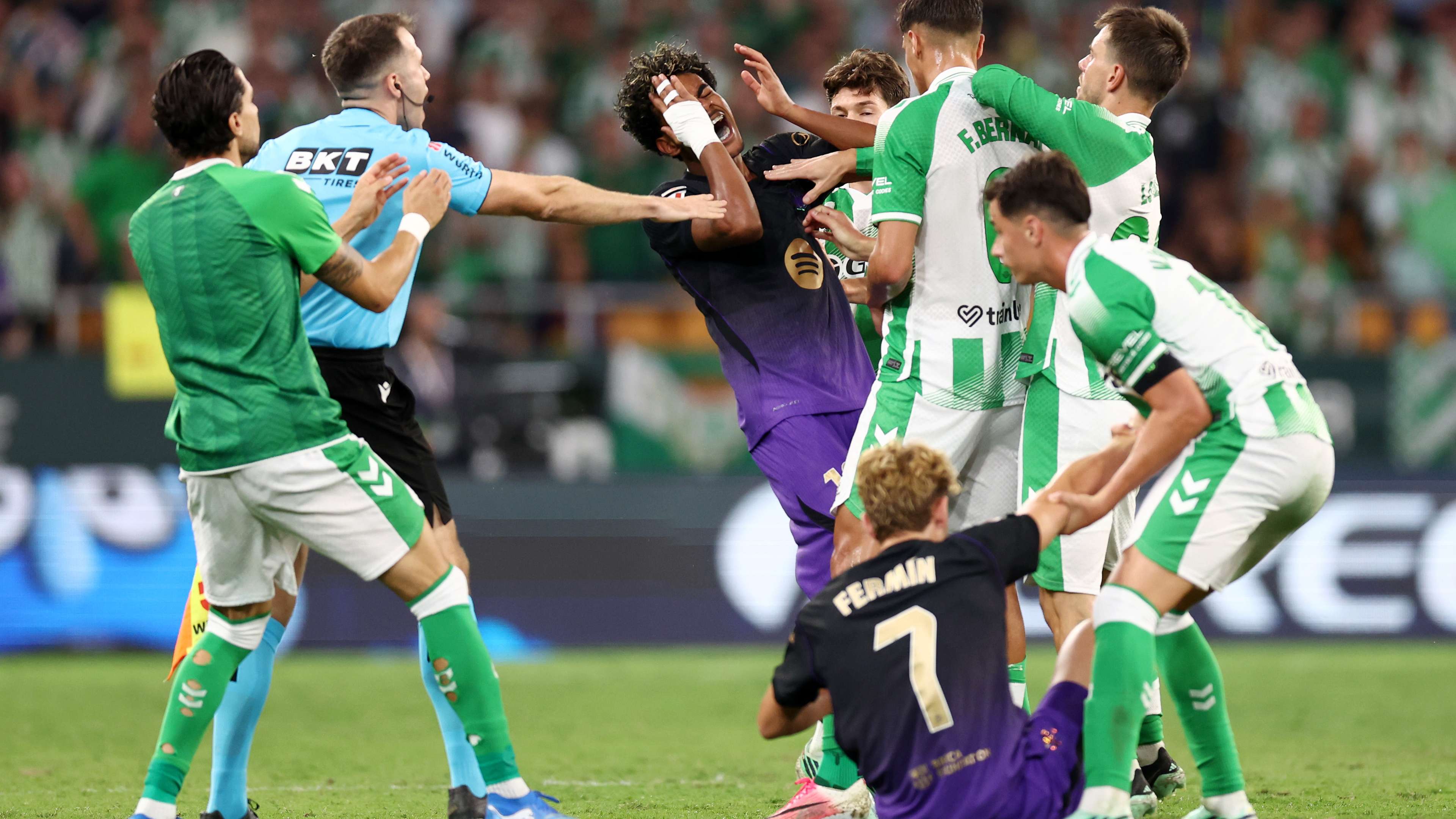
One flashpoint involved Barcelona forward Fermin Lopez going to ground after a collision. Attention then shifted to an exchange between Yamal and Facundo Bernal. After Yamal pushed the Uruguayan, Bernal responded by grabbing the winger’s head. The referee intervened and sent Bernal off, leaving Betis with another significant setback. Yamal remained on the pitch.
The dismissal added another layer to a match already shaped by disputed calls. For Betis, the sequence of the disallowed goal, the protests and the red card made it difficult to focus solely on the football. Barcelona, meanwhile, were able to continue with their attacking threat while their opponents dealt with both a numerical disadvantage and mounting frustration.
What the controversy means for the La Liga title race
One refereeing decision does not determine a league campaign, but moments like this can have an outsized impact on the title conversation. Barcelona’s result strengthened their position in the standings, while Betis were left to consider how differently the match might have unfolded had Lo Celso’s goal stood. The episode is also likely to renew calls for clearer communication when VAR reviews involve an earlier handball or a disputed foul in the same move.
For supporters searching for a football prediction on the wider La Liga race, the match offers a reminder that form and tactics are only part of the picture. Squad depth, discipline and the ability to respond to setbacks can prove just as important over a long season. Barcelona showed resilience in a hostile atmosphere, while Betis demonstrated that they could create chances against a major rival, even as frustration threatened to overshadow their performance.
The final verdict on the Lo Celso incident will depend on how fans interpret the rules and the sequence of play. What is clear is that the decision became the defining talking point of the match. With VAR controversies continuing to shape football discussions across Spain, the debate over consistency, transparency and the limits of video review is unlikely to fade soon.