
Australia’s Fast-Bowling Depth Tested Before England T20I Series
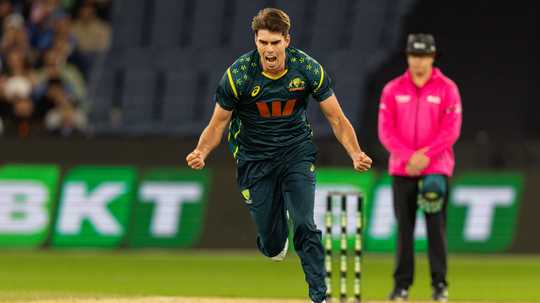
Australia’s preparations for the five-match T20I series against England have suffered a fresh setback, with fast bowlers Mahli Beardman and Xavier Bartlett ruled out because of injuries. Their withdrawals add to an already growing list of unavailable players and leave the selectors with important decisions to make ahead of the opening match at the Melbourne Cricket Ground on Saturday, November 21.
Beardman has sustained a strain to his left quadriceps, while Bartlett is dealing with a left knee injury. Neither will feature in the series. They join Nathan Ellis, who is sidelined by a side strain, further reducing Australia’s pace options for a contest expected to test the team’s depth and adaptability.
Injuries and rest reshape Australia’s squad
The fast-bowling absences are only part of the challenge for Australia. Travis Head, Matt Renshaw, Cameron Green, Josh Inglis and Cooper Connolly have also been left out, with the group rested. Pat Cummins and Josh Hazlewood will likewise miss the T20I series as they focus on preparations for next month’s Test matches against New Zealand.
With several experienced players unavailable, captain Mitchell Marsh will lead a squad that combines established international options with emerging talent. The series against England will provide opportunities for players to take on greater responsibility, particularly in the bowling department, where Australia must balance pace, control and flexibility across five matches.
For supporters following cricket prediction discussions ahead of the series, the selection changes make Australia’s prospects harder to assess. The team still has considerable talent, but the loss of several frontline bowlers could influence how it manages the powerplay, middle overs and closing stages of each innings. England’s batting approach and the conditions at each venue will also shape the contest.
Stanlake returns as injury cover arrives
Billy Stanlake has been recalled after recovering from a side strain of his own. He returned to action in the One Day Cup earlier this week, giving Australia another pace option as the squad adjusts to the latest injuries. His comeback offers a potential boost, although his workload and match readiness will be closely watched.
Ben Dwarshuis and Riley Meredith were added to the original squad as cover, alongside uncapped fast bowler Henry Thornton. The trio gives Australia additional choices, but the series will also be a chance for less-experienced players to show that they can handle the demands of international T20 cricket.
Australia’s full squad is Mitchell Marsh (captain), Nikhil Chaudhary, Tim David, Joel Davies, Ben Dwarshuis, Jack Edwards, Jake Fraser-McGurk, Sam Harper, Spencer Johnson, Riley Meredith, Mitch Owen, Lachlan Shaw, Billy Stanlake, Henry Thornton and Adam Zampa.
Beardman’s development remains a key storyline
Beardman’s absence is notable because the young quick had recently made an impression on his ODI debut. His pace and potential have prompted discussion about whether he could eventually be fast-tracked into Australia’s Test setup, particularly with a demanding schedule approaching: the team is preparing for a run of 10 Tests in three months.
However, the injury is another interruption for a player whose progress has already been affected by fitness concerns. Beardman has yet to make his first-class debut, so his development will depend on building a consistent record of availability as well as continuing to perform in limited-overs cricket. He is expected to return for the Perth Scorchers’ Big Bash League campaign, offering a possible route back to competitive action once he has recovered.
Bartlett’s next steps are less certain. He will undergo further assessment on his knee, with the extent of the injury and his recovery timeline to be determined. For Australia, that assessment will help clarify whether he can return later in the domestic season or needs a longer rehabilitation period.
What the absences mean for the England series
Australia’s bowling plans may need to rely on a mix of specialist quicks, all-rounders and adaptable options. That can create opportunities for players such as Spencer Johnson, Meredith and Thornton to make an impact, while Dwarshuis brings another left-arm angle. Adam Zampa remains an important spin option, especially if the pitches encourage variation rather than sheer pace.
The team’s challenge will be to find the right combinations without placing excessive pressure on any one bowler. T20 cricket rewards attacking spells, but it also demands discipline: a few expensive overs can quickly change a match. Australia may therefore need to use its bowling resources creatively, adjusting match-ups to England’s batting lineup and responding to conditions from game to game.
The series also arrives at a busy point in Australia’s calendar. Resting key players reflects the need to manage workloads ahead of the Test commitments, while the injuries underline the importance of having reliable depth across formats. For emerging players, the England fixtures are more than a short-term opportunity: strong performances could strengthen their cases for future selections, while consistent fitness will remain essential.
With the opening match at the MCG approaching, Australia face uncertainty but not a shortage of motivation. The reshaped squad will be tested against a strong England side, and the results could offer useful insight into the country’s next wave of T20 talent. For fans weighing up a cricket prediction, the changing personnel make the series particularly intriguing: Australia’s success may depend less on reputation and more on how quickly its available players settle into new roles.