
Mustapha Hadji Names Achraf Hakimi the Greatest Player in Moroccan Football
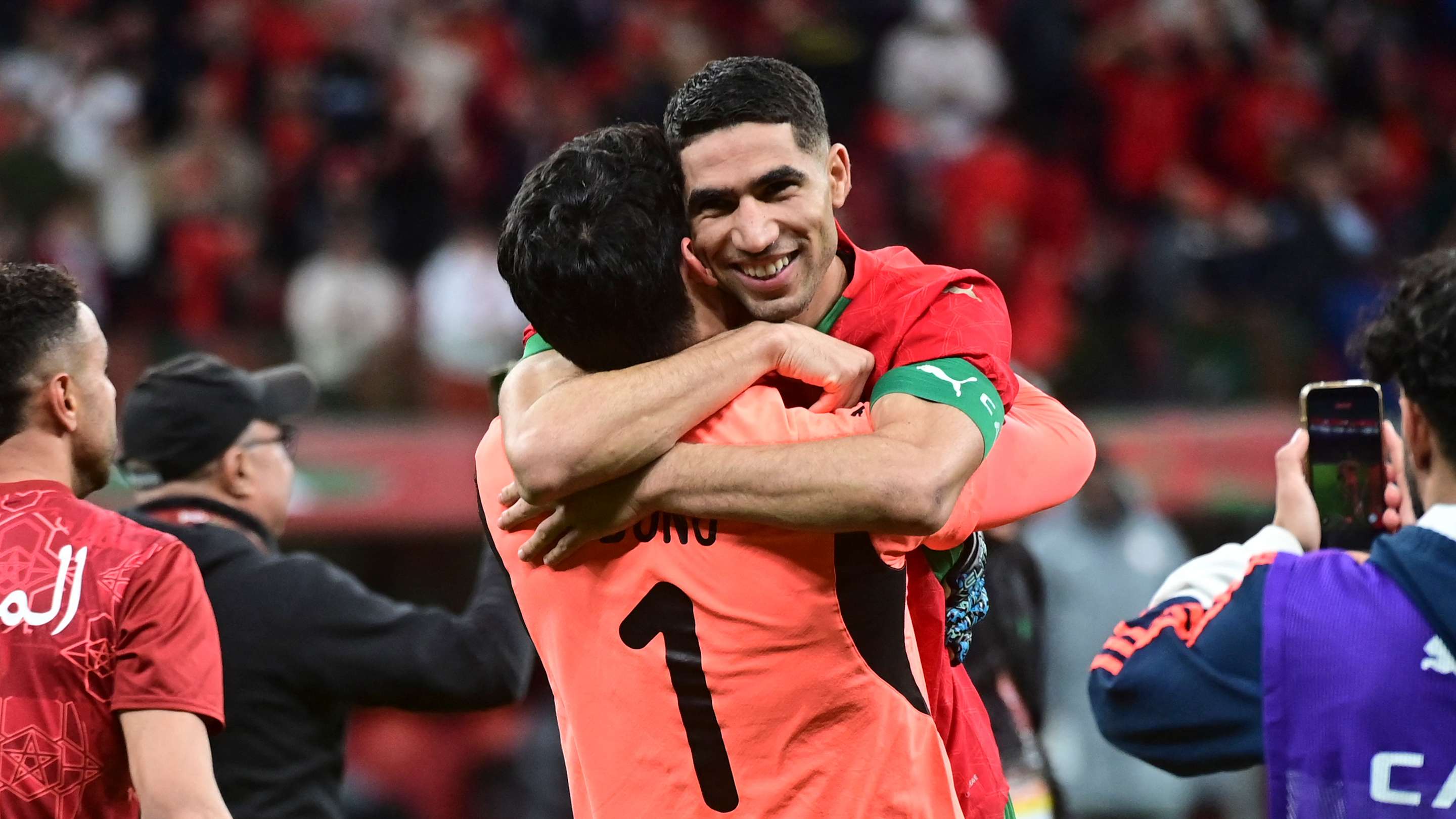
Morocco legend Mustapha Hadji has placed Paris Saint-Germain defender Achraf Hakimi at the top of the Atlas Lions’ all-time rankings, describing him as the country’s finest footballer by a considerable margin. Hadji also singled out goalkeeper Yassine Bounou as a standout figure, putting him second on his personal list of Moroccan greats.
In a video interview with Kooora, due to be released in full later, Hadji was asked to compare Hakimi with the many celebrated players who have represented Morocco. His answer was emphatic: he believes the full-back stands well ahead of the rest.
“Yes, Hakimi is the best player in the history of Moroccan football by a wide margin over any other player,” Hadji said. “He is very far ahead of the others.”
The former Morocco international also praised Hakimi’s influence beyond his performances on the pitch. He sees the PSG star as an example for young players, pointing to the way he has developed into a leading figure for both club and country.
Hakimi and Bounou lead Hadji’s personal rankings
Hadji placed Bounou, widely known as Bono, second behind Hakimi. The goalkeeper has become one of Morocco’s most recognisable players, earning acclaim for his composure, consistency and important contributions in major matches. Hadji said the rest of the country’s football legends followed at a significant distance in his own ranking.
His comments are a personal assessment rather than an official verdict, and Morocco’s football history includes many players with strong claims to greatness. Still, Hadji’s view carries weight: he was one of the country’s most celebrated players during his own career and understands the demands of representing the national team.
When asked where he would place himself among Morocco’s all-time greats, Hadji laughed and played down his own standing. “No, I am far from that,” he replied, leaving the focus on the current generation.
A record-breaking international career
Hakimi’s case is supported by the scale of his achievements. He has made 103 appearances for Morocco across all competitions, making him the second-most-capped player in the history of the Atlas Lions. Only former captain Noureddine Naybet, with 115 appearances, has played for the national team more often. Bounou sits third on the list with 99 caps.
Those numbers reflect more than longevity. Hakimi has become a central part of Morocco’s identity on the international stage, combining defensive responsibilities with the pace and attacking instincts to influence games in the final third. His ability to operate as a full-back or wing-back gives coaches tactical flexibility, while his experience at elite European clubs has helped raise expectations around the national side.
For younger Moroccan footballers, that combination offers a practical example of what sustained progress can look like: technical ability, athleticism, adaptability and the discipline to perform consistently at the highest level. It is this broader influence that helps explain why Hadji described Hakimi as a role model, not simply a gifted player.
Success with club and country
Hakimi’s reputation has been built across several stages of his career. He has played for some of Europe’s leading clubs and collected major honours along the way, including three UEFA Champions League titles with his teams. His club experience has also brought regular exposure to high-pressure matches, where small decisions and moments of quality can determine the outcome.
He was named Africa’s best player for 2025 and is pushing to remain in contention for the same honour in 2026. Recognition of that kind reflects his standing among the continent’s leading footballers, as well as the growing visibility of Moroccan players in top-level European competition.
Hakimi’s individual success has coincided with a period of heightened ambition for Morocco. The Atlas Lions have established themselves as a team capable of challenging respected opponents, and their recent progress has encouraged debate about how far the current generation can go. With Hakimi and Bounou among the most experienced players in the squad, their influence is likely to remain important as Morocco prepares for future international fixtures.
What Hadji’s praise means for Morocco’s next generation
Hadji’s assessment is also a reminder that football legacies are shaped by more than statistics. Caps, trophies and awards provide measurable evidence, but leadership, consistency and inspiration matter too. Hakimi’s status as one of Morocco’s most prominent athletes makes him a visible reference point for young players who hope to follow a similar path.
Bounou’s place in Hadji’s top two highlights another route to national-team greatness. A goalkeeper’s contribution can be less visible than a forward’s or an attacking full-back’s, yet reliable performances in decisive matches can define a team’s success. Together, Hakimi and Bounou represent two different forms of influence within the Atlas Lions setup.
There is no single formula for comparing generations, and supporters will continue to make their own choices among Morocco’s historic stars. Hadji’s ranking is therefore best understood as a strong personal opinion shaped by what he has seen from the current leaders. His prediction, however, is clear: Hakimi’s achievements and example have already placed him at the summit of Moroccan football in his eyes.
As the Atlas Lions look ahead to upcoming international competition, attention will remain on whether Hakimi can add further honours and continue climbing Morocco’s appearance records. Whatever comes next, Hadji’s remarks underline the scale of the defender’s impact—and the high standard he has set for the next generation of Moroccan footballers.