
New Zealand Lose Lockie Ferguson Ahead of Fourth T20I Against India
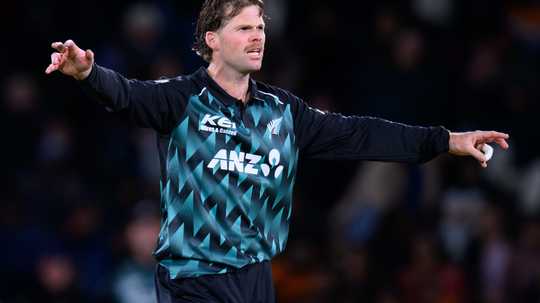
New Zealand’s fast-bowling resources have taken another hit ahead of the sold-out fourth T20I against India at Eden Park, with Lockie Ferguson ruled out for the remainder of the ongoing series. The right-arm quick suffered a low-grade tear in his right calf during the second match at Hagley Oval and is expected to need about another week to recover before returning to action.
New Zealand Cricket confirmed the injury after scans, naming Matt Fisher as Ferguson’s replacement for the remaining T20Is. The development is a disappointment for the home side, particularly with a large Auckland crowd expected for Friday’s match. Ferguson had been looking forward to playing at Eden Park, but the team will now have to adjust its pace-bowling plans once again.
Ferguson joins an expanding injury list
Ferguson is not the only New Zealand quick dealing with a fitness concern. Matt Henry was also assessed after experiencing pain in his right quadricep during the second T20I. Scans revealed a low-grade tear, with an estimated recovery period of one to two weeks.
Head coach Rob Walter said the injuries were difficult news for the players and the team, even though setbacks are a familiar part of international cricket. He added that Ferguson had been eager to feature in front of a sell-out home crowd and was determined to return in time for the upcoming one-day international series.
Henry’s situation is being managed with the longer schedule in mind. He was already expected to sit out the remaining T20Is as part of a planned workload-management programme, allowing him to prepare for New Zealand’s busy summer. The team remains hopeful that he will be available for the ODIs, where his experience and ability to move the ball could be particularly valuable.
Matt Fisher gets an opportunity
Fisher’s inclusion gives New Zealand another chance to assess its fast-bowling depth. Replacing a bowler of Ferguson’s pace and international experience is no simple task, but the call-up offers Fisher an opportunity to contribute in a high-profile series against India.
New Zealand may need to balance aggression with control at Eden Park. The ground is known for its compact boundaries, where even well-directed deliveries can be punished if batters find the middle of the bat. For the home attack, disciplined lines, effective changes of pace and smart use of the shorter boundaries could be just as important as raw speed.
India, meanwhile, have already secured the series with an unassailable 3-0 lead. That result gives the visitors a strong position heading into the final matches, while New Zealand will be looking to respond in front of its home supporters and build momentum before the ODI leg begins.
Jamieson follows a separate workload plan
Kyle Jamieson will also miss the immediate T20I action, but his absence is part of a planned workload-management arrangement rather than an injury setback. He will remain in Wellington and is available to play for Canterbury in the second round of the Ford Trophy on Saturday. He is then scheduled to rejoin the national squad on Monday ahead of the ODI series.
Managing fast bowlers carefully is an increasingly important part of the international calendar. Bowlers face repeated high-intensity spells across formats, and even minor muscle injuries can become more serious if players return too soon. New Zealand’s approach with Henry and Jamieson reflects the need to protect key players while keeping them ready for the demands of a packed summer programme.
What the injury news means for the fourth T20I
With Ferguson unavailable and Henry already set to be rested, New Zealand’s bowling combination will look different from the one the team may have hoped to field at Eden Park. The selectors must weigh the need to give emerging players experience against the challenge of containing an India side that has already found winning form in the series.
For fans following the match, the team changes add an extra layer of interest to the cricket prediction conversation. India’s 3-0 advantage makes the visitors the form side, but a home crowd and the distinctive conditions at Eden Park could give New Zealand reasons for optimism. Any prediction should also account for the revised bowling attack, the ground’s short boundaries and the possibility that the final T20Is will be used to test combinations ahead of the ODIs.
New Zealand’s immediate priority will be to remain competitive while avoiding further fitness concerns. The fourth T20I is scheduled for Friday in Auckland, where the sold-out crowd will hope to see a strong response from the home team. Although Ferguson will miss the occasion, the focus now shifts to Fisher and the rest of the attack as New Zealand look to finish the T20I series with a more encouraging performance.