
Harry Kane Still Sees Room to Improve After Ballon d’Or Triumph
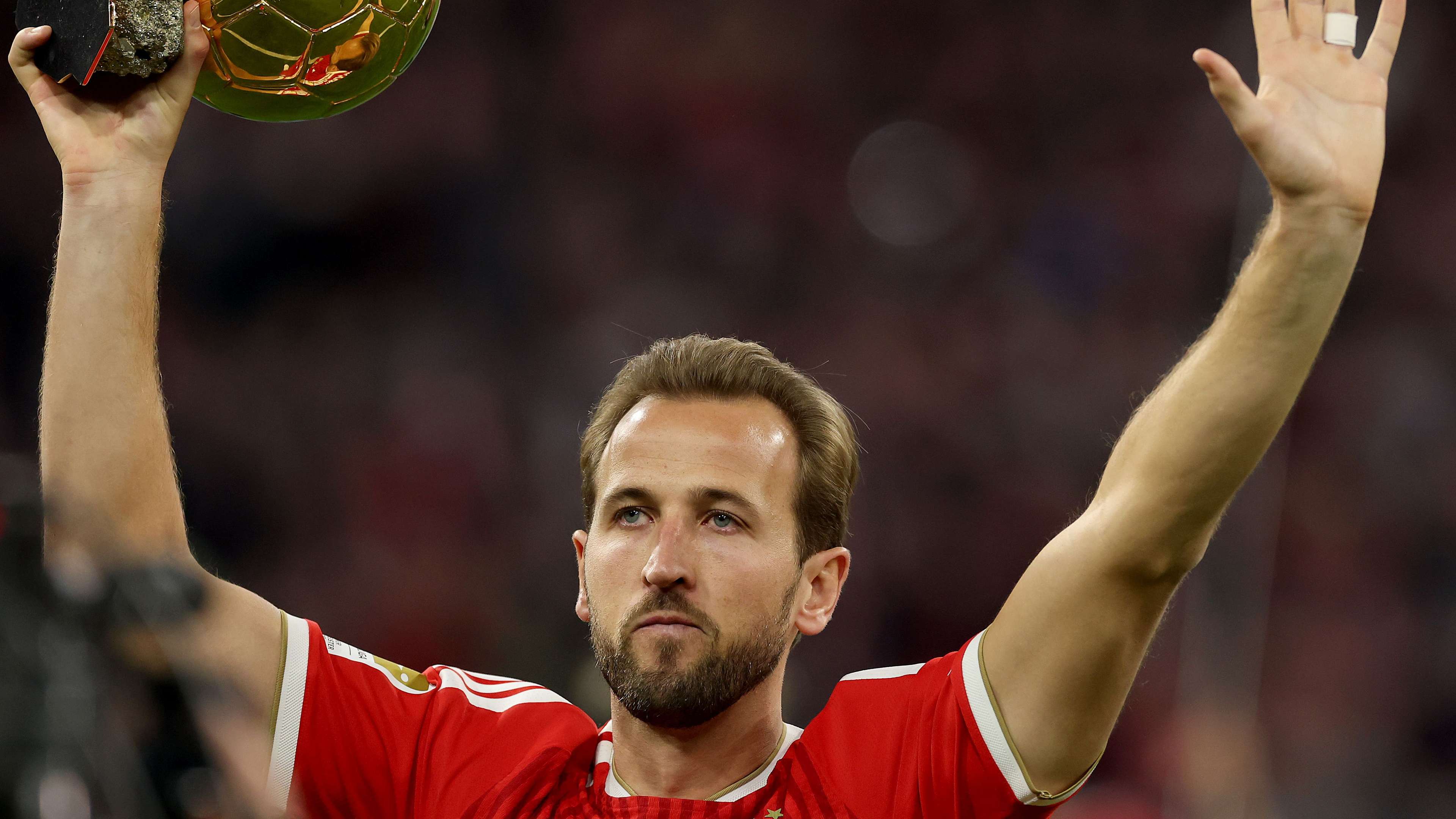
Winning the Ballon d’Or might represent the ultimate individual milestone for a footballer, but Harry Kane says it has not changed his appetite for progress. The Bayern Munich and England striker believes he is playing at the highest level of his career, yet remains convinced there are skills he can refine—and one particular ability he would love to add to his game belongs to Lionel Messi.
Kane’s comments offer a glimpse into the mindset behind his remarkable consistency. Rather than treating success as a finish line, the forward views it as a reason to keep pushing. For supporters following his performances, that ambition also raises an intriguing question: if Kane can still find ways to improve, how much more dangerous could he become?
Kane’s pursuit of a more complete game
Speaking to Tribuna, Kane was asked whether he still has weaknesses despite being crowned the 2026 Ballon d’Or winner. His answer was direct: no player should consider their development complete while they are still competing.
“There are always aspects you want to improve, and that will remain the case right up until the day I decide to retire from football,” Kane said. He added that he has never felt more complete, describing himself as being at the peak of his physical and mental abilities when he steps onto the pitch.
That combination of confidence and self-criticism is central to Kane’s approach. He recognises the level he has reached, but does not assume that reaching the top means there is nothing left to learn. For an elite striker, small improvements can matter: a quicker decision in the penalty area, a sharper movement between defenders or a better pass under pressure can change the outcome of a match.
More than a goal scorer
Kane’s reputation has long been built on his finishing, but his own assessment of his game extends well beyond goals. He pointed to his ability to read the play, find and exploit space, position himself effectively and pull defenders out of shape.
Those qualities help explain why Kane can influence a match even when he is not the player taking the final shot. By dropping deeper, he can link midfield and attack, draw a centre-back away from their position and create room for a teammate to run into. When he stays close to goal, his timing and movement make him difficult to track. The ability to switch between those roles gives a team more tactical options.
Kane said he has noticed his progress particularly in training and in the way he scores. He feels more versatile than ever, and that versatility is one of the reasons he remains motivated. His comments underline a broader truth about modern football: the best forwards are often expected to contribute to build-up play as well as finish attacks.
The one skill Kane would borrow from Messi
Asked which footballing ability he would add to his own toolkit, Kane did not hesitate to name Lionel Messi’s left foot. The Bayern striker joked that if he possessed Messi’s famous weapon, “stopping me would be almost impossible.”
It is an understandable choice. Messi’s left foot has been central to his career, allowing him to score from difficult angles, glide past defenders and deliver passes that split compact defensive lines. Its value is not limited to power or accuracy. Messi’s close control and ability to disguise his intentions make it especially difficult for opponents to predict whether he will shoot, dribble or create a chance for someone else.
Kane is already a powerful and technically accomplished finisher, so the imagined addition would not simply give him another way to strike the ball. It would make him less predictable. A defender facing a forward who can threaten with either foot has fewer opportunities to guide him toward one side, while goalkeepers have less time to anticipate the direction of a shot.
That hypothetical comparison also highlights the different strengths of two exceptional players. Kane’s game is built around intelligent movement, physical presence, precise finishing and an increasingly creative passing range. Messi’s left-footed artistry is one of the most distinctive features in football history. Kane’s admiration is clear, but his own style remains recognisably his own.
Why continued improvement matters
At 33, Kane says he remains in excellent physical condition and is still asking himself how far he can go. Rather than making a bold prediction about what comes next, he is taking a measured approach: he will see whether he can continue to progress and improve.
That attitude is significant for both club and country. Bayern Munich rely on Kane not only to lead the line but also to help shape attacks, while England benefit from his experience and ability to connect play. Maintaining his fitness and adapting his game could help him remain influential as opponents adjust their tactics to limit his scoring opportunities.
For fans assessing Kane’s future, the most interesting prediction may be that his evolution is not finished. If he continues to develop his movement, creativity and all-round contribution, his value could remain high even as the demands of the game change. His own comments suggest that he is focused less on protecting his achievements than on finding the next area to sharpen.
A Ballon d’Or has not dulled his ambition
Kane’s Ballon d’Or recognition places him among the game’s most celebrated players, but he has made clear that the award has not reduced his hunger. He can acknowledge that he is operating at a career-best level while still looking for ways to become more effective.
That balance may be one of the reasons he has remained so productive: confidence in his strengths, combined with the willingness to examine what is missing. Messi’s left foot may be the one skill Kane would choose if he could borrow an ability from a legend, but his broader ambition is more important. He wants to keep learning, keep adapting and keep improving for as long as he plays football.
For a striker already regarded as one of the most complete players of his generation, that determination is a compelling prospect. Kane may not have Messi’s left foot, but his commitment to evolution ensures that defenders will continue to face a forward searching for new ways to make himself harder to stop.