
Total Chess World Championship Tour: Group Stage Produces Comebacks and Close Battles
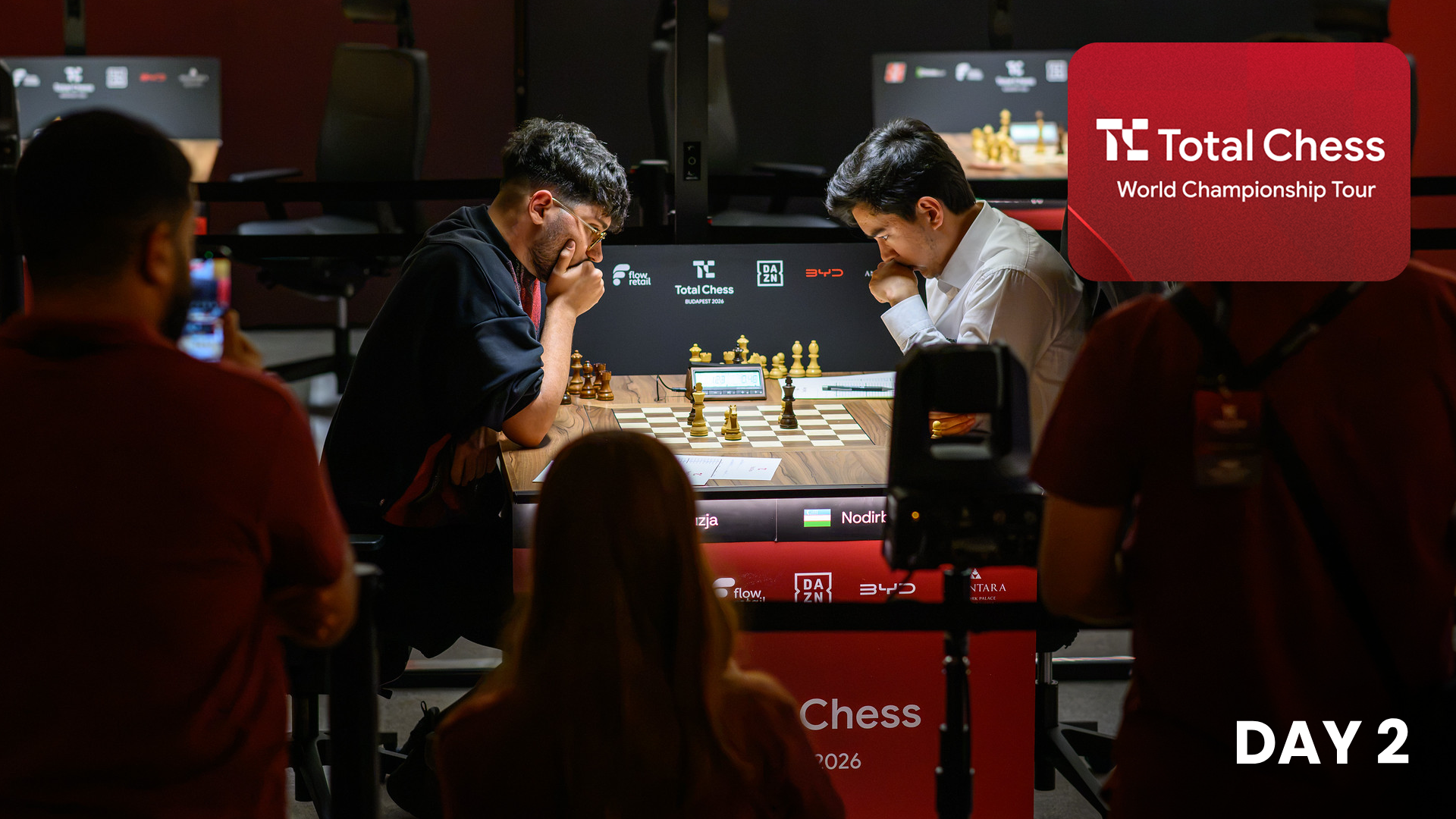
The group stage of the Total Chess World Championship Tour Pilot 2026 opened with a day of sharp reversals, hard-fought draws, and early moves toward the knockout phase. Grandmasters who lost in the first round responded with important victories in round two, while several top contenders finished the day sharing the lead in their groups.
After the opening pair of games, GMs Alireza Firouzja, Jan-Krzysztof Duda, Fabiano Caruana, Le Quang Liem, Ian Nepomniachtchi, Haik Martirosyan, Maxime Vachier-Lagrave, and Bibisara Assaubayeva were among those at the top of their respective groups. Each had scored four points from one win and one draw under the event’s points system. Some came close to making it two wins from two, but stubborn defense and time-pressure drama kept several games from reaching a decisive result.
One of the day’s most compelling stories came from Jorden van Foreest, who recovered from a first-round defeat by beating Levon Aronian in an uncompromising attacking game. Martirosyan also bounced back with a win, giving both players a stronger position than rivals who settled for two draws. Meanwhile, Magnus Carlsen and Anish Giri produced two intensely contested draws, leaving them on two points apiece and with ground to make up.
A Group Stage Where Every Result Matters
The group phase is the critical first hurdle of the competition. Only the winner of each group advances to compete for the title, leaving little room for a slow start. Players are contesting five days of double-round action, with each game played using a 45-minute “fast classic” time control. The format rewards both strategic preparation and the ability to make accurate decisions when the clock begins to exert pressure.
Round one produced decisive results in roughly half of the games, immediately establishing the importance of taking chances. The second round was more tightly balanced: only four games ended with a winner, despite several positions coming close to tipping either way. That contrast underlined the challenge of the format. A player may need to take risks to catch a group leader, but one inaccurate decision can quickly turn an ambitious position into a loss.
Group A: Firouzja and Duda Set the Pace
Firouzja and Duda emerged as early leaders in Group A, but the group’s headline encounter belonged to Van Foreest and Aronian. Van Foreest chose a bold approach with the King’s Indian Defense, steering the game into a position where active piece play and attacking chances mattered more than a quiet material advantage.
His victory was a striking example of the risk-and-reward balance in fast classical chess. Rather than simply trying to equalize after his opening loss, Van Foreest played for the initiative and kept the pressure on. Aronian, a highly experienced competitor, was forced to defend against a growing attack. The result gave Van Foreest a valuable comeback win and made the game one of the day’s defining moments.
For Firouzja and Duda, the early lead offers a platform, not a guarantee. With several rounds still to come, Group A remains open, and the narrow difference between a win and a draw could prove decisive in determining who reaches the knockout stage.
Group B: Caruana and Le Share the Lead
Caruana and Le led Group B after the first two rounds, combining a victory with a draw. Their position reflects the premium on consistency: a player who avoids an early loss can remain firmly in contention even when the group is crowded with elite opposition.
As the group stage continues, the leaders will need to balance risk carefully. A draw can preserve a strong position, but it may also allow a rival to catch up with a win. In a format where only the group winner advances, standings can change quickly, particularly during double-round days when players have limited time to recover from a difficult result.
Group C: Nepomniachtchi Leads as Carlsen and Giri Battle
Nepomniachtchi took the early lead in Group C, while Martirosyan made the most of his opportunity to recover from a first-round loss. His win was especially important in a group where every half-point matters and a pair of draws can leave a player trailing those who have already claimed a full point.
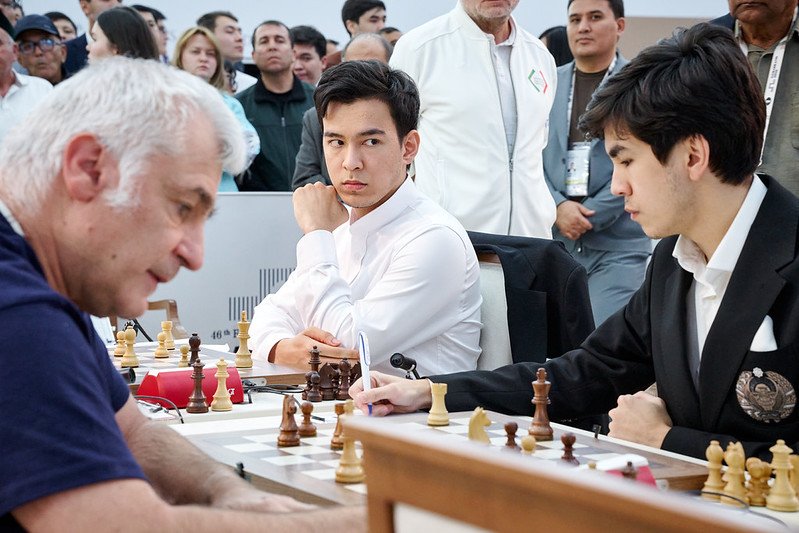
The group also featured the day’s gripping Carlsen-Giri encounters. Both games ended in draws, but neither was a routine affair. The players repeatedly tested one another, creating positions that demanded careful calculation and resourceful defense. Their shared score leaves both needing a strong run in the upcoming rounds if they are to challenge Nepomniachtchi for the group’s sole qualifying place.
Group D: Vachier-Lagrave Leads After a Missed Opportunity
Group D leader Vachier-Lagrave had the chance to finish the day with a perfect score but was unable to convert the opportunity. Assaubayeva, meanwhile, held her ground and finished with two draws, keeping herself within reach of the leading position.
Although Vachier-Lagrave missed a chance to pull clear, his results still leave him well placed. Assaubayeva’s resilience could also prove valuable as the schedule intensifies. In a group where one win can quickly reshape the standings, a solid defensive performance may provide the foundation for a later push.
How to Follow the Chess Action
Fans can review the event through its Chess24 pages and follow the games through the tournament’s online coverage. The first day did not feature a live broadcast, but streaming began on day two. The broadcast team included grandmasters, international masters, and women’s international master commentators, offering analysis of the games and the key decisions behind them.
The next double-round day is scheduled for Thursday, November 12, with rounds three and four beginning at 9 a.m. ET, 15:00 CET, and 7:30 p.m. IST. Those rounds will be significant for players looking to turn early promise into a genuine qualification push—and for those who need to recover before the group leaders pull away.
About the Total Chess World Championship Tour Pilot
The pilot event is being held from November 10 to 21 at the Anantara New York Palace Hotel in Budapest, Hungary. It is designed as a trial run for the planned official championship in 2027, which will crown the first FIDE World Combined Champion.
After the round-robin group stage, the competition moves to a knockout format featuring blitz, rapid, and fast classical chess. The scheduled controls include blitz at 3+2, rapid at 15+10, and fast classical at 45+30. If a match reaches Armageddon, White receives 10 minutes and Black seven, with a one-second increment beginning on move 41.
With group winners the only players guaranteed a place in the title fight, the opening day has already set up a tense contest. Comebacks by Van Foreest and Martirosyan, the close battles involving Carlsen and Giri, and the tightly packed group standings all point to a chess tournament where momentum can shift with a single critical decision.